
Middelburg ‘farm boy’ recalls Ukraine-Russia frontline horror
From shrapnel stopped by his Bible to screams that haunt his nights, a special forces soldier reveals the hidden cost of war.
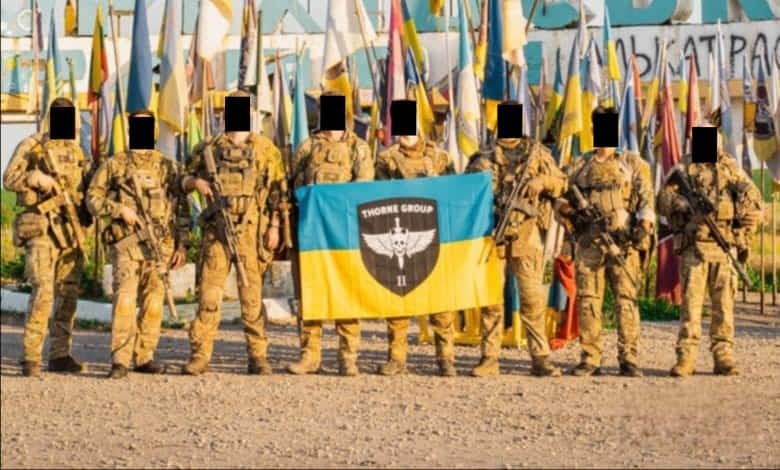
A resident of Middelburg recently returned from the frontlines of the Ukraine-Russia war, where he officially enrolled with the Ukrainian national army and served in an elite special forces unit.
Speaking exclusively to the Middelburg Observer, the soldier – a highly trained reconnaissance specialist and sniper – detailed his experience in explosives, close combat and the brutal reality of trench warfare.
Known by the call sign ‘Saint’, the 22-year-old carries the weight of his experiences in his gaze. He bears the physical scars of battle and tattoos of Russian phrases to mark his time in the conflict. For security reasons, he has requested that his identity be withheld, asking to be identified only by his military moniker.
“Ironic, isn’t it, that it’s ‘Saint’, War is not meant for saints,” he says of the nickname.
Only five months ago, Saint was operating with a special forces unit in Ukraine. Now back home on his family’s farm, he is grappling with the difficult transition to civilian life.
The reality of a destructive war
The memories of the frontlines, he says, will haunt him forever. “You never forget their faces – especially how they looked at you in their last moments. The sound of the screams keeps you awake at night.”
“As we speak, people are dying; people are losing limbs. This war is being fought on a massive front, and the world does not realise how dire it is,” Saint says. “It is a war of destruction. The only reason I am speaking out is to make people aware of the pain and sorrow it causes.”
A Russian FPV drone captured a Fab-3000 strike on a building in Kostyantynivka.
— ayden (@squatsons) February 13, 2026
The city has been cut off from most logistics and deployment points like this a reduced daily. Ukrainian casualties in the city from indirect combat are staggering.
A bridge on the western end of… pic.twitter.com/W0OmgWuL4b
Saint’s reasons for joining the Ukrainian effort were noble. Driven by a sense of justice, he wanted to stand against the injustice being done to the people. However, despite his training, nothing could have prepared him for the sheer scale of the devastation.
“The worst was entering a town that had just been attacked. You walk into a house and see the family photos; you see that a happy family lived there. That is when it hits you hardest.”
Finding humanity amid the rubble of Ukraine
He pauses, his expression darkening. “It’s hell on earth. After the Russians pass through, it looks like a desert – black and dead. There are corpses everywhere, civilian and soldier alike. It smells of death. It is only amid that pain that you fully understand the value of a single life.”
Despite the carnage, Saint found moments of humanity. In the towns where his unit stayed, the local children offered a strange sense of peace. “Sometimes, amid the destruction, the heavenly voices of children echoed. To them, we were heroes. They sang to us and gave us flowers.”
Yet, Saint is adamant that he wants to shield his own future children from this part of his life. “My children shouldn’t know I have this side. You forget who you are in war. You become something you don’t recognise.”
Saint recalls one incident he views as divine intervention. He escaped serious injury when a piece of shrapnel struck him from behind, only to be stopped by the Bible in his backpack. Luck, however, was not always on his side.
Scars of a suicide mission
During one engagement, he was shot in the arm, continuing to return fire before realising he had been hit. In another instance, while fighting in a two-metre-deep trench, a drone dropped a grenade nearby. Shrapnel penetrated his leg – a scar he says will always remind him of the desperate struggle in a foreign land.
When asked if he felt fear, Saint is candid. “When you’re on your way to battle in an armoured vehicle, everyone is on edge. You start to shake. You aren’t necessarily afraid of dying – you’re afraid of what comes after. Nobody really knows.”
He describes many of their operations as ‘suicide missions’. “For those of us who survived as long as I did, it was pure luck or supernatural protection. Every metre you walk, you are one metre away from death. You have to accept that if you go, you may not come back.”
Footage of a missile strike on a thermal power plant in Kiev. 👀👀👀 pic.twitter.com/vyuB5vnXss
— MD (@distant_earth83) February 12, 2026
The constant threat wasn’t limited to the trenches. In the cities, missile strikes were a nightly occurrence. “The sirens go off and everyone flees to the basements. You hear a rumble, a bang, and the sound of falling debris. It happens every single night.”
Behind the lines with the stormtroopers
While they were sitting in a village one night, the power suddenly went out. Shortly thereafter, two ballistic missiles were fired in quick succession. “There was a massive bang. It sounded like it was falling right next to you,” he recalls.
Despite the trauma, Saint remains proud of his service. He spent his first year in Ukraine’s 3rd Separate Assault Brigade before moving into the special forces as a stormtrooper. Surprisingly, Saint holds little malice toward the average Russian soldier. “Half of them don’t want to be there. They are either brainwashed by their government or forced into service under threat of the death penalty. They are trapped,” he claims.
Regarding the official casualty counts reported in the media, Saint is sceptical. “The real number is likely double what is being reported. The bodies they can’t identify never make it onto the list.”
Breaking news at your fingertips… Follow Caxton Network News on Facebook and join our WhatsApp channel.
Nuus wat saakmaak. Volg Caxton Netwerk-nuus op Facebook en sluit aan by ons WhatsApp-kanaal.
Read original story on www.citizen.co.za

