
Minister: Corruption has caused great suffering and harm
International Anti-Corruption Day is commemorated today and Minister Thulas Nxesi says more should be done to address the issue.
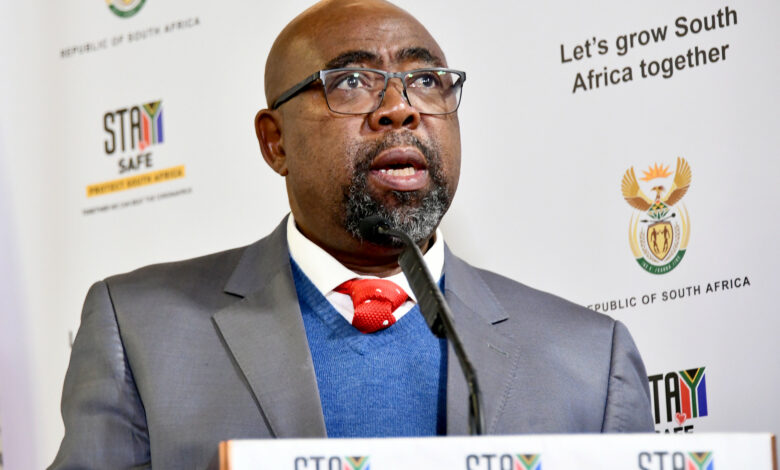
“Corruption has often been seen as an African and developing world phenomenon, mostly because of underdeveloped governance frameworks and lax judicial systems, as compared to richer countries.”
These are the words of acting Public Service and Administration Minister Thulas Nxesi, who says corruption has caused great suffering and harm to the country and the continent.
Nxesi yesterday spoke at the International Anti-Corruption Day Summit, which is being held at Unisa in Pretoria.
International Anti-Corruption Day is celebrated on December 9 to create awareness among people about the impact of corruption on the nation.
Corruption, he said, is a trans-border problem found in all societies, regardless of economic development. Its impact is catastrophic on all societies, as it stifles economic growth and development, and limits opportunities to break the cycle of poverty.
“I would like to emphasise that it also undermines the very essence of our existence and, ultimately, the cohesion of society itself,” Nxesi said.
SA’s action plan
On November 18, 2018, Cabinet approved the National Anti-Corruption Strategy (Nacs), which provides a framework and action plan for South Africa. The Nacs is based on the principle that there should be prevention and combating of corruption through good governance, transparency, integrity management and accountability in society. This includes the early detection of potentially corrupt practices to supplement the reactive measures executed by law-enforcement agencies and other anti-corruption bodies.
Nxesi said the collective effort of society as a whole as well as an integrated approach to the fight against corruption will help mitigate the risk of costly commissions of inquiry, forensic investigations and other legal processes.
Protect the whistle-blowers
Acting Public Protector Advocate Kholeka Gcaleka said there was a need to provide better protection to whistle-blowers.
She conveyed her sincere gratitude to the many courageous whistle-blowers who brought various allegations of fraud and corruption to the attention of the Public Protector and to those who gave evidence at the State Capture Commission.
“I agree that we are indebted to the men and women who executed their functions tirelessly and honestly in our criminal justice institutions; who, without fear or favour, worked to turn testimony presented to the commission into evidence that can now be used in prosecutions.
“We are indebted to the diligent public servants and public representatives, researchers, journalists, activists, workers and businesspeople who uncovered, spoke out against and resisted State Capture,” Gcaleka said.
She said conflicts of interest need to be looked at, especially at leadership level, and encouraged the promotion of media freedom as a tool for fighting corruption.
“Ethical leadership is needed to resist the abuse of entrusted power for private gain, as well as potential interference and to protect the anti-corruption agencies’ operational independence, thus enabling good governance.”
Answers are needed
Chairperson of the National Anti-Corruption Advisory Council Prof Firoz Cachalia said the summit needed to answer urgent questions related to corruption.
“We do not hide from the truth that is self-evident, that our democracy is being damaged by corrupt and self-serving leaders.
“Persons who are elected to high office in a representative democracy are required to act faithfully at all times in the interests of the people and never in the interests of themselves as an elected caste of wannabe oligarchs and plutocrats.
“They should also never place themselves in a relationship of dependence on private economic interests or allow such interests to capture the democratic process for their own selfish ends,” Cachalia said. – SAnews.gov.za
Read original story on highveldernews.co.za

