
Nationwide June 30 protests lead to hundreds of arrests
Despite 120 marches taking place across the country, police said only 12 required intervention following isolated incidents of unrest, looting and violence.
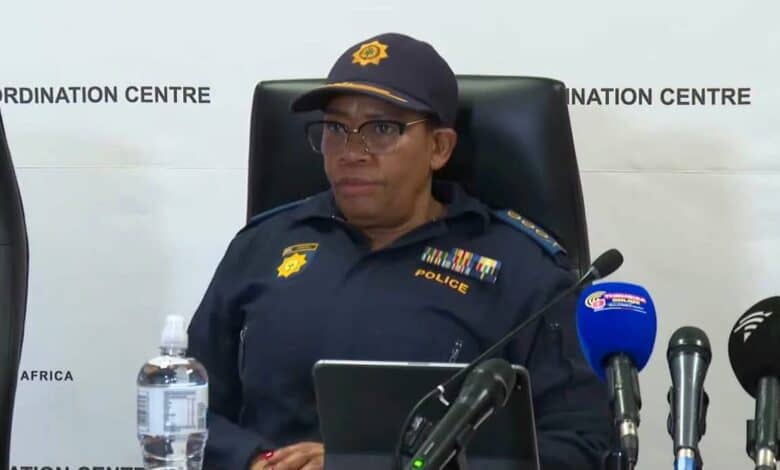
Police said more than 900 people were arrested during operations linked to yesterday’s (June 30) nationwide protests over undocumented migration, with most arrests relating to alleged immigration offences and others linked to alleged criminal activity, including looting and attempted murder.
Lieutenant General Tebello Mosikili, the deputy national commissioner of the SAPS, said 120 known marches took place across the country, with only 12 requiring law enforcement intervention due to incidents of unrest.
“Our law enforcement officers worked tirelessly throughout the night to ensure that peace, safety and stability prevailed. While there were opportunistic criminal elements that sought to exploit the situation, they were identified and dealt with swiftly and decisively by law enforcement,” she said.
Mosikili said reinforcements were deployed to parts of Gauteng, Eastern Cape, KZN, Free State and Western Cape in response to isolated incidents of looting and other criminal activity.
Teen shot in Hillbrow
Although it was not addressed during the briefing, police later confirmed one of the more serious incidents linked to the day’s protests unfolded in Hillbrow, Johannesburg, where two people, including a 17-year-old, were shot and injured.
Police allege three suspects opened fire at protesters passing through the area before protesters retaliated by setting the suspects’ vehicle alight. The three suspects were arrested, and two licensed firearms believed to have been used in the shooting were seized. They are expected to appear in the Johannesburg Magistrates’ Court on charges of attempted murder.
Isolated unrest incidents
The Western Cape was the unruliest of the provinces, recording four incidents of unrest, followed by the Eastern Cape, KZN and the Northern Cape with two each; and Gauteng and Mpumalanga with one each. The Free State, Limpopo and North West reported no unrest.
“Law enforcement agencies acted swiftly to stabilise the affected areas, restore order and prevent any further disruption. The situation remains under control, and the areas remain under constant monitoring,” she said.
Most of the arrests involved undocumented foreign nationals, while other suspects were arrested for alleged offences including looting, public violence, harbouring undocumented immigrants and robberies at spaza shops.
The Western Cape recorded the highest number of arrests (215), followed by the Eastern Cape (208), KZN (153), the Free State (132), North West (83), Gauteng (more than 82), the Northern Cape (51), Limpopo (26) and Mpumalanga (7). The charges include public violence, looting, business robbery and contravention of the Immigration Act 13 of 2002.
Mosikili added that yesterday’s events showed that the country’s democracy can be upheld while maintaining respect for the rule of law.
“Our operations remain active. Law enforcement will continue to monitor developments in the days ahead. We remain vigilant and we remain prepared,” said Mosikili.
Ramaphosa addresses migration and unrest risks
During a meeting with kings and queens on the government’s approach to managing migration, President Cyril Ramaphosa outlined the five pillars that will guide efforts to tackle the issue.
Ramaphosa said the government is targeting immigration and labour law violations while strengthening border security.
It is also rooting out corruption in the immigration system, tightening legislation and working with regional partners to address the causes of migration.
“Migration is not the cause of our problems, but it is something that we must manage constructively and collectively. We are mindful that the recent mobilisation against foreign nationals carries real risks for our communities and for our country.”
He said unrest, violence and intimidation tear at the social fabric of our communities.
“They endanger lives and they damage the standing and the reputation our country has worked hard to build. These developments strain the bonds of brotherhood and sisterhood that unite us with our neighbours on the African continent.”
He said that there is no place for racism, sexism, tribalism, xenophobia, Afrophobia or any other form of intolerance.
“As a country, we need to have a common view and to take a common approach to managing migration,” he added.
Breaking news at your fingertips… Follow Caxton Network News on Facebook and join our WhatsApp channel.
Nuus wat saakmaak. Volg Caxton Netwerk-nuus op Facebook en sluit aan by ons WhatsApp-kanaal.
Read original story on www.citizen.co.za

