
Never return a stranded turtle to the ocean
As turtles strand on beaches because they are in trouble, putting them back into the water could lead to their death.
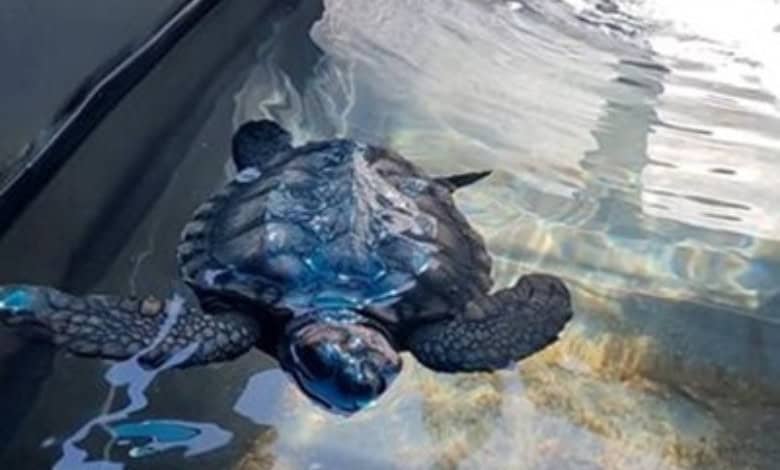
Our beaches are sanctuaries of beauty, but for some marine creatures, they can become places of distress.
According to an article published by Mossel Bay Advertiser, there has been an increase in the number of stranded turtles found along our shores in recent months.
While well-meaning beachgoers often attempt to help by returning these turtles to the ocean, experts warn that this could do more harm than good.
“Turtles strand on beaches because they are in trouble,” says Tracy Whitehead from the Two Oceans Aquarium Foundation’s Turtle Rescue Network.
“Adult stranding season is something we see annually between September and February along our coast. They may be sick, injured, and simply too weak to survive in the wild… Putting them back in the water could very well lead to their death. One major reason for weakness that causes turtles to strand is plastic ingestion and the subsequent inability to feed, plus possible internal infection.”
Why turtles wash ashore
Turtles can become stranded by onshore currents and weather and we are able, to a degree, to predict stranding areas and times by focusing on weather patterns, says Whitehead.
Hatchlings strand when they are pushed into cold Cape coastal waters by wind and rough seas. This usually occurs between March and June, after having been in the warm Agulhas current since first reaching the ocean after hatching. This causes cold shock and hyperthermia which, in turn, causes dehydration and weakness.
How to respond
The most crucial advice for anyone encountering a turtle on the beach is simple – do not return it to the ocean.
Call for help. The Turtle Rescue Hotline (083 300 1663) connects directly to the Two Oceans Aquarium Foundation’s Turtle Rescue Network, a dedicated team that specialises in rescuing and rehabilitating stranded turtles.
In Mossel Bay, you can also call the Stranded Marine Animal Rescue Team (S.M.A.R.T.) on 072 227 4715. It is part of the turtle rescue network and has local volunteers.
Ensure the turtle is out of harm’s way, away from direct sunlight, predators, crashing waves and rocks, and the high tide line. Do this only under guidance. Carefully move the turtle to a well-ventilated container or box, lined with a soft dry towel. Never lift it by the flippers or the edge of the shell but always from underneath the belly.
Ensure that the turtle remains cool, and do not put it into water. Turtles breathe air so they are safe out of water during the rescue process and may drown if submerged while weakened.
A stranded turtle is almost always exceptionally weak and hardly moving. The less it’s moved around or handled, the better.
“We’ve seen it all. Severe infections, amputations from bites or ghost fishing gear entanglements, and malnourished hatchlings that have ingested plastic,” says Whitehead. “But with proper care, many recover and all our turtles are returned to the ocean stronger than ever.”
Rehabilitation often includes weeks, months and sometimes years of medical treatment and monitoring. When recovered, some turtles are tagged for release and their journeys contribute vital research to marine conservation.
Read original story on www.mosselbayadvertiser.com

