
Organ and Tissue Awareness Month: The price organ recipients pay for a second change
An organisation founded by transplant recipients aims to create awareness about the challenges transplant patients and those awaiting a donor go through.
August is National Organ and Tissue Awareness Month in South Africa and Transplant Education for Living Legacies (TELL) wants to ramp up the conversation around transplantation by raising awareness about the importance of organ donation and breaking down barriers preventing those in need from receiving a second chance in life.
The cost of transplantation
Organ transplantation entails various costs beyond financial considerations. The emotional, physical, and societal aspects of transplantation should not be overlooked. Understanding these multifaceted costs can help healthcare professionals, patients, and society at large to better support individuals undergoing transplantation and understand the challenges they face.
Comprehensive care, including emotional support, rehabilitation services, and ongoing education, is vital to address the holistic needs of transplant recipients and their support networks.
Emotional Cost
Along with the physical challenges, there are significant emotional costs that patients and their families may experience throughout the transplantation journey. Here are some emotional aspects that patients and families commonly encounter:
- Uncertainty and Fear: The process of waiting for a suitable donor organ can be emotionally exhausting. Patients and their families may live in constant uncertainty, hoping for a match while fearing the worst if one does not come in time.
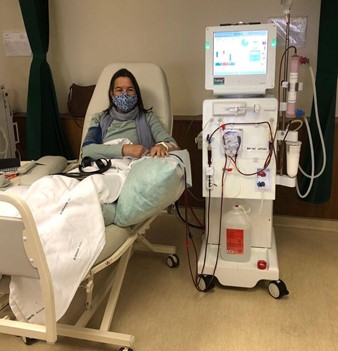
Stella de Kock was diagnosed with end-stage renal failure in 2011 at the age of 35 and has been on haemodialysis since then. She has been on the waiting list for a kidney since 2012 and unlike her kidney function which is almost non-existent, Stella applies her skills and time to TELL.
“I’ve been on the waiting list for a kidney for 11 years, and it is easy to lose hope that a match will be found. Each year you think this year will be my turn. The fear of the unknown plays a role as well, how will your life change when you get a transplant” says De Kock.
- Anxiety and Stress: The anticipation of surgery, the fear of the unknown, and the potential complications during and after transplantation can lead to heightened levels of anxiety and stress.
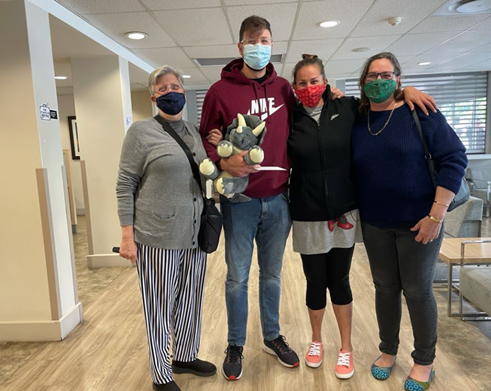
Coreen Walstra was diagnosed with autoimmune hepatitis which is a liver disease where your immune system rejects your liver. She was waitlisted for a liver transplant in 2019, but fortunately, one of her friends came forward and offered to donate part of his liver to Walstra. She now lives a predominantly healthy life and works full-time at a school in Edenvale as a teacher and rowing coach.
“The transplant process and waiting period are not easy on any patient. Chatting to a psychologist regularly made it a little easier to calm the overthinking, and to slow down the constant thoughts rolling in your mind about all of the ‘what ifs’ that popped up,” says Walstra.
- Emotional Rollercoaster: The transplantation process can be emotionally draining, with its ups and downs. There may be moments of hope, setbacks, and various emotions experienced throughout the waiting period and recovery.
“I had several complications right after my transplant. I rode the high of a new liver for two days after the surgery and plummeted emotionally when I found out about [things such as] infections, and fluid leaks that arose. I was in and out of the hospital three times after the surgery within the space of two months and was devastated that there seemed to be no light at the end of the tunnel. My family were incredible at reminding me of the small positives and wins, and it became a real test of focusing on being hopeful and optimistic about making it through it all” says Walstra.
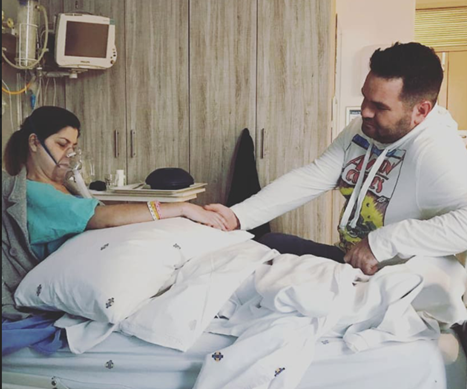
- Depression and Isolation: Patients may experience depression due to the strain of the entire process, potential post-transplant complications, or changes in their quality of life. Social isolation can also occur as the patient needs to avoid exposure to infections.
- Adapting to a new life: Post-transplant, patients and their families must adjust to a new way of living, including managing medications, doctor’s appointments, and potential lifestyle changes. Adapting to these changes can be emotionally challenging.
Fawn Kruger was born in Zimbabwe with cystic fibrosis, a chronic illness that destroyed her lungs and made it necessary for her to have a double lung transplant in 2013.
”Transplant is not a cure and while the primary organ is ‘fixed’ there are still a lot of other issues to deal with and these can become even worse with all the post-transplant medications. Keeping up with doctor’s appointments, tests, ordering medication and living a healthy lifestyle can easily become overwhelming,” says Kruger who is one of three founders of TELL.
- Coping with Rejection or Complications: Transplant rejection or post-transplant complications can be emotionally devastating for patients and their families. Coping with setbacks requires strong emotional support.
Alice Vosloo was born with cystic fibrosis, a genetic illness that made it necessary for her to have a double lung transplant in 2008 at the age of 23, and then again in 2017 at the age of 33. She is the first person in South Africa to survive two bilateral lung transplants.
“Transplant patients live with a constant fear of rejection for the rest of their lives. Five years after my first transplant my body slowly started rejecting my transplanted lungs. It caused me a lot of anxiety, which is not a condition that goes well with declining lung function! Having to undergo various treatments for rejection, and the disappointment of those treatments only working up to a point, which lead to ultimately getting a second transplant, was very emotionally taxing. Facing death for the second time after ‘tasting’ normal life felt cruel,” says Vosloo, co-founder of TELL.
- Pressures on the support team: Transplant is not only a difficult journey for the patient but for their support team as well. When a transplant recipient goes through a rough time, it becomes an emotional burden on their support team.
“The emotional stress is always there and it becomes a harsh reality when things go wrong and she ends up in hospital. It’s tough to always put on a brave face and be the support system when you need support,” says Travis, Kruger’s husband.
- Impact on future planning: Having a transplant means that you always need to factor in your condition when planning your future. This is true when deciding on a career, whether or not to have children and whereabouts you want to live.
“After my transplant, I got my first job and after a few months, I realised that working full-time for someone else is not what I wanted to do. I felt like it put too many restrictions on me, and I wasn’t able to put my health first. I now work for myself and this has been great for my health as I can take days off when I’m not well or need to see doctors,” says Fawn.
- Living with being ‘different’: Even though transplantation is a life-saving procedure, it does not lead to a normal lifestyle. Whilst some patients can live relatively normal lives, others are affected more severely.
To address these emotional challenges, patients and their families are encouraged to seek emotional support from healthcare professionals, counsellors, and support groups such as TELL’s Facebook page. Building a strong support network can help patients and families navigate the emotional aspects of organ transplantation and promote a healthier coping process.
Financial Cost
Organ transplantation can be expensive, and the financial burden may add to the emotional strain on both patients and their families. These costs can be substantial and may include the following:
- Medical aid costs for surgery and immunosuppressive medications: To prevent organ rejection, transplant recipients must take immunosuppressive medications for the rest of their lives. For example, Kruger takes around 60 pills a day.
These drugs can be expensive and constitute a major ongoing cost. Being on a comprehensive medical aid scheme is essential for those that cannot afford it. Government aid is the only other option. Currently, the SA government does not perform or cover costs for lung transplants.
Kruger is on the Discovery Classic Comprehensive plan and pays R7 487 in monthly contributions.
This covers her monthly medical costs totalling R35 000 which consist of:
– Chronic Medication: R23 000
– Diabetes Equipment: R5 000
– Weekly Biokinetics: R5 000
– Other: R2 000
- Follow-up care: Transplant recipients need regular follow-up visits with their transplant team to monitor their health, have diagnostic tests, adjust medications, and address any potential complications. Ongoing rehabilitation and therapy may also be necessary to aid recovery and improve functionality. These services can add to the financial burden.
- Travel and accommodation: For patients who need to travel to a transplant centre for evaluation and surgery, travel expenses, and accommodation costs can be significant. Kruger had to relocate from her home in Zimbabwe (where they don’t offer transplants) to Johannesburg so that she could be listed for a transplant. This was both a financial and emotional challenge for her and her family.
- Lost income: Patients and their family members may face lost income due to the patient’s inability to work during the transplantation process and the subsequent recovery period. Patient recovery varies on what organ they received and how their body responds. Some patients can go back to work after three months while others are unable to work for up to 12 months.
- Non-medical expenses: There may be various non-medical costs associated with the transplantation process, such as meals, transportation to and from medical appointments, and other incidentals. Diet is especially important for transplant patients to maintain their health. These diets can be expensive as they include fresh whole foods which are typically more expensive than non-nutritious ‘junk’ foods.
To help manage the financial burden of organ transplantation, patients and their families should explore their healthcare coverage options, including insurance and government assistance programs.
Independent financial planner Haley Rieckhoff gives the following medical aid tips:
-It’s good to remember that authorisation given by your medical aid does not ensure your procedure will be covered in full.
-Use your broker. They should add value to you and be responsive and available when needed thus ensuring an enjoyable relationship between you and your medical aid. If they are not assisting, find one who will be.
-It is better to be on medical aid before you are diagnosed with a serious condition. You can start with a basic cover and if or when the diagnosis arrives, you can upgrade to something better suited to your needs.
-In some cases, it makes sense to split your family’s membership. If one of you needs comprehensive cover but not everyone in the family, why must everyone pay the higher premium? Have your spouse and children stay on the lower plan and the person needing the enhanced cover can upgrade.
-Gap cover is a valuable add-on to your medical aid as a medical aid has a possibility of not covering your admission in full. You have a variety of different gap cover products available at a variety of different premiums.
-Critical illness cover could help by providing you with a lump sum of money to assist with other unexpected costs, or maybe you just need to go on a three months cruise, what you spend it on is entirely up to you.
-If possible, have income protection in place which can provide for you to still earn your income should you be unable to work for some time.
Despite all the costs, the quality of life that organ transplantation gives means that patients are willing to do anything to find a donor. There is no cost greater than the cost of your life.
For more information about organ and tissue donation, please visit TELL’s social media pages @tellorgza, website or e-mail.
Who is TELL?
TELL (Transplant Education for Living Legacies) was established in September 2018. Two of the three founders, Vosloo and Kruger, are double lung transplant recipients and are therefore in a unique position to contribute to the transplant community.
De Kock joined the team in 2019 and is currently on the waiting list for a kidney. She brings perspective from a patient who has been on the waiting list since 2012. Most of TELL’s volunteers are either waiting for a transplant or have received a transplant. Through awareness campaigns and education initiatives, they aim to lead the conversation surrounding organ and tissue donation in South Africa.
TELL is a registered non-profit and public benefit organisation.
Read original story on www.citizen.co.za

