
Phiri the hyena: Ambassador for misunderstood species
The journey of a spotted hyena living at a sanctuary near Bethlehem is being used to challenge long-held myths about these predators.
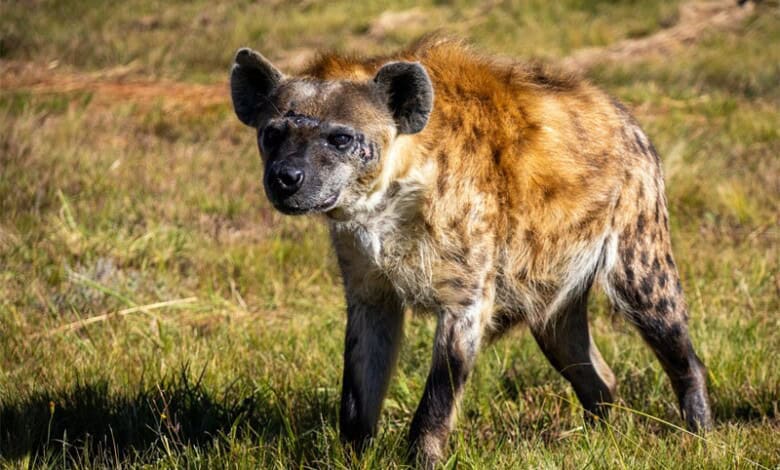
Once forgotten and confined to a life of isolation, Phiri, the rescued hyena, has become an unlikely ambassador for a species too often misunderstood. His nightly calls now echo across the plains of the Free State as a reminder of these animals’ resilience.
As International Hyena Day approaches on April 27, the spotlight turns to this spotted hyena living at Lionsrock Big Cat Sanctuary near Bethlehem, reports Pretoria Rekord.
His journey from neglect to rehabilitation is being used to challenge long-held myths about hyenas and to highlight their ecological importance. International Hyena Day was established to confront misconceptions and to encourage a more balanced understanding of the species. As the only hyena at the sanctuary, Phiri has carved out a unique role among the more than 90 big cats that also call the sanctuary home.
From a barren cage to the Free State plains
Phiri’s story began far from South Africa. In January 2010, he was rescued from a zoo in Jordan where he had been kept in poor conditions, confined to a small, barren enclosure without stimulation, companionship, or the ability to express natural behavior. After his rescue, Phiri was temporarily housed at the New Hope Centre before being relocated in June 2010 to the Free State.
Healing the emotional scars of neglect
What followed was not an instant transformation, but a gradual process of rebuilding trust and rediscovering instinct. “When he arrived, he carried the emotional scars of his past,” sanctuary manager Hildegard Pirker explained. Over the past 16 years, a sense of safety has allowed Phiri’s personality to emerge. He now roams a spacious, species-appropriate enclosure where he can engage in natural behaviors such as scent-marking, exploring, and scanning his environment.
“Today, he moves with confidence and curiosity. His journey reminds us why we fight for stronger protections for all wild animals who suffer at the hands of humans,” said Pirker.
The complex language of a predator
Phiri is now known among staff and volunteers for his distinctive vocalizations. “Phiri reminds us every day how intelligent, sensitive and social hyenas are. Once he felt safe, his entire personality opened up,” explained Pirker.
These vocalizations are often misunderstood. Hyenas are frequently depicted in popular culture as sinister or comical scavengers, and their ‘laughter’ is portrayed as mockery or madness. In reality, these sounds are complex communication signals used to convey information about identity, status, and emotional state. Scientific research supports this view; hyenas live in structured clans with intricate hierarchies and rely on social bonds for survival, making isolation particularly damaging.
Enrichment and a life of dignity
At the sanctuary, Phiri receives regular sensory enrichment designed to stimulate his instincts and keep him engaged. Keepers provide ‘enrichment packets’ filled with scents that encourage him to investigate, roll on the grass, and interact with his environment. Food enrichment is also part of his routine, with treats such as eggs adding variety to his diet.
A species under pressure
Phiri’s transformation comes at a time when hyenas continue to face significant threats in the wild. In South Africa, the brown hyena is listed as Near Threatened, with an estimated population of between 1 000 and 2 000 individuals locally. Globally, numbers range between 4 000 and 10 000, with South Africa serving as a key stronghold.
The spotted hyena, to which Phiri belongs, is classified as Least Concern, with fewer than 50 000 individuals across Africa. While populations remain stable in protected areas, they face ongoing pressures from habitat loss and persecution outside these zones.
Education through transformation
Hyenas are often exploited in captivity, kept as exotic pets, or displayed in facilities that cannot meet their needs. Phiri’s life at the sanctuary stands in stark contrast to that reality. While he cannot be released, he now lives in an environment that prioritizes his well-being and dignity.
His journey has become a powerful tool for education. Visitors and supporters are encouraged to see beyond the stereotypes and recognize the complexity of hyenas as individuals. After 16 years at his Free State home, Phiri’s transition from a neglected zoo animal to a sanctuary ambassador is complete.
Breaking news at your fingertips… Follow Caxton Network News on Facebook and join our WhatsApp channel.
Nuus wat saakmaak. Volg Caxton Netwerk-nuus op Facebook en sluit aan by ons WhatsApp-kanaal.
Read original story on www.citizen.co.za

