
SA’s oldest practising specialist Dr John Callaghan prepares for 100th birthday
As he approaches a century of life, a veteran ear, nose and throat surgeon reflects on more than 70 years of medical breakthroughs, devoted patient care and staying active at 99.
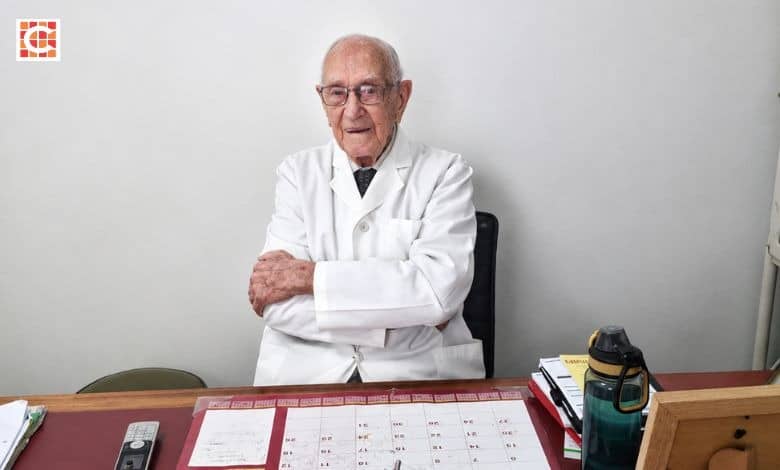
His life has spanned nearly a century, from starting his studies during World War II and living through apartheid to embracing modern technology and AI.
He has lived through these historic events, and now, just two weeks shy of his 100th birthday, the country’s oldest practising specialist, Dr John Callaghan, says he has embraced it all.
He remains one of the country’s leading ear, nose and throat (ENT) specialists, securing a permanent place in South African medical history as a foremost expert in voice and larynx disorders.
“A true pioneer in his field, he was among the first ENT surgeons to acquire a video stroboscope, bringing advanced video recording and analysis of the vocal cords to local medicine,” writes Dr Louis Hofmeyr in a tribute to Callaghan.
However, Callaghan remains humble, saying everything he did throughout his career was for his patients.
Patients have a soul
Although he embraced technology – ‘it makes a doctor’s life so much easier’ – he does not believe in the ethics of ‘so-called quick specialists’ overcharging their patients, diagnosing them after just 15 minutes and pushing a prescription into their hands. “I believe the body is not fragmented. You work with people who have a soul, not with cattle or donkeys. Every complaint has a reason.
“Sometimes a patient comes with a pain in the ear or nose that actually has to do with a larger, deeper underlying problem, such as hidden cancer or vocal cord lesions that an experienced doctor must be able to identify immediately.”
Callaghan’s memory is still as sharp as a scalpel. He recalls, for instance, seeing a 20-year-old student for laryngitis, but when he looked closer, it was a cancer on her vocal cord that everyone else had missed.
And he remembers one of the first patients he helped find her voice. She could not speak, and other specialists had given up. Not him. He operated on her larynx nine times. Then, one day, she opened her mouth and he could hear her voice.
“I can now call my children, doctor,” she cried – while her young children heard their mother’s voice for the very first time.
Always suited up
Memories fill his head. “There are so many,” he says, sitting behind his desk in his consulting rooms close to Life Brooklyn Day Hospital in Pretoria on a Wednesday morning. He is always dressed in a suit, tie and all, complete with his white doctor’s coat.
“No,” he says, shaking his head, “I don’t understand this new generation of doctors who dress in jeans and takkies. No respect for their patients.
“During my medical studies at the University of the Witwatersrand in the 1940s, the professors were strictly trained in the Netherlands or Scotland. Students had to appear neatly dressed in the conference hall; if you weren’t dressed properly, the professor immediately corrected you: ‘You are not properly dressed!'”
And it has been like that for him for more than 70 years.
His hearing is fading, and he will often ask politely for a question to be repeated. He broke both his hips over the span of a year, but he has ‘his third leg’ – a trusty walking stick.
“And I have my two beautiful receptionists, Sania du Plessis and Mariana White,” he says. “They are my support.”
He still has a sparkle in his eye when looking at pretty women.
Throughout his decades in medicine, the anchor of his world was the love of his life, who he affectionately called ‘Oumiesies’.
They were happily married for nearly 65 years. When she became bedridden during the final three years of her life, he cared for her entirely at home until the end, washing her, managing catheters, turning her at night and tending to her every need.
After she passed away eight years ago, he continued living in his house, maintaining his independence until a severe health crisis with Covid-19 eventually changed his living arrangements. “I am living with my only son now. He is 74 years old and manages my practice. They are good to me.”
Surgeries until the age of 98
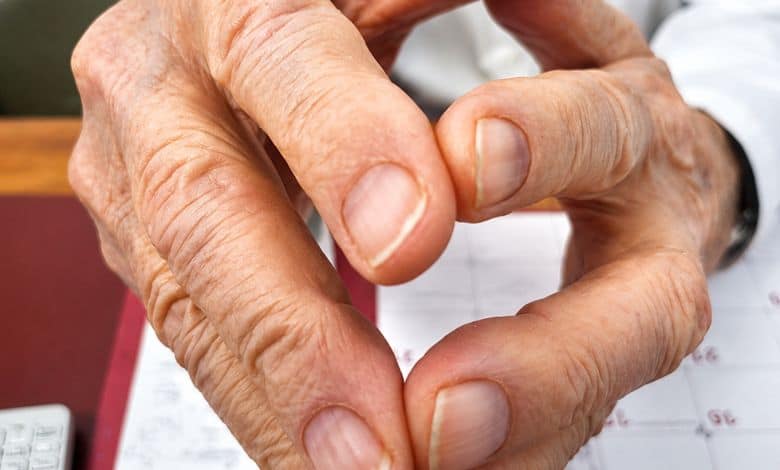
He folds his arms. His hands, his strongest asset, show no sign of a tremor, despite the age spots that cover them. Once, his eyes were like a hawk’s – sharp and all-seeing. Those are the reasons why he performed surgeries up to the age of 98, from patching torn eardrums and inserting tiny tubes to drain fluid to vocal cord and neck operations.
He had a big practice at the Mediclinic Medforum Hospital.
“I saw up to 13 patients a day,” he says.
In February, he decided to scale down. “Not retiring,” he says. “I still see my patients, but only in the mornings. In the afternoons, I go to the gymnasium,” he says, smiling. “Yes. Competing with the young males in the muscle-building section,” he muses.
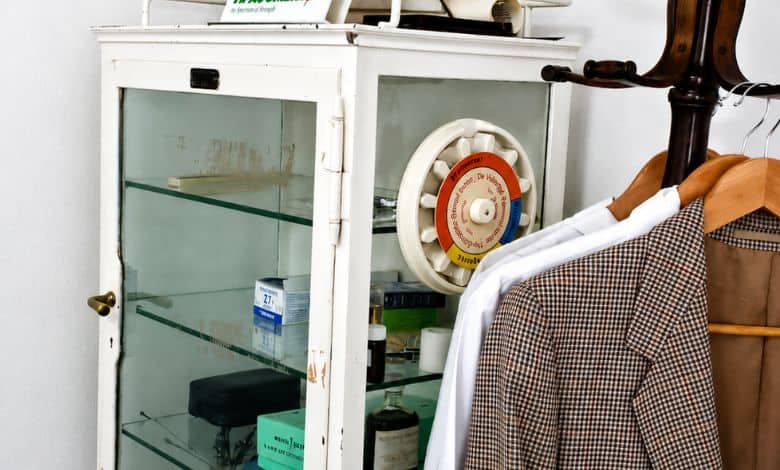
He doesn’t own a computer. Instead, a paper desk calendar anchors his workspace, while a heavy, solid steel case from London, dating back to the 1940s, stands in the corner, a vintage vault where he stored his medical instruments for decades.
Money was never the reason
Although he is a specialist with a long history of patients and operations, money was not the biggest reason he remained in medicine for so long. He thinks modern doctors have become too monetary, always chasing financial gain.
“I made enough money to assist me in buying a small aeroplane – yes, I have my pilot’s licence – but the only reason for that indulgence was the fact that I did not want to drive to conferences or seminars in Africa. I also bought two farms, but both are sold now. Those were my hobbyhorses. My fun.
“And now, I have enough to last for the next phase of my life. But I never indulged in expensive cars and holidays. Money was never the reason why I became a doctor.”
Roots in Groot Marico and Wits
Born in Lichtenburg in the North West, with roots tracing back to Cork in Ireland, where the Callaghan castle remains in the family’s possession, a sharp mind made his career path inevitable. “At that stage, we did not have a big choice. It was either the University of Cape Town or Wits.”
Wits offered an eye-opening refuge of progress long before the rest of South Africa caught up. “I remember that we had female and black medical students. My studies opened a new world for me, a place where females and people of colour were treated the same.” Many of his black colleagues returned to serve their rural communities after graduating, and he did the same thing.
He headed to Groot Marico in the North West, famously known as Bosman country (referring to the author Herman Charles Bosman). “I practised there for 14 years before specialising. Those were good days.”
As the district doctor, he was a one-man medical lifeline, handling everything from delicate baby deliveries to complex diagnoses.
“Sometimes I worked up to 14 days with no rest. There were always sick patients to help.”
Balancing that relentless demand required fierce dedication. Patients always came first, but family was equally vital. When he set out on exhausting district visits, his wife and children would drive with him, turning the lonely rural roads into their own version of family time.
Courage in general practice
Back then, working as a general practitioner demanded a fearless brand of medicine that modern specialists would rarely dare attempt, he says. He recalls a perilous birth where the mother’s water had broken, and a tiny arm presented instead of a face – a crisis that would have killed both mother and child without instant intervention.
“I decided to push the arm back and turned him manually. He is a healthy, strong man today.”
In another critical case, an infant was born without an anus. Right there on the spot, he didn’t hesitate to perform a swift, life-saving corrective operation. “When he was a bit older, he went for reconstructive surgery,” he says.
With that, Callaghan wraps up the interview – it is time for his gym session. He is a hugger; opening his arms wide to pull you in. He smells of medicine, of life and love.
His birthday is on August 12. “I think my son is having a surprise party. I am not supposed to know,” he winks.
In September, he will attend the Wits Founders’ Tea, an exclusive annual alumni event honouring graduates of 40 or more years. He attends it every year, though none of the faces is familiar anymore.
He is the last one standing. His former colleagues and friends have long since passed.
Breaking news at your fingertips… Follow Caxton Network News on Facebook and join our WhatsApp channel.
Nuus wat saakmaak. Volg Caxton Netwerk-nuus op Facebook en sluit aan by ons WhatsApp-kanaal.
Read original story on www.citizen.co.za

