
Typhoid in Bronkhorstspruit: Political battle erupts over water crisis
While political parties trade accusations over a small Gauteng town’s water crisis, residents face the consequences as a growing number of typhoid cases are reported.
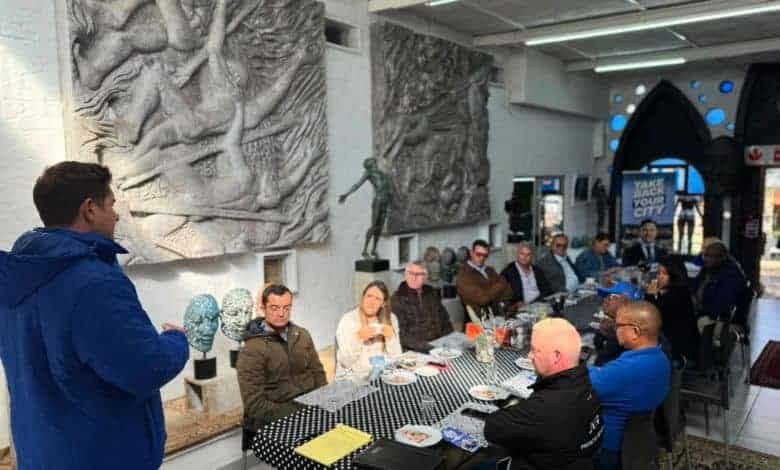
Bronkhorstspruit has become a political battleground ahead of the elections, with the DA accusing the City of Tshwane of prioritising the ‘water tanker mafia’ over the health and well-being of residents.
DA Tshwane mayoral candidate Cilliers Brink said earlier this week that Bronkhorstspruit, a town east of Pretoria with about 66 000 residents, had recorded several cases of typhoid fever over the past six months.
The Bronkhorstspruit Water Treatment Plant has become a focus of claims about the alleged outbreak. According to Brink, the plant’s capacity has been declining for months. He said the Department of Water and Sanitation reported in November last year that it was operating at 38 megalitres a day, below its 54-megalitre daily capacity. Brink said the plant was now producing only 15 megalitres a day.
The Tshwane metro is not treating the typhoid threat with sufficient urgency, he said.
The National Institute for Communicable Diseases (NICD) reported 60 laboratory-confirmed cases of typhoid fever in the City of Tshwane between January 1 and July 29. Of these, 31 patients presented at Bronkhorstspruit Hospital, while additional people living in the Bronkhorstspruit area sought treatment at healthcare facilities in Pretoria.
Although the NICD was unable to provide statistics for August and September, it has reported an increase in cases in the Bronkhorstspruit area but stressed that no typhoid fever outbreak has been declared in South Africa.
According to the NICD, typhoid is a category one notifiable medical condition (NMC), and healthcare professionals are required by law to report any suspected or confirmed case through the NMC surveillance system. Untreated, the NICD says the bacterial disease can lead to severe, life-threatening complications, which typically manifest between two and four weeks after infection.
While Brink stressed that the DA was not claiming a confirmed epidemiological link between the water treatment plant and individual typhoid cases, he said the broader concern was the public health risk when residents could not rely on a consistent water supply.
“The responsible approach is to restore reliable potable water, continuously test water quality, investigate confirmed typhoid cases with the relevant health authorities, make the results transparent and eliminate potential exposure pathways.”
The condition of the plant has nevertheless become a central part of the political dispute.
ActionSA refutes claims
ActionSA has accused the previous administrations of allowing the water treatment plant to deteriorate through years of inadequate maintenance.
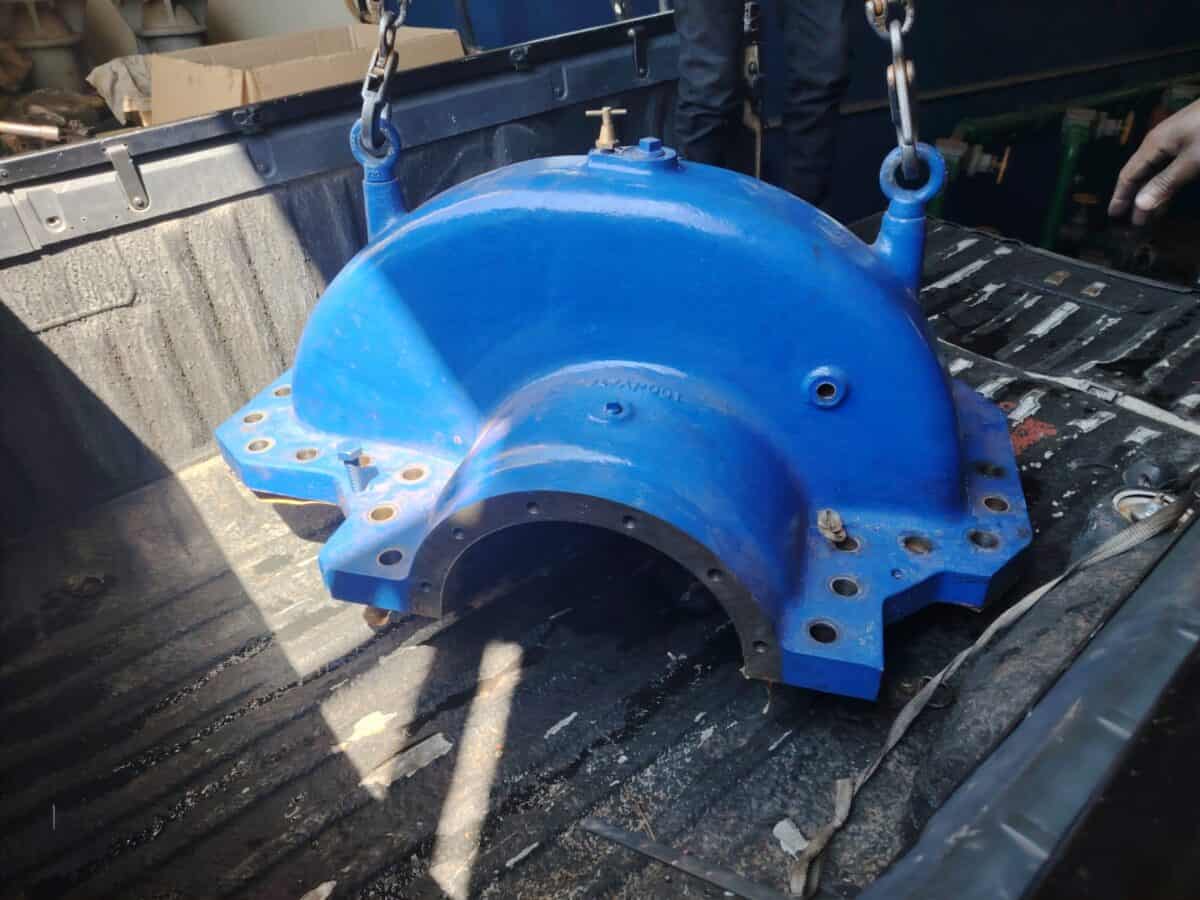
ActionSA councillor Cobus Coetzee said the City of Tshwane (CoT), under Executive Mayor Dr Nasiphi Moya, had implemented urgent interventions since October 2024, including new high-lift pumps, switchgear and electrical panels, as well as new raw water extraction pumps. “The plant is in perfect working condition,” he said.
He said CoT had also allocated R57m for upgrades to the plant during the 2026/27 financial year as part of its water stabilisation plan. “The interventions were aimed at addressing long-standing water supply challenges in Bronkhorstspruit and surrounding communities in Region 7.”
Figures may not reflect full extent of infections
Politics aside, it is the residents of the town who feel the impact of the water crisis. While most residents of Bronkhorstspruit town do not depend on tap water but instead use borehole or bottled water, residents of nearby informal settlements such as Zithobeni, Ekangala and Rethabiseng face greater challenges.
Although a typhoid outbreak has not been declared in the area, an investigation by Caxton Network News found that the available figures may not reflect the full extent of typhoid infections in Bronkhorstspruit.
The area has no private hospitals or clinics that could provide additional figures on patients diagnosed or treated for typhoid fever. Caxton Network News also contacted clinics and the public hospital in the area for confirmation, but after two days of attempts, none had answered their phones.
A doctor who spoke to Caxton Network News on condition of anonymity said he had treated patients presenting with symptoms consistent with typhoid fever, including headaches, extreme tiredness and weakness, stomach pain or cramps and diarrhoea or constipation.
Residents speak out over contaminated water
A long-time resident, who also asked to remain anonymous, said that the previous week she had brushed her teeth with what she described as ‘ugly brown water’ and had diarrhoea for two days afterwards.
She said residents have been previously warned not to use the water, even for brushing their teeth. “So, why do we have water?” she asked.
A Rethabiseng resident, who wishes to remain anonymous, said politicians can say whatever they want, but the water problem in Bronkhorstspruit is real and the water is indeed undrinkable. She said she spends around R200 a month on drinking water because residents can no longer use their taps.
“Most of the residents who cannot afford bottled water have to rely on the water tanks, which often do not supply sufficient water for consumption,” she said.
Penuel Mahlangu, a community leader and founder of the Kids Care and Support Trust in Zithobeni, said the water shortages had been affecting communities in Bronkhorstspruit and surrounding areas for a long time.
“Week in, week out, we are struggling with water,” Mahlangu said.
Mahlangu, whose organisation runs a drop-in centre in Rethabiseng and in Zithobeni, said the shortage had become particularly difficult for vulnerable families who could not afford to buy bottled water or travel to find alternative sources.
He said some residents had resorted to collecting water from a nearby river when municipal water was unavailable.
“When there’s no water, people go there, get that river water, boil it and use it,” he said.
According to Mahlangu, some residents used the river water for bathing, while those who had no other option also used it for cooking and other household needs.
Mahlangu said water tankers were also ‘very, very scarce’ in areas such as Zithobeni and Ekangala, leaving residents with few alternatives during prolonged outages.
He said the consequences extended beyond households to community organisations providing essential services.
“It’s really painful living in our centres and struggling when there’s no water. We have to shut down and not work,” he said.
The Kids Care and Support Trust provides food to children through its drop-in centre, meaning water shortages can affect its ability to operate.
“Normally we feed kids, so if we don’t work it means those kids who are eating in our centres won’t be able to get something,” Mahlangu said.
Mahlangu said the political arguments did little to help residents living with the consequences. “They are fighting among each other. But what about the residents?” he said.
He said he believed political parties were using the crisis to campaign against one another.
“Those who are saying other parties were not doing anything, those who are coming in, they are also campaigning, just like the other ones,” he said.
Mahlangu said the water crisis should instead be treated as a basic service delivery issue. “Having clean drinking water is a basic human right,” he said.
He questioned why the problem remained unresolved despite Tshwane reportedly allocating R57m towards upgrades at the water treatment plant.
“If they wanted to do something, these are not problems that cannot be solved. These are problems that can be solved,” he said.
Water tankers become election issue
Water tankers have become a key theme of Brink’s election campaign.
He said tankers have a role during genuine emergencies but should not become a substitute for functioning infrastructure.
“Our objective is simple: Water in taps, not permanent dependence on water tankers.”
“The real victory against the tanker mafia comes when communities no longer require tankers in the first place.”
City of Tshwane silent on questions
Caxton Network News sent the City of Tshwane 24 questions on Monday (September 21) about the deterioration and current operational status of the Bronkhorstspruit Water Treatment Plant, funding for its refurbishment and the ongoing use and cost of water tankers.
The questions also sought clarity on tanker procurement and alleged irregularities, as well as the latest water quality testing and any possible link between the plant and typhoid cases reported in the area.
The city’s media team requested an extension, citing the technical nature of the questions, and undertook to respond by Tuesday (September 22). At the time of publishing, no comment had been received.
Breaking news at your fingertips… Follow Caxton Network News on Facebook and join our WhatsApp channel.
Nuus wat saakmaak. Volg Caxton Netwerk-nuus op Facebook en sluit aan by ons WhatsApp-kanaal.
Read original story on www.citizen.co.za

