
Veld fires and rip currents: What you need to know
The festive season brings an increased risk of rip current and veld fire injuries and deaths, with an average of 56 annual drownings from rip currents and 34 fire-related fatalities recorded last year.
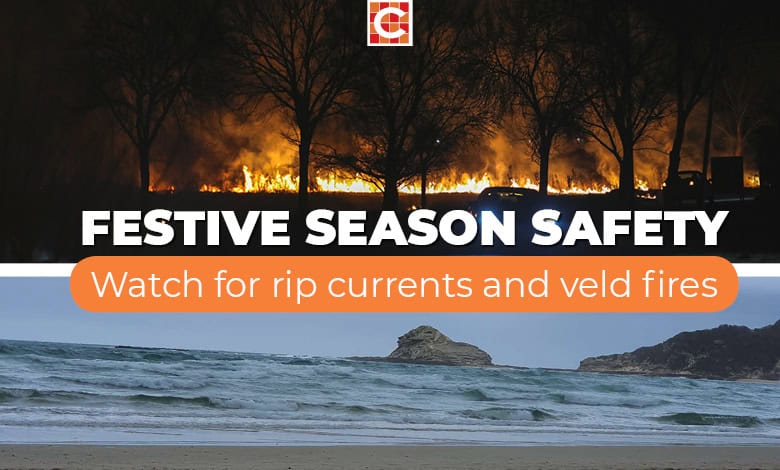
The holiday season is here and among all the cheer, there are elements of nature that often cause tragedy during this joyous time. The best way to avoid tragedy is to be aware of two factors: Veld fires and rip currents, which contribute to numerous deaths during the season.
Rip currents are a significant cause of water-related incidents along South Africa’s coastline, with National Sea Rescue Institute (NSRI) statistics showing multiple rescues during the festive season. The NSRI’s Pink Rescue Buoys have played a crucial role in saving lives, demonstrating the importance of public awareness. In addition, the South African Weather Service (SAWS) has developed a rip current forecasting model for six high-risk Cape beaches.
While rip currents are a natural phenomenon, many veld fires are the result of irresponsible behaviour.
Caxton Local Media contacted the NSRI and SAWS for valuable insights into rip currents and fire safety.
Rip currents prevalence
According to SAWS marine scientist Carla-Louise Ramjukadh, rip currents often form due to ‘strong onshore winds, large waves and tidal variations’, which push water toward the shore, creating pressure that eventually forces water to rush seaward through gaps in sandbars.
They are dangerous because they can quickly drag swimmers out to sea.
Summer conditions amplify the risk, with stronger winds and higher wave activity making rip currents more prevalent. “Larger waves carry more energy, increasing the amount of water pushed toward the shore and intensifying rip current formation,” she explains.
Beaches in the Eastern Cape, KZN and the Western Cape are particularly prone to rip currents due to their geographic features and exposure to powerful swells.
- Eastern Cape: Beaches exposed to southeast swells face high rip current risks due to large waves and coastal geography. Surf spots in the region are particularly hazardous during strong offshore winds and stormy conditions.
- Western Cape: Rip currents frequently form during high swells or southeasterly winds, especially along beaches exposed to south and southwest waves. False Bay is a hot spot, with sandbars and reefs channelling water back into the ocean during large wave activity.
- KZN: Warm Indian Ocean waters, seasonal winds and large waves heighten rip current risks, especially in summer. Northern areas like the Wild Coast see frequent rip currents due to their strong waves and varied coastal features.
Ramjukadh highlights a new rip current forecasting model designed to improve coastal safety. This system, currently monitoring six Cape Peninsula beaches, uses data like wave height and wind direction to assign daily ‘rip-risk’ levels.
“This risk level indicates the likelihood of rip currents forming based on factors such as wave height, wave direction, tidal stages and wind characteristics. The system produces daily forecast outputs, including the highest rip current risk by time and location.”
The data is presented in a practical, colour-coded format, making the information actionable for lifeguards, emergency responders and beach managers.
She adds that the potential impact of these models is significant. “They enable lifeguards to issue timely warnings, helping prevent rip current-related injuries and fatalities. Beachgoers can access forecasts via the website, making informed decisions about when to visit specific beaches.”
Plans are underway to expand this system to more beaches, aiming for nationwide coverage to reduce incidents and fatalities.
Ramjukadh notes that many swimmers fail to recognise the danger of a rip current.
“Most people don’t know how to escape a rip current; trying to swim directly back to shore against the current can be exhausting and futile,” she explains.
During the festive season, the number of beachgoers increases significantly, leading to more swimmers in the water. This higher number of people raises the risk of rip current accidents, particularly when individuals are unaware of the danger.
Ramjukadh says, in comparison, other hazards such as wave impact, surf injuries, encounters with sharks and marine life and sunburn or heat stroke are less common and generally less fatal than rip currents.
She believes public education, combined with advanced forecasting, remains vital to ensuring beachgoers’ safety during the busy festive season.
56 people drown annually – NSRI
NSRI communications manager Andrew Ingram says there are an average of 56 drownings annually due to rip currents. Since the launch of the NSRI Pink Rescue Buoys in November 2017, the initiative has saved 199 people, with approximately 33 rescues each year involving rip currents.
According to him, rip currents can reach speeds of almost 3m per second, faster than an Olympic swimmer.
To help beachgoers identify rip currents, Ingram highlights several visual cues: Darker water, gaps between waves and choppy surfaces.
How to escape a rip current
It is important to note that a rip current will not pull you under the water. Thus, as long as you can float, you should be OK.
Ingram advises that swimmers stay calm and swim parallel to the shore if caught in a rip current. They should also signal for help.
Remember, he says, the safest place to swim is between the lifeguard flags, where lifeguards are on duty.
Fire danger
On the back of one of the deadliest fire seasons, which broke several records and claimed 34 lives, extra care needs to be taken this festive season.
SAWS senior forecaster Kate Turner urges: “Take caution when making fires, particularly in windy conditions. Fires that are not controlled can easily spread. Do not toss cigarette stubs or glass bottles in the veld or on the side of the road. These can spark fires.”
She adds that there will always be room for improvement in forecast and warning systems but explains that SAWS, in collaboration with other stakeholders, is working on a project to develop a new fire danger index for South Africa. It should be completed in 2029, Turner says.
Read original story on www.citizen.co.za

