Volkswagen unveils new T-Roc with hybrid power and bold design
The second-generation T-Roc boasts a hybrid option, fresh design and new tech, but South African approval remains uncertain.
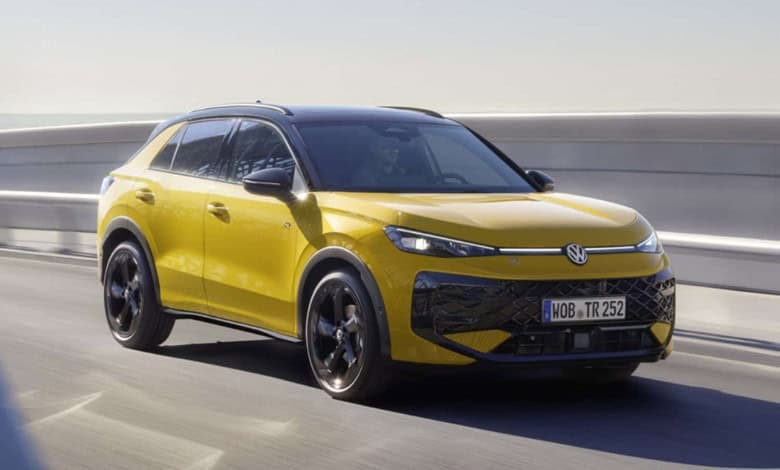
Having been in production since 2017, Volkswagen has officially revealed the second-generation T-Roc ahead of its market introduction in Europe in November.
The Citizen reports that long regarded as one of Wolfsburg’s most important models, the replacement for the original – which only became available in South Africa five years ago – debuts a completely new look derived from certain Chinese-market models, while also becoming a hybrid for the first time.
Billed as a ‘major leap’ over its predecessor, the T-Roc moves from the MQB platform to the updated MQB Evo shared with the Golf Mk8.5. Its dimensions are an overall length of 4 373mm, wheelbase of 2 631mm, height of 1 562mm and width of 1 828mm.
With respective increases of 122mm, 28mm and 9mm in the case of the latter pair, boot space has also improved by 20-litres to 465-litres with the rear seats upright.
Design
Styled not only similar to some of its siblings hailing from the People’s Republic, but also to sister brand Cupra, the T-Roc retains the coupe-styled silhouette of its predecessor but with a rounded facia at the front, complete with a thin illuminated grille, angular LED light clusters and a sportier bumper with gloss black detailing on the flagship R-Line.
Riding on alloy wheels up to a first-time 20-inches, the rear is dramatically more evolutionary than the front.
Besides a new bumper and an imitation diffuser with faux quad exhaust outlet tips, the bootlid and design of the window have remained the same as before. However, an illuminated full-width LED bar now connects the restyled light clusters.
A newly scripted T-Roc logo directly underneath the illuminated Volkswagen badge completes the exterior, along with six colours: Pure White, Wolf Grey Metallic and four new additions – Canary Yellow, Grenadilla Black Metallic, Celestial Blue Metallic and Flamed Red Metallic.
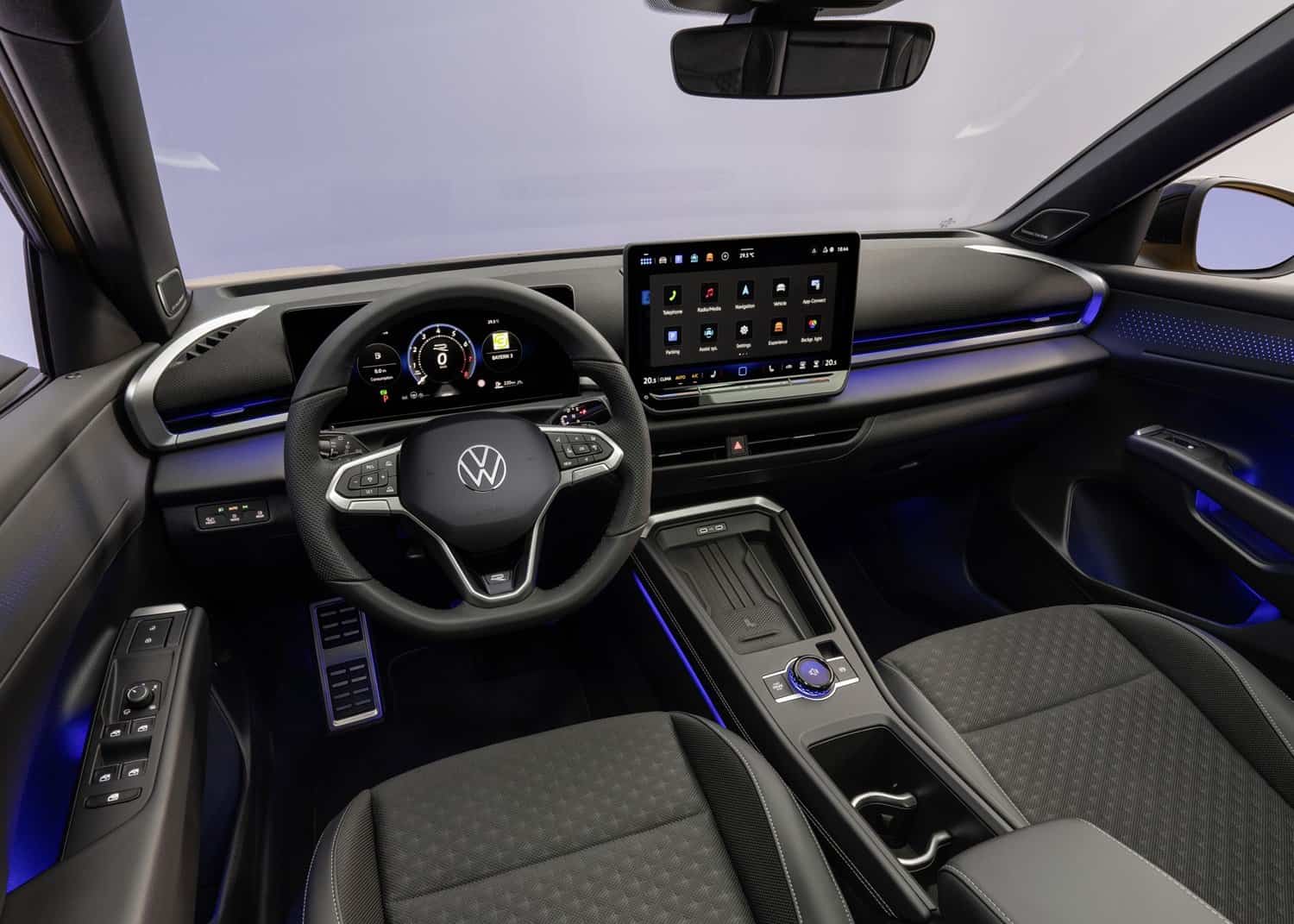
Tiguan inside
Inside, the cabin borrows heavily from both the Tiguan and Tayron in look and design, including the 10-inch Digital Cockpit instrument cluster as standard and a pair of freestanding infotainment displays measuring either 10.4 or 12.9-inches.
Despite the retention of physical buttons on the steering wheel, the much-criticised touch sliders for the audio system and climate control remain, but now feature illumination.
Down the centre, the console has been redesigned to include a lidded smartphone charging pad, starter button and multi-function dial for the drive mode selector and sound system.
The new layout means the gear selector has moved to the steering column, bringing an end to the manual gearbox still available in certain European markets.
Exact specifications will depend on trim grades, of which five will be made available in Germany: Base, Life, Style and R-Line. Noted items include electric, ventilated and heated front seats with a massaging function, a Harman Kardon sound system and a full suite of safety and driver assistance systems.
First-time hybrid
On the power front, the T-Roc will, initially, only be powered by the mild-hybridised 1.5 eTSI Evo engine in two states of tune: 85kW/220Nm and 110kW/250Nm. Both are connected to a seven-speed DSG with drive to the front wheels.
Debuting next year will be a 2.0 TSI unit with and without mild-hybrid assistance, the 4Motion all-wheel drive system and two new full-hybrid models.
Also confirmed to return is the flagship T-Roc R. However, a full electric variant has not yet been approved.
South Africa not yet approved
Production will once again take place at the Palmela plant outside the Portuguese capital, Lisbon. In Germany, pricing will start at €30 845 (about R634 340, directly converted and excluding taxes).
For the moment, it remains unconfirmed for South Africa and will most likely only receive approval sometime in 2026 if deemed suitable by Volkswagen Group Africa.