Holden Hurricane: The 1969 concept car that redefined Australian design
Long before modern navigation and digital displays, a wedge-shaped Holden showcased futuristic technology that was decades ahead of its time.
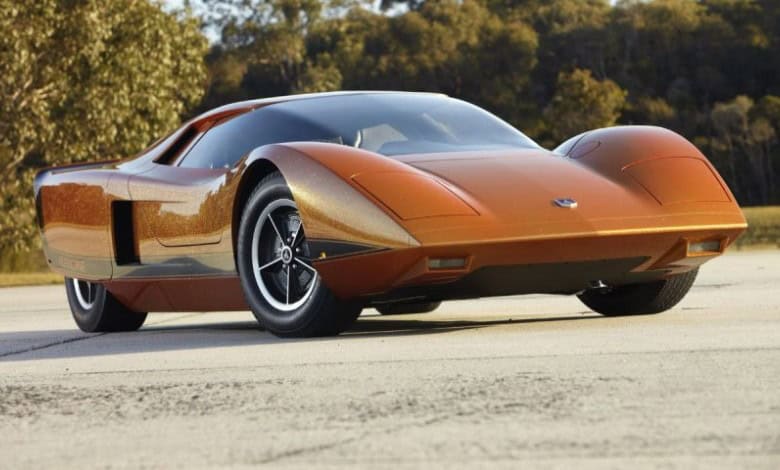
In 1969, Holden unveiled the radical Hurricane, a wedge-shaped concept car that showcased aerospace technology and advanced engineering far ahead of its time.
When thinking of Australia’s contribution to the automotive world, rugged SUVs and ‘utes’ (bakkies) may come to mind before futuristic concept cars. However, the launch of the Hurricane arrived just before some of the most famous concept cars of the 1970s, including the Maserati Boomerang, Lancia Stratos Zero and Alfa Romeo Carabo.
At the heart of Holden’s brief for the Hurricane was an investigation into the ‘feasibility of applying aerospace techniques and materials to the manufacture of future Holdens’. While much of the technology showcased by the concept never made it into production, one significant development did: its engine.
The low-slung Hurricane featured lightweight fibreglass body panels and a hydraulically operated one-piece canopy instead of conventional doors. Beneath the bodywork was a tubular spaceframe housing the first example of what would become Holden’s famous V8 engine.
The 253, a 4.2l V8 known as the ‘Iron Lion’, replaced the US Chrysler-sourced small-block V8s that had powered many Holden models since the 1950s. Between 1969 and 1984, the engine was fitted to around 500 000 Holden vehicles, including the Monaro, Commodore and Torana.
Like Ford’s GT40, the Hurricane used a mid-mounted engine and a four-speed transaxle. Producing 193kW while weighing just 1 020kg, the concept also featured an innovative disc-braking system with oil coolers designed to combat brake fade.
The Hurricane’s technology extended well beyond its powertrain. It featured digital instrumentation, a rear-view camera and, most notably, an early navigation system called Pathfinder.
The driver fed a route into the car’s onboard computer using a punch card. Sensors beneath the car then detected signals from magnets buried at road intersections. Pathfinder processed the information and guided the driver using turn-by-turn arrows displayed on the dashboard, accompanied by a warning buzzer.
The system was rudimentary by today’s standards, but it was an extraordinary concept for 1969, particularly as the Hurricane was unveiled before the Apollo 11 moon landing.
After serving as a showcase for Holden’s technological and powertrain developments, the Hurricane was placed in storage. It escaped the scrapyard twice before being fully restored to its former glory in 2011.
The concept remains a remarkable piece of Australian automotive history and a reminder of just how ambitious Holden’s engineers were at the dawn of the 1970s.
Click here to browse thousands of new and used vehicles here with CARmag!
The post Cool concepts: 1969 Holden Hurricane concept appeared first on CAR Magazine.
Breaking news at your fingertips… Follow Caxton Network News on Facebook and join our WhatsApp channel.
Nuus wat saakmaak. Volg Caxton Netwerk-nuus op Facebook en sluit aan by ons WhatsApp-kanaal.