Law enforcement agencies and the Border Management Authority have found discrepancies in passenger numbers at various points along the N1.
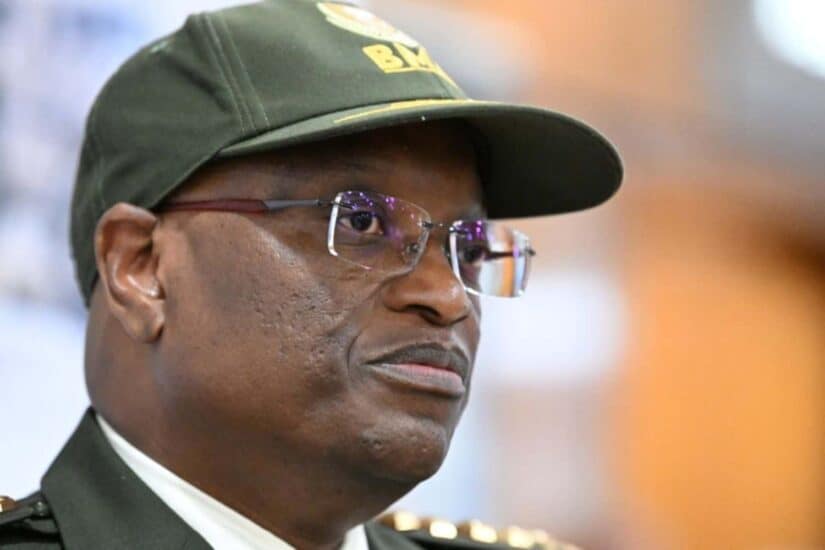
Border Management Authority (BMA) Commissioner Michael Masiapato. Picture: Gallo Images/Lefty Shivambu


Law enforcement agencies will increase their presence on the main route used by foreign nationals entering and leaving Limpopo.
The Border Management Authority (BMA) has identified a worrying trend where vehicle passenger numbers recorded at the border do not match those observed further down the N1.
To combat this issue, permanent checkpoints, improved passenger manifests and mandatory weighbridge stops will be implemented.
BMA Commissioner Michael Masiapato confirmed the new measures during a briefing on a drug bust at the Beitbridge border post.
Border security officials on Thursday discovered 713kg of methaqualone, a key ingredient in the manufacturing of mandrax.
24/7 N1 roadblock
Masiapato was joined by Minister of Home Affairs Leon Schreiber on Friday to celebrate improvements in border security.
The commissioner said that while procedures were tightening at ports of entry, illegal entry into South Africa was still occurring via river crossings and other unguarded parts of the border.
He explained that buses and trucks carrying foreign nationals often met all the paperwork requirements when crossing into the country, but were later found with additional human cargo.
Citing two examples in recent months, he said buses were intercepted in Polokwane and Bloemfontein with vastly more passengers than recorded at the border.
Masiapato stated that the extra passengers were believed to have been picked up on or near the N1 after they had made it back to the main road after crossing into the country at other points.
While the BMA could not patrol every section of the border, the commissioner said it would focus on areas it could control, namely, roadblocks and vehicle scrutiny.
“From today, there is going to be a 24/7 roadblock at the particular tollgate, and that is at Boabab,” Masiapto confirmed during a media question and answer session.
“We agreed that we are not going to accept a passenger manifesto that is handwritten. We have agreed that all buses when they exit Beitbridge, all of them are going to be compelled to go to the weighbridge,” he added.
Digitisation of documentation
On the hand-written passenger manifestos, Masiapato stated that drivers were collecting passengers en route and adding their names to the manifesto as the journey went.
Regarding the weighbridges, he said vehicles were previously selected at random for weighing, but that now it would be tightly monitored.
Additionally, the BMA were now going to insist on electronic cross-border permits, as paper documentation was proving to be exploitable.
This digitisation was in line with Schreiber’s push to modernise South Africa’s ports of entry,
Schreiber called Thursday’s drug bust the “biggest breakthrough against the drug trade in South African history”, and championed the use of drone and body cameras throughout BMA operations.
“This singular breakthrough vividly demonstrates our investment in intelligence-driven work, modern technology, digital transformation and building a new organisational culture, exemplified by BMA personnel.
“When you add in the intelligence work, when you add in the surveillance technology, it is methodically securing South Africa’s borders,” said the minister.
Three suspects have been arrested in relation to the drug bust – one Zambian male and a male and female from Malawi – and the investigation has been handed over to the Hawks.