



Three years on, Asca emergency ETD tender sits unused after irregular procurement, late delivery and millions spent before an audit.
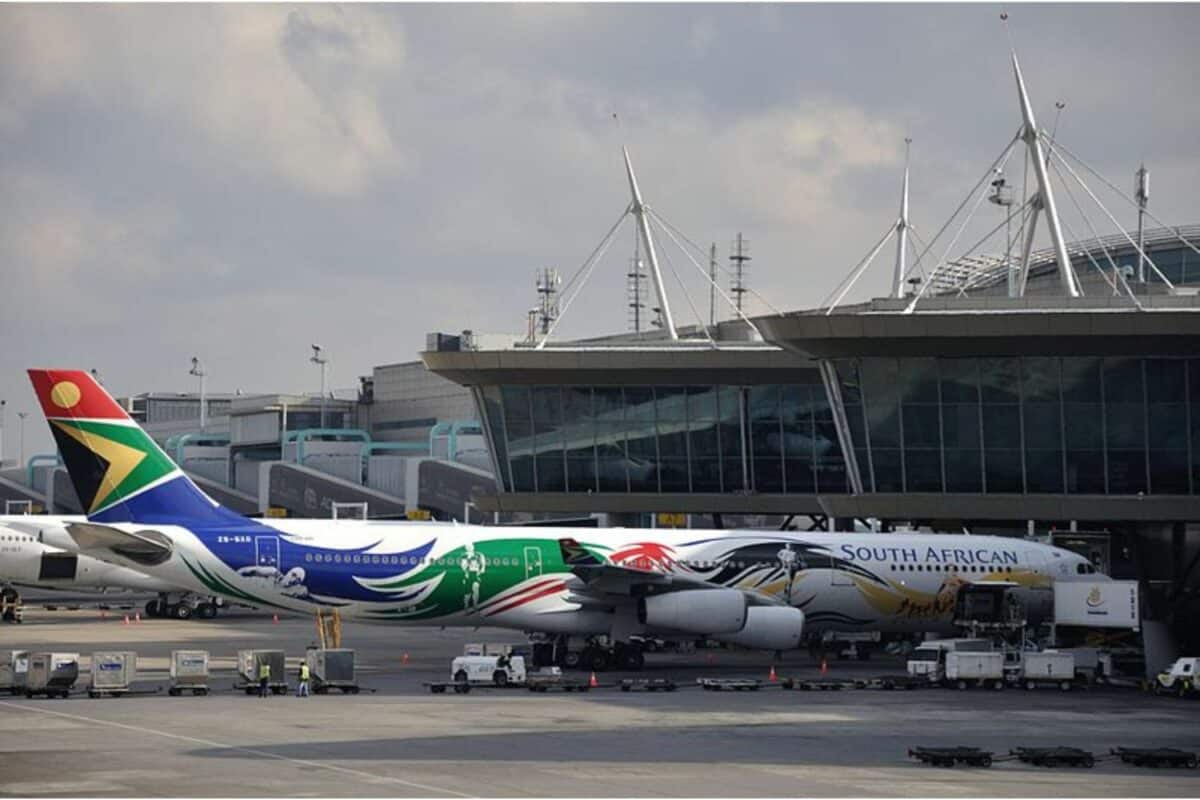
Picture: Acsa


It’s been three years since Airports Company of South Africa (Acsa) awarded a multimillion-rand emergency tender for explosive trace detectors (ETDs).
It’s also been three years and counting for the same equipment to be put to work. This, while the supplier allegedly profited by supplying the goods at close to double that of a competing quote.
Acsa admits to irregular emergency procurement
By Acsa’s own admission, the process was irregular and, said the state-owned entity (SOE), the procurement process is now the subject of an internal probe.
But the who, what, why and where of the bid has raised serious questions about governance at the company.
What has emerged from Acsa’s written responses, SA Civil Aviation Authority (Sacaa) correspondence, supplier quotations and internal documents is a procurement trail with several red flags, timing contradictions and admitted irregularities that all played out in the run-up to an International Civil Aviation Organisation (Icao) security audit in August 2022.
The organisation regularly audits aviation authorities and providers around the world for safety and regulatory compliance.
ALSO READ: Buck stops with board that is answerable for malfeasance
According to the Sacaa, intention to audit is provided several months in advance.
There is enough time for anyone to prepare. Instead, Acsa initiated a last-minute emergency procurement for ETD units at a cost of R36 million.
Goods delivered late
The goods were delivered late and, by Acsa’s own version, were paid for before the supplier was officially contracted.
The request for quotations was a limited bidding process despite the value involved.
It was awarded to Mafoko Security, the same company that was recently under fire for not paying its staff on time in December last year and accused by former staffers of sporadically delaying salaries previously.
ALSO READ: Unpaid guards at national key points spark security alarm
According to the Sacaa, Icao’s notification of audit was timeous.
“Member states are generally notified four to six months before an audit,” said Sisa Majola, the regulator’s spokesperson.
Acsa conceded an emergency procurement declaration was made in May 2022, then again in July 2022, shortly before the audit.
Acsa spokesperson Ofentse Dijoe acknowledged the earlier emergency approval was irregular because there was still time to follow a normal procurement process. Only in July, closer to the audit, did he say emergency procurement became justified because the normal process had not been completed in time.
Staffer believed outcome was predetermined
Even then, the paperwork did not line up. An Acsa staffer, who did not want to be named, told The Citizen they believed the outcome of the procurement bid was predetermined.
Acsa confirmed the request for quotations was issued without an RFQ, or request for quotation reference number, potentially limiting an internal audit trail at the time. It also confirmed Mafoko Security invoiced on 27 July, 2022before a purchase order or contract award was in place.
“It was irregular,” Dijoe said, adding the matter had since been referred for investigation and reported to the Hawks.
“It is not permissible for a supplier to invoice without a contract or a purchase order,” he said.
ALSO READ: Airport safety expert lays criminal charges against aviation authorities
The Citizen has seen all the documents that indicate that it did occur.
In addition, a 50% upfront deposit was approved on purchase order number 36697 raised by an H Mohlongo on 8 August, 2022 and paid on 16 August, 2022 per a receipt from Mofoko seen by The Citizen.
Entire amount classified as irregular expenditure, AG confirmed
Acsa’s loss control unit later classified the entire amount as irregular expenditure, a finding, Dijoe said, confirmed by auditor-general Tsakani Maluleke.
The CAA was also asked for approval on the Nuctech devices prior to the tender being awarded. According to an Acsa insider, this was out of sequence.
Majola said operators must submit a detailed request specifying equipment type, model and operational purpose under the National Aviation Security Programme. He said the regulator conducts a confidential evaluation before issuing procurement approval.
ALSO READ: Aviation Co-ordination Services rejects Acsa claims over OR Tambo grenade security breach
Majola added Sacaa “will then conduct a confidential internal evaluation to ensure strict compliance with all security and performance standards. Upon verification, the regulator will issue a formal procurement approval”.
The Nuctech TR2000DC ETD selected by Acsa had European certification at the time but not US Federal Aviation Administration (FAA) approval.
According to an aviation expert, lack of FAA recognition can complicate use in certain US-bound screening environments.
Lack of FAA recognition can complicate use in US screening environments
The urgency used to justify the process did not translate into timely delivery, either. Acsa confirmed the ETDs were delivered after the Icao audit. They are still not in operation.
“Mafoko delivered the equipment late and while a letter for penalties was issued, no steps were taken to levy and collect the penalties,” Dijoe said.
An Acsa staffer close to the process showed The Citizen an e-mail in which competing bidder Eagle Eye Security cautioned Acsa the timelines.
ALSO READ: Airport safety concerns cloud G20
The bidder set out the landed cost for 36 units with consumables, training and installation would be about R17.4 million.
Acsa acknowledged two bids but framed the price gap differently.
“The difference between the two bids was about R3 million,” Dijoe said. Yet the difference in the Eagle Eye e-mail indicated an R18 million price gap.
Acsa CEO not part of the procurement decision
Despite being copied on the cautionary e-mail, Acsa CEO Mpumi Mpofu’s was not part of the procurement decision, said Dijoe. But the e-mail trail shows pricing and delivery concerns reached execs before the award.
Acsa fingered former security boss Mzwandile Petros as responsible. Yet, the cautionary e-mail showed concerns prior to the award to Mafoko.
The department of transport and Mafoko Security did not respond to questions by the time of publication.
NOW READ: Creecy steps in to resolve dispute over Acsa baggage screening services
Support Local Journalism
Add The Citizen as a Preferred Source on Google and follow us on Google News to see more of our trusted reporting in Google News and Top Stories.

