The preliminary report, which is now in its fourth draft, runs to about 800 pages.
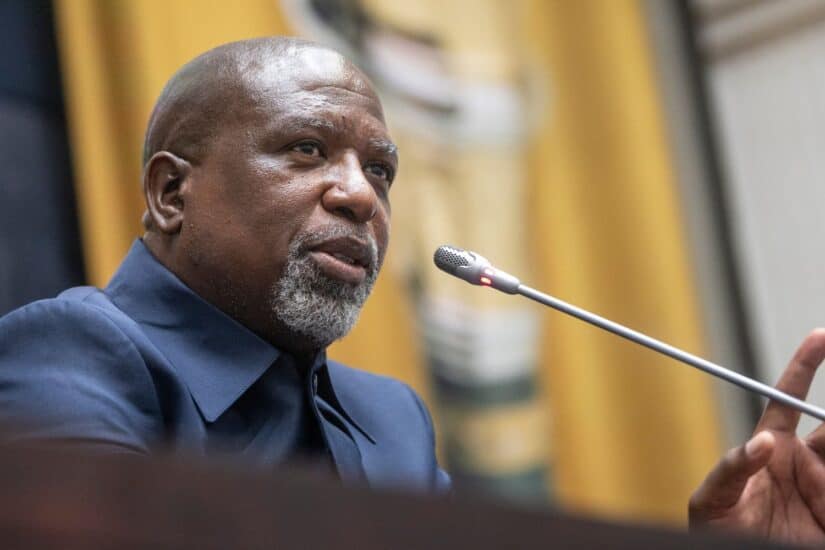
Ad hoc committee chairperson Soviet Lekganyane. Picture: Gallo Images/ Brenton Geach


Parliament’s ad hoc committee investigating allegations of political interference, corruption and criminality within law enforcement structures descended into a heated debate over witnesses who were not called to testify.
The committee met on Thursday, 13 August 2026, to consider its draft report following its inquiry into allegations made by KwaZulu-Natal police commissioner Nhlanhla Mkhwanazi.
Having wrapped up its witness testimonies in March, the committee has since been working to consolidate the evidence presented into a final report.
DA warns against findings based on hearsay
Committee chairperson Soviet Lekganyane told MPs that the preliminary report, which is now in its fourth draft, runs to about 800 pages.
Lekganyane also disclosed that the Democratic Alliance (DA) had written to the committee outlining concerns about aspects of the report.
DA Chief Whip Glynnis Breytenbach cautioned that the committee did not have the authority to determine whether individuals were guilty or innocent of allegations made against them.
She said the committee was also not empowered to make findings of fact, but rather to make recommendations aimed at improving the criminal justice system.
“We have also pleaded that we do not spend time weighing up and making findings based on conjecture [and] hearsay evidence.
“We do not know what the truth is and we do not know the untruths that were told to us,” Breytenbach said.
Breytenbach warned against including untested evidence in the committee’s final report.
“It will be both incorrect and possibly misleading. We just need to be careful and the letter is meant to express those sentiments and again plead with all of the members to be very careful about what we include in our report,” she concluded.
Lekganyane said the committee was expected to uphold the necessary standards and principles in compiling its report.
“This committee cannot become a laughing stock. This committee cannot become a joke,” he said.
ANC proposes balance of probabilities
The ANC proposed that the committee use the balance of probabilities standard when considering whether Police Minister Senzo Mchunu was connected to the alleged cartel and whether the disbandment of the political killings task team was intended to advance cartel interests.
On individual referrals, the ANC proposed that the committee should not make findings of criminal guilt, but could refer conduct for further investigation or other action where prima facie evidence justified such a step.
The proposals received the support of all MPs.
MK party questions scope of investigation
The uMkhonto weSizwe (MK) party raised concerns that the committee had focused primarily on the South African Police Service (Saps) and had not adequately investigated allegations involving other institutions, including the National Prosecuting Authority and the judiciary.
ANC MP Xola Nqola rejected this assessment, pointing out that former National Director of Public Prosecutions Shamila Batohi and former Investigating Directorate Against Corruption head Andrea Johnson had appeared before the committee.
Nqola also argued that there was no basis for calling members of the judiciary to testify because no allegations had been made against them.
It was subsequently proposed that the wording in the report be changed.
Dispute over Feroz Khan testimony
The MK party also objected to senior Crime Intelligence official Feroz Khan not being called before the committee.
The party argued that allegations made against Khan by several witnesses should have been tested through his testimony.
“We emphasised that let’s bring the name in and we were asked to give [reasons] which we did, but he was being shielded,” MK party MP Vusi Shongwe said.
Some MPs countered that the decision not to call Khan was a collective decision taken by the committee through a majority.
Shongwe also criticised President Cyril Ramaphosa for submitting written responses to the committee rather than appearing to give oral testimony.
He argued that the MK party’s minority position on the matter should be reflected in the final report.
MPs clash over dissenting views
FF Plus MP Wouter Wessels disagreed, arguing that the purpose of the report was not to document dissenting and majority positions.
“That’s not what we are busy with and chairperson with due respect, I think we are being abused currently,” Wessels said.
Shongwe, however, maintained that Rule 166 of the National Assembly rules provided for dissenting views to be recorded.
“If we are changing the rules, I have no fight against you.. I will lose. I am one against many,” he said.
The draft report also noted that no findings would be made against criminally accused businessman Katiso “KT” Molefe and Tembisa Hospital looting kingpin Hangwani Morgan Maumela that they were members of the so-called Big Five cartel.
The committee is expected to reconvene on Monday to continue its consideration of the report.