



Persistent shortages, stalled refits and ageing machinery are leaving South Africa’s navy increasingly exposed.
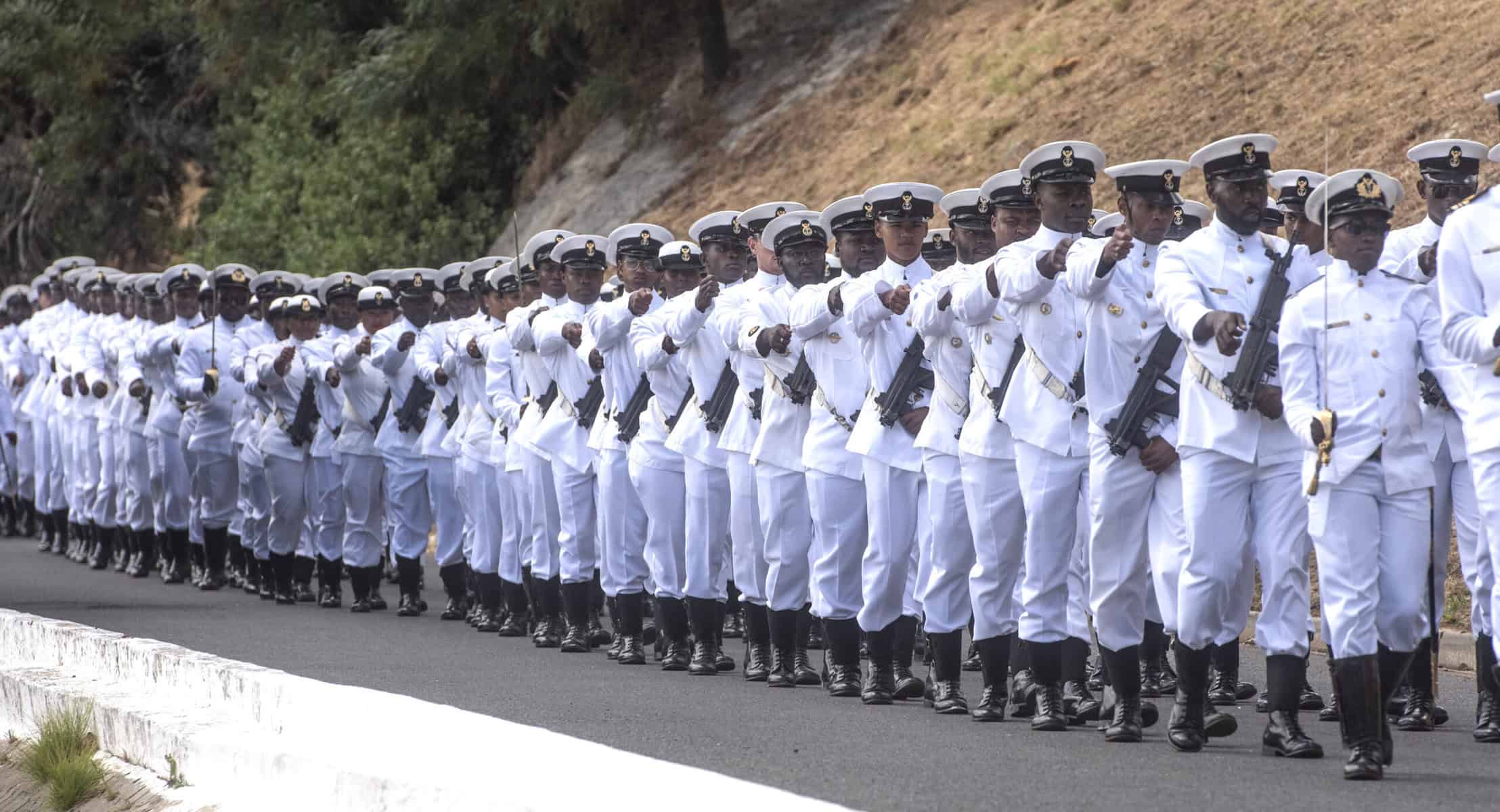
Navy members parade at the South African Navy Fleet Change of Command Parade at Martello Sports Field on November 26, 2024 in Simon’s Town, South Africa. Picture: Gallo Images/Brenton Geach


The South African Navy has signalled its intention not to renew its contract with the state arms manufacturer Armscor due to chronic underperformance at the Armscor Dockyard – the navy’s primary facility for refits, repairs and deep-level maintenance.
According to the navy, Armscor Dockyard remains “below required standards” in virtually every key performance area, warning that persistent failures were now directly impacting on national maritime readiness.
Staff shortages and mounting maintenance gaps
Of the dockyard’s 373 staff, 46 posts remain vacant, while the facility is operating with a shortfall of more than 65 000 manhours compared to what is required to meet the navy’s upkeep plan.
To close the gap, according to the report, Armscor estimates it needs 345 additional personnel, a figure seen as unattainable under current budget allocations.
In just two financial years, the navy spent more than R50 million on contractors as the dockyard increasingly acted as an outsourcing agent rather than a maintenance authority.
This was revealed in the report of the navy and Armscor to parliament’s joint standing committee on defence yesterday, raising alarm on the worsening operational backlogs at the dockyard.
ALSO READ: Navy struggles as budget cuts threaten coastal security
The report lamented that years of declining capacity, ageing infrastructure and skills shortages was pushing the navy’s fleet into a state of escalating vulnerability.
“Shortages in technical and project planning roles [are] impacting execution of upkeep projects… [Armscor Dockyard] is in the process of recruiting 15 fixed-term contractors to address workload demands and improve turnaround capacity,” said the report.
Ageing infrastructure cripples critical dockyard operations
It also painted a bleak picture of ageing, malfunctioning and sometimes non-operational infrastructure.
Essential equipment such as cranes, frequency converters, and the Durban Syncrolift, which is critical for lifting vessels out of the water, were more than 50 years old, with the Durban facility not functioning at all, and would require an estimated R50 million to restore to full capacity.
Across the dockyard, equipment failures, frequent breakdowns and delayed procurement have caused compounding delays across the fleet.
Major vessel refits have either stalled, faced repeated extensions or entirely outsourced due to insufficient internal capacity.
ALSO READ: This is why South Africa’s generals are ‘revolting’
According to the report, less than 10% of the SAS Isandlwana refit, outsourced to Sandock Austral Shipyards, has been completed, despite the project being scheduled to finish by next March.
Submarine refits have been delayed for years, with the dockyard lacking both the planning capability and the technical expertise to conduct SSK-level work.
Tugs, frigates and patrol vessels have similarly been affected by delayed spares, inadequate project planning, and the absence of approved maintenance plans.
Navy explores new solutions as contract expiry looms
As part of the solution to the crisis, the report revealed the navy intended not to renew the service level agreement with Armscor and is exploring government-to-government assistance to execute future refits.
Armscor estimates that bridging the current capability gap would cost nearly R890 million, while the navy warns that without urgent intervention, fleet availability and SA’s maritime security commitments will continue to deteriorate.
This comes in the backdrop of warnings about the navy’s imminent sinking, with its ability to protect the nation’s seas and defend its coastline severely eroded by budget constraints as recently decried by South African navy chief Vice-Admiral Monde Lobese.
NOW READ: Motshekga’s scolding of Navy chief sparks civil society backlash
Support Local Journalism
Add The Citizen as a Preferred Source on Google and follow us on Google News to see more of our trusted reporting in Google News and Top Stories.


