


Minister in the Presidency, Khumbudzo Ntshavheni, warned foreign nationals to respect SA customs.
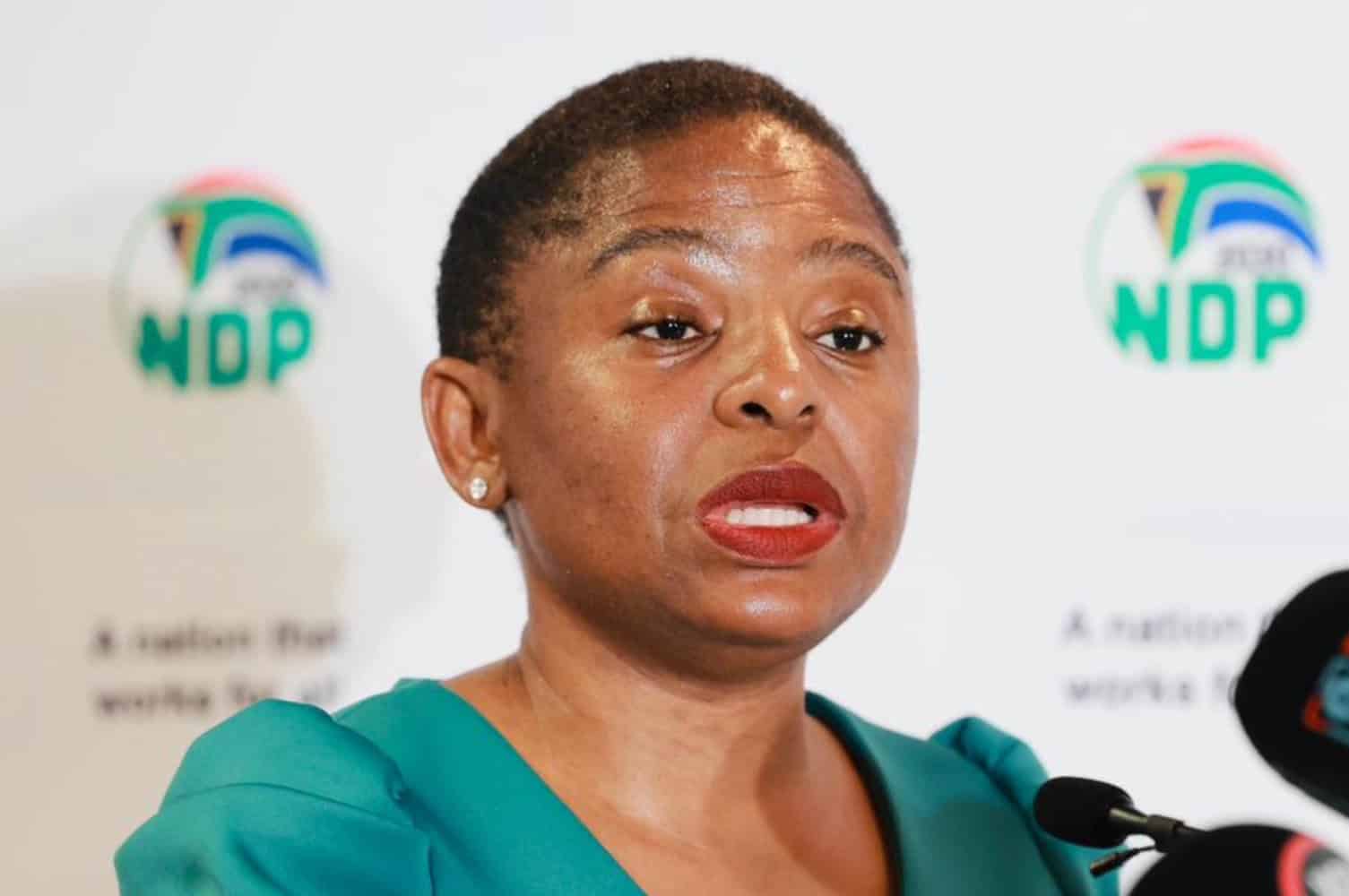
Minister in The Presidency Khumbudzo Ntshavheni. Picture: X / @PresidencyZA


South Africa’s Cabinet has condemned the alleged coronation of a Nigerian national as a traditional “chief” or “king” in the Eastern Cape.
During a briefing on Monday, Minister in the Presidency Khumbudzo Ntshavheni said the alleged coronation was legally void while urging both law enforcement action and diplomatic engagement to address the broader pattern of conduct by some foreign nationals in the country.
‘Kindergarten gimmick’ with no legal standing
Cabinet left little room for ambiguity in its assessment of the incident, with Ntshavheni describing the event as “a mere kindergarten gimmick” that carries absolutely no legal weight.
The attempted coronation, which took place in KuGompo City in the Eastern Cape, was roundly rejected as a violation of the legal framework that strictly governs traditional leadership in South Africa.
“Cabinet expressed disgust at the so-called coronation of the Nigerian national as an alleged chief in KuGompo City in the Eastern Cape,” Ntshavheni said.
She emphasised that South Africa’s Traditional and Khoisan Leadership Act establishes non-negotiable procedures for the recognition, establishment, and functioning of traditional leadership structures.
No individual, foreign or otherwise, can be installed as a traditional leader outside of this framework, and Cabinet confirmed the so-called coronation produces no legally binding outcome whatsoever.
Watch: Ntshavheni briefs the media, says Cabinet is disgusted by the so-called coronation of a Nigerian king in KuGompo City
WATCH | Minister in the Presidency Khumbudzo Ntshavheni says Cabinet is disgusted by the so-called coronation of a Nigerian king in KuGompo City, reminding foreign nationals that they are guests in the country. pic.twitter.com/MZEHaAZt0g
– SABC News (@SABCNews) April 2, 2026
ALSO READ: Deport Nigerian ‘king’ and all who crowned him, traditional leaders demand
Diplomatic fallout and an apology from Nigeria’s High Commission
The incident triggered a formal diplomatic response.
“Cabinet noted the apology from the Nigerian High Commission on this matter and directed the Department of International Relations and Cooperation (Dirco) to continue engaging with the High Commission on the unacceptable conduct of Nigerians in South Africa that is unbecoming of visitors,” Ntshavheni said.
She was pointed in her framing of the situation, reminding the public of the boundaries that apply to foreign nationals.
“We must remind them they are visitors in this country,” Ntshavheni said.
Violence in response condemned, but government defends its timing
The coronation sparked protests that, in some instances, descended into violence and criminality.
Cabinet condemned these acts while acknowledging the legitimacy of the underlying grievances.
Ntshavheni pushed back firmly against suggestions that government had been slow to respond, insisting that condemnation and engagement began well before the public march.
“The condemnation did not start today. The condemnation started immediately the intelligence structures picked up this – those that attempt to so-called coordinate and achieve – and Dirco started to interact with the Nigerian High Commission,” Ntshavheni explained.
She added that Cabinet had noted the High Commission’s apology precisely because those engagements had already taken place.
The Deputy Minister of Traditional Affairs, Reverend Prince Zolile Burns-Ncamashe, was also cited as having been present on the ground in the Eastern Cape prior to and on the day of the march, working to clarify the position of the Aba-Thembu royal family after false claims circulated that King Dalindyebo had endorsed the coronation.
ALSO READ: AbaThembu kingdom demands accountability after KuGompo ‘Nigerian king’ unrest
Ntshavheni said it was the deputy minister’s intervention that ensured the royal family publicly clarified its position.
South Africans were reminded that the right to protest comes with boundaries.
“The right to protest comes with responsibility. It must be exercised peacefully and within the confines of the law,” Ntshavheni said.
Government distances itself from anti-Nigerian generalisation
When pressed on whether government viewed Nigerians as a particularly problematic group, Ntshavheni drew a firm distinction between individuals who break the law and the broader Nigerian community in South Africa.
“The Cabinet has no view about Nigerians. When they are in the country legally, they are welcome to be in the country legally,” she said.
She acknowledged that while some Nigerian nationals had contributed to what she described as the destruction of the country, that remained a matter for law enforcement to pursue decisively.
“The behaviour of a few should not lead to the generalisation of the conduct of Nigerians. Outside that grouping, there are many Nigerians who are contributing meaningfully to the economy of this country,” Ntshavheni said.
She also reaffirmed the strength of the bilateral relationship between Pretoria and Abuja, stating that South Africa’s ties with Nigeria remain fraternal and solid.
“The Nigerian government will not stand aside and have its citizens undermine the authority of the state in South Africa. We are confident of that,” she said.
READ NEXT: Eastern Cape police on alert after violent protests in KuGompo [VIDEO]
Support Local Journalism
Add The Citizen as a Preferred Source on Google and follow us on Google News to see more of our trusted reporting in Google News and Top Stories.

