


“My mother almost worked herself to death to educate me," says human rights champion Wendy Isaack.
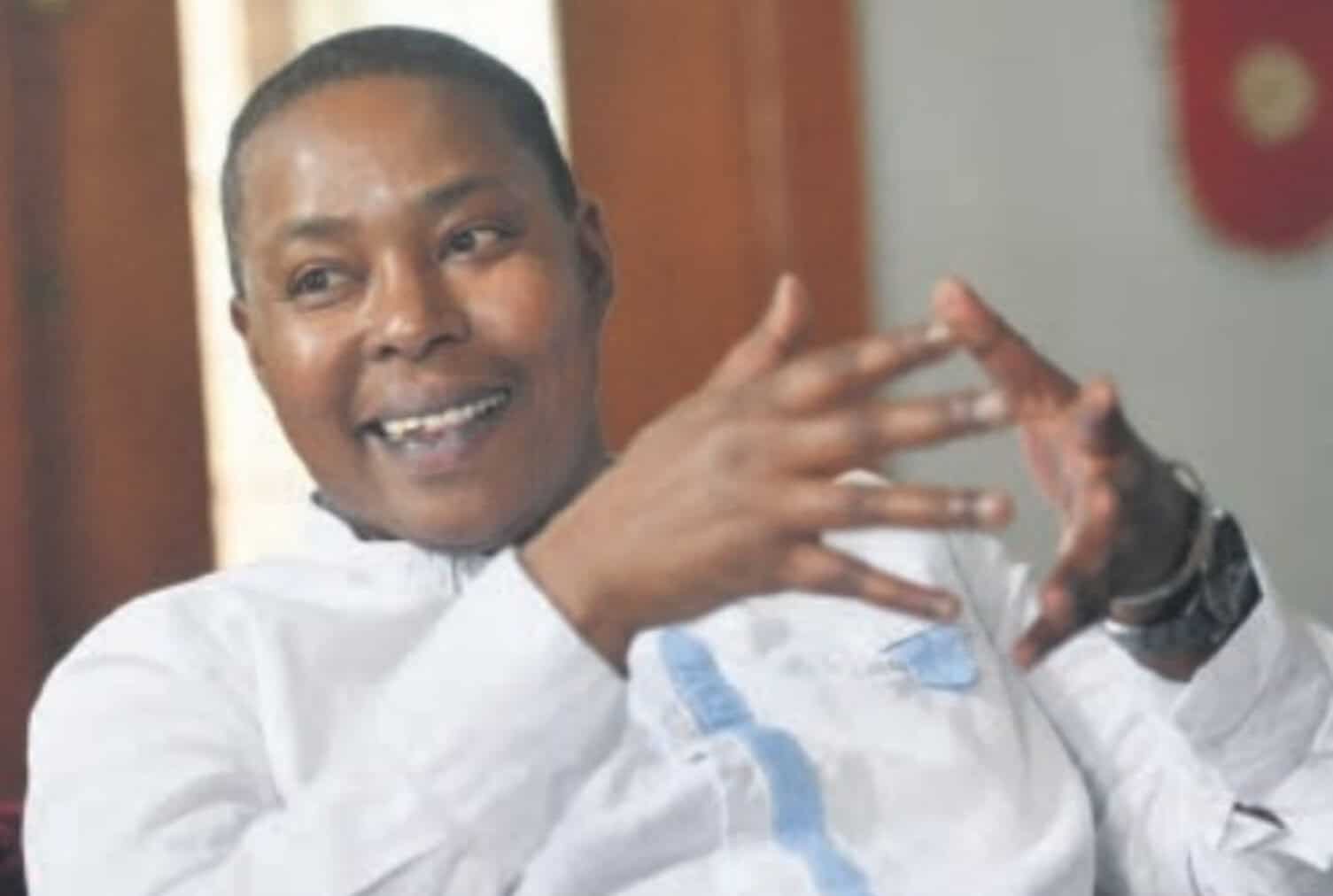
Human rights lawyer Wendy Isaack. Picture: Nigel Sibanda


Growing up under apartheid, international human rights lawyer Wendy Isaack got to see the brutal system of discrimination first-hand.
According to the peculiar logic of the National Party’s race experts, Isaack – who was born in Ladysmith, KwaZulu-Natal – was forced to go to a “coloured” school, though her mother was black and her father was Indian.
“I grew up in a most loving and compassionate family. I was truly blessed. My parents worked very hard to build a home for us.
“My parents were the most decent and loving people on the planet,” she said.
“My mother almost worked herself to death to educate me. She would take loans from different people, while my father, who was a factory worker, was also trying to make sure there was food in the house.
“They also instilled the culture of reading in my siblings.”
Dedicated to fighting injustice
After primary and high school, she later went to university in KwaZulu-Natal, qualifying with a law degree.
She went on to obtain a masters degree in International Human Rights Law in May 2006, from Ulster University in Northern Ireland.
She also went to Harvard University, Kennedy School of Government in Cambridge, Massachusetts, where she obtained her master’s degree in public management in 2015.
She said her father was an activist in his own right because he protected her against the homophobic men who were abusing her after she disclosed that she was a lesbian.
“I was 14 years old when I disclosed that I am a lesbian, and my father celebrated that I would not fall pregnant and I would be able to continue with my studies, unlike other girls who were getting pregnant while they were still young,” she said.
“While other parents and family members are embarrassed about their lesbian and gay children, mine were proud and loving. And that is why I know that men can do better; can do more than disrespect and be violent towards women.”
The background of the struggle against injustice at home helped shape and steer her career path.
She is an official member of the Gender Persecution Expert Group, comprising high-level experts recognised in the fields of international human rights law, international criminal law and gender justice.
She is also an expert in gender justice and international human rights law with more than 15 years of professional experience in law, policy and advocacy in South Africa and several African countries.
She is involved in a United Nations (UN) human rights-oriented project.
“I am an admitted attorney at the Law Society of South Africa and in possession of postgraduate qualifications in International Human Rights Law and Public Administration,” she said.
Isaack, 48, has spent many years working in the New York in human rights related projects.
Palestinian ally
The lawyer continues with her international projects, but this time around, she is working remotely from her apartment in Killarney Court & Gardens in Johannesburg North.
The activist worked for a number of human rights-orientated international civil societies.
“I worked for UN Women, Palestine Office as international consultant in 2016,” she said.
“I also worked for the UN Women headquarters in New York in 2010 as a human rights specialist. Other companies that I worked for include the Legal Resources Centre, Lesbian and Gay Equality Project.”
The current situations involving South Africa on the international stage fires her up.
She calls on all South Africans and civil society to do whatever it takes to assist the government to protect South Africa’s international reputation.
Now a senior gender justice and international fellow at Madre, a global women’s rights group, she said that, so far, the country’s international status is in good standing because of the way it has handled several international projects, including the hosting of the successful G20 summit and its intervention in the fight between Israel and Palestine.
Isaack said the country needs to unite and defend itself against what US President Donald Trump and his administration are doing, trying to convince the world that the government wants to take the land belonging to white people and that there was also a genocide perpetrated against the white people.
“We do have problems in South Africa, but the killing of white people is not one of them,” she said.
“We are actually living in peace with every South African. South Africans must stand up and say let us not allow people to tell lies about our government.”
GBV champion
Much as Isaack praises South Africa for doing well internationally, she, however, lambasted the government for failing to address gender-based violence (GBV) against women and children.
She commended the GBV activists and their organisations for pushing the government to finally classify the scourge as a national crisis.
Growing up in the former apartheid government, it encouraged her to become a human rights lawyer with the aim of assisting international communities to attain their freedom and making sure that their rights are not being infringed.
In her leisure time, she reads books and other sources about Palestine. She has been part of the activists fighting for the independence of Palestine and she also loves building Legos of some of her favourite scenes in Star Wars.
Now that’s not something you’d expect from a legal eagle, but when The Citizen visited her at her flat, she displayed the Legos of the building and equipment displayed in Star Wars, which is one of her favourite movies.
“I love Star Wars; it took my son and I more than three months to build the Star Wars-oriented Legos,” she said.
She was married, but later divorced, and has a 15-year-old son who stays with her mother in the US. She is a former Christian who has turned to Islam.
NOW READ: ‘Drowning in the paperwork’: Inside a doctor’s breaking point
Support Local Journalism
Add The Citizen as a Preferred Source on Google and follow us on Google News to see more of our trusted reporting in Google News and Top Stories.

