Machado has been hailed for her efforts in favour of democracy, but she has also been criticised for aligning herself with US President Donald Trump.
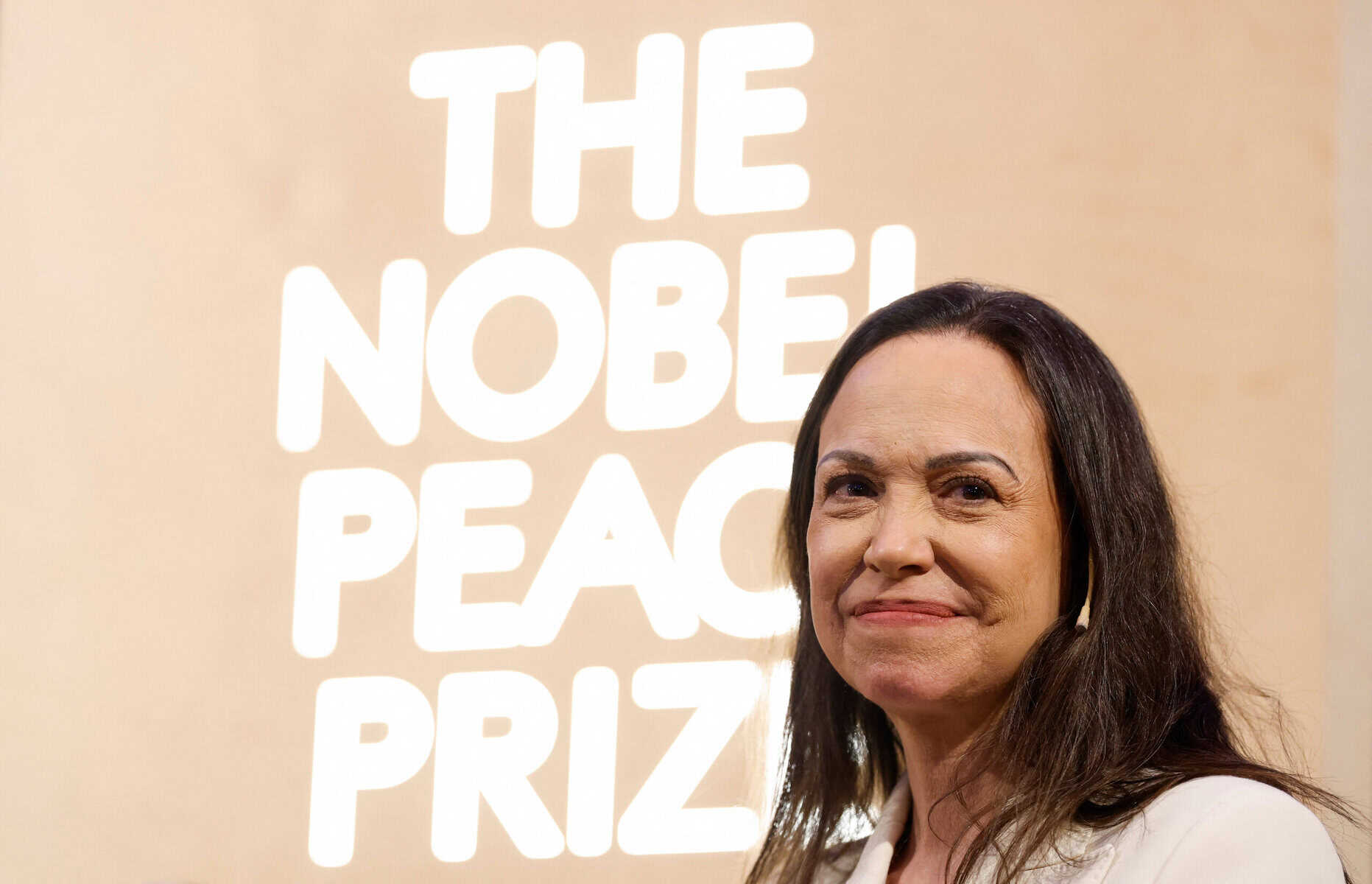
Nobel peace laureate Maria Corina Machado addresses a press conference at the Grand Hotel in Oslo, Norway, on December 11, 2025. Picture: Odd Andersen / AFP


Maria Corina Machado reportedly took three days to make it out of Venezuela and reach Norway, wearing a wig and a disguise, dodging checkpoints and the risk of arrest.
Smuggled out of hiding in Caracas and across the Caribbean Sea in a fishing vessel to a waiting plane, the Nobel Peace Prize laureate finally got to Oslo and emerged to greet cheering supporters from a hotel balcony early on Thursday.
This is what we know about the opposition leader’s risky journey — and her plans to return to Venezuela.
Will she, won’t she be in Oslo?
On Saturday, November 6, the Nobel Institute told AFP that Machado would be in Oslo to accept her Nobel Peace Prize in person at Wednesday’s award ceremony.
A press conference traditionally held by the laureate on the eve of the ceremony was confirmed, then postponed and finally cancelled.
The director of the Nobel Institute, Kristian Berg Harpviken, said he “simply” did not know where she was.
Then, just hours before the ceremony, the institute announced that Machado would not attend the award ceremony and that her daughter Ana Corina would accept the prize on her behalf.
In a sudden twist, the institute then revealed that Machado would arrive in Oslo by Thursday at the latest, after undertaking “a journey in a situation of extreme danger”.
Machado made her first public appearance on Thursday at 2:00 am (0100 GMT) from the balcony of her Oslo hotel. Dozens of jubilant supporters cheered her for several minutes.
She last appeared publicly on January 9 in Caracas, where she protested against Venezuelan President Nicolas Maduro’s inauguration for his third term.
ALSO READ: Venezuela’s Machado ‘safe’ but will miss Nobel Peace Prize ceremony
How did she get out of Venezuela?
Machado herself has provided no details about how she left Venezuela, where she has lived in hiding since August 2024, several days after the election in which she was barred from running.
The Wall Street Journal, though, said she wore a wig and a disguise when she began her journey on Monday.
First, she left her hideout in a Caracas suburb where she had been living for nearly a year, heading for a coastal fishing village.
Two people helped her flee. The trio passed 10 military checkpoints, avoiding capture each time, on a nerve-wracking 10-hour trip, before reaching the coast around midnight, the newspaper said.
They then began a perilous trip across the open Caribbean Sea to Curacao in an open wooden fishing skiff.
According to the WSJ, the US military was informed of her crossing, to avoid the boat being targeted by airstrikes. Machado confirmed on Thursday that she had US support.
Machado arrived in Curacao around 3pm (1900 GMT) on Tuesday. She was met by a private contractor who specialises in extractions and was supplied by the Trump administration, the newspaper said.
It said the extent of the US administration’s involvement in her escape was not known.
After staying in a hotel overnight, she boarded a private jet for Oslo early Wednesday.
“I want to… thank all those men and women that risked their lives so that I could be here today. One day I will be able to tell you because certainly I don’t want to put them at risk right now,” she told a press conference with Norwegian Prime Minister Jonas Gahr Store on Thursday.
ALSO READ: Venezuela says US terrorist designation a ‘ridiculous lie’
Does she plan to return to Venezuela?
Machado vowed Thursday that she would return. “I will not say when that is or how it’s going to be,” she said, but added that she wanted “to end with this tyranny very soon and have a free Venezuela”.
Venezuelan authorities have accused her of “acts of conspiracy, incitement of hatred, terrorism”, and said she would be considered a “fugitive” if she travelled to Oslo to accept the Peace Prize that was awarded to her for her “struggle” for democracy.
Being in the opposition in Venezuela and challenging Maduro is “very dangerous”, she said.
Machado has been hailed for her efforts in favour of democracy, but she has also been criticised for aligning herself with US President Donald Trump, to whom she has dedicated her Nobel.
Maduro has accused Washington of seeking his ouster in order to seize Venezuela’s oil reserves.
NOW READ: Venezuela sends planes to fetch undocumented migrants from US