The lesson of 76 is that we shouldn't stop speaking out when we get comfortable.
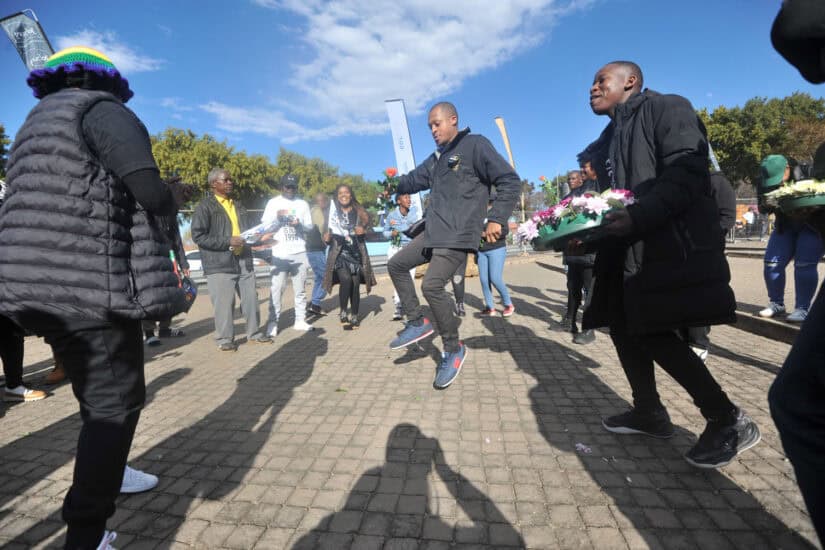
Rise Mzanzi activists attends a commemoration event at the Hector Pieterson Memorial on June 16, 2025 in Soweto, South Africa. Picture: Laird Forbes/Gallo Images


You lose your soul not in battle, but in victory.
15 years ago, as a somewhat naïve young student, I wrote an opinion piece arguing that Youth Day had lost much of its meaning because it no longer had the crystal-clear political and social motivations that the Class of 1976 did.
There was no Apartheid and its draconian policies to disease classrooms, homes, and lives – poisoning multiple generations with trauma and violence.
The effects of the system lingered, but life should be better for the youth of today than it was when the sands of Soweto were stained red.
The youth of today should be rebels in need of a cause, a generation struggling to find a struggle.
A few short years later, I would see youth and graduate unemployment with my very own eyes. Not long after that, the lights started being cut systematically and it was called load shedding.
As the years rolled by, it got worse. Corruption became more brazen, commissions were formed, false New Dawns were devised, garbage piled up on the sidewalk, squatters moved into the neighbourhood, and taps began to run dry.
Now there was a cause – so many causes – and it had come because of inaction.
Advancing ourselves, not others
Poverty and lack of basic services are still a lived reality for millions of South Africans, but that was not the vision when Apartheid ended. Communities began to be serviced, and in that service, people became more comfortable.
This lifting up of many communities coincided with the acceleration of global technologies that would make our world bigger, but also more isolated. Despite the convenience of phone calls, text messages, emails, and video calls, they have largely replaced face-to-face interaction.
Social media made us more connected and AI more informed, but also more isolated and selfish.
Social media teaches and thrives on comparisons and conflicts, neither of which builds communities. Too much of the content on it is divisive, not developmental.
When you live in such a world, you barely know your neighbour, never mind worry about them.
Sure, we trauma-bond on the neighbourhood WhatsApp group when there is an outage or in the social media comments section when corruption is uncovered, but it seldom, if ever, goes beyond the superficial “I want to see the manager” moan.
We are far too distracted to care about the greater cause – and then call it “being busy”. We are far too comfortable to share what skills and resources we have. Too guarded to risk standing up for the marginalised or bullied.
The 1976 march was an invitation to all. It may have been interrupted by gunfire and blood, but it woke up the world and welcomed them to change it. The march was suddenly not 20 000 students but hundreds of millions around the world.
In South Africa, it should have kept us marching. Marching to democracy, then on to social and economic equality. Then, on to true citizen power, collective governance, mutual reliance, and, finally, structural solidarity.
Now, we just march alone…