


Despite rare candour from Ramaphosa, the ANC’s corruption, infighting and weakening credibility remain its greatest obstacles.
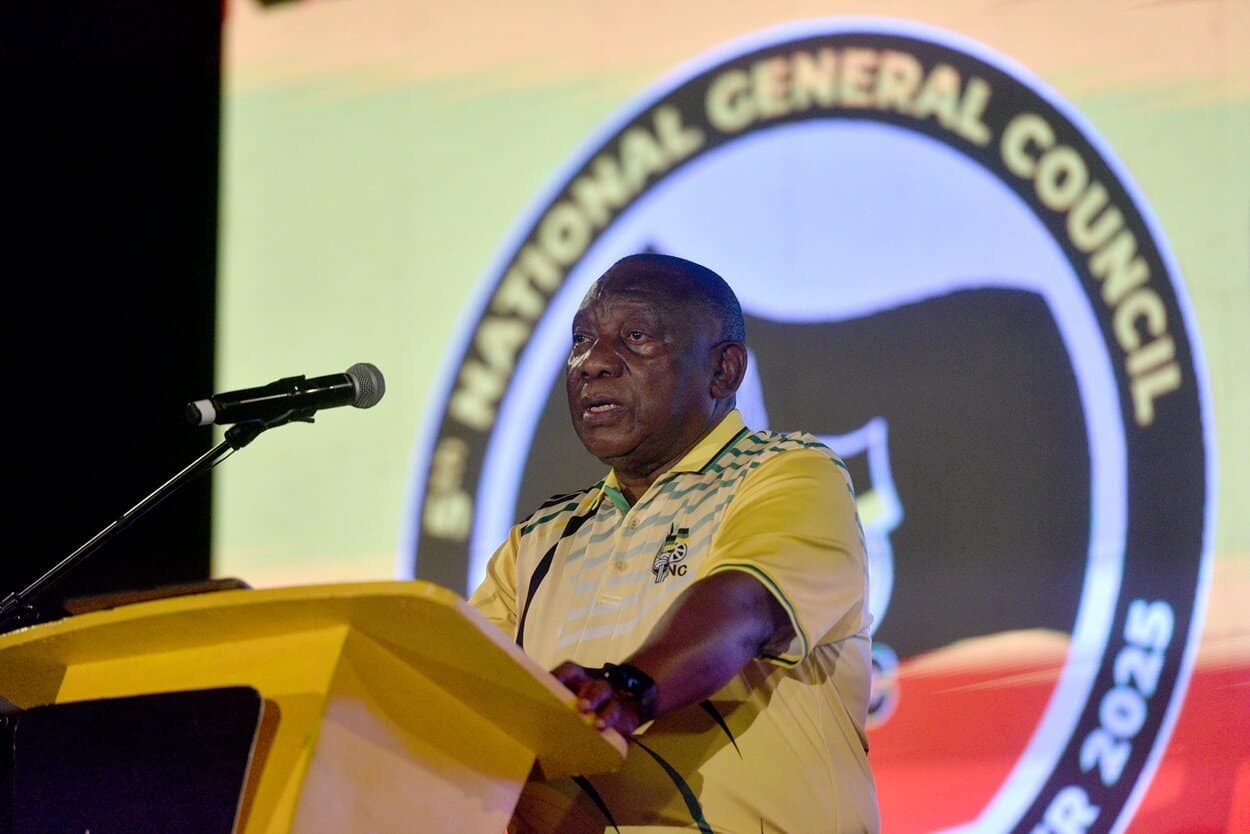
President Cyril Ramaphosa addresses delegates at Birchwood Hotel in Ekhuruleni, Johannesburg, 8 December 2025, during the 5th ANC NGC. Picture: Nigel Sibanda/ The Citizen


Despite its myriad conferences and committee meetings, proper, thoughtful introspection has never been an ANC strong point.
Whenever it has felt under attack, it has scapegoated everything from whites to imperialists to enemies of the revolution.
That last is ironic because – despite what many right-wingers believe – Karl Marx and Vladimir Lenin are spinning in their graves at ANC claims it is leading a “national democratic revolution” towards socialism.
One look at the car park at yesterday’s ANC national general council – as Daily Maverick did – showed that the struggle has been good to many people in the fashionable gold, green and black party T-shirts.
Critics might call it “neo-colonialism”, others say the party resembles a criminal mafia. Both assessments are correct.
ALSO READ: Zille the cracker the ANC needs?
Yet, President Cyril Ramaphosa ditched his normally waffly persona yesterday and was remarkably candid about the ANC decline in recent years.
He singled out Jacob Zuma’s uMkhonto weSizwe party as being responsible for siphoning support away from the ANC and partly responsible for its poor showing in last year’s general elections.
It could well be that Ramaphosa was trying to galvanise the ANC faithful to unify in the face of a common enemy.
Yet his comment that MK capitalised on citizens’ anger about endemic state corruption, unemployment and poor service delivery, was a deflection.
It was not only MK supporters who have seen this – you’d have to be blind to miss it.
ALSO READ: ANC financial crisis: Luthuli House staff salaries delayed again [VIDEO]
As an aside, it is clear that those who flocked to Zuma are clearly not that fussed about people putting their sticky fingers in the state’s piggy bank.
Still, Ramaphosa and the comrades have a big task on their hands to radically reform the ANC into a party which truly stands for the people.
The spirit may be willing but the flesh of the organisation is exceedingly weak.
Support Local Journalism
Add The Citizen as a Preferred Source on Google and follow us on Google News to see more of our trusted reporting in Google News and Top Stories.

