Most powerful nations may not relinquish control.
Picture: iStock


India, which once spearheaded a successful campaign at the United Nations (UN) against apartheid South Africa’s racist policies, is now championing Africa’s demand for permanent representation on the UN Security Council.
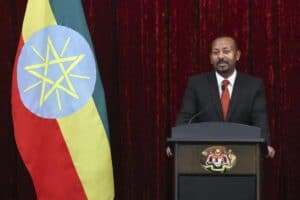
Speaking in Addis Ababa during the final leg of an African tour, India’s External Affairs minister S Jaishankar called for sweeping reforms of the council, saying that India and Africa could no longer be marginalised in global decision-making.
New Delhi’s support for Africa
He reiterated New Delhi’s support for Africa’s demand for equitable representation in the permanent and non-permanent categories of the Security Council.
The visit was aimed at further strengthening India’s relationship with Africa, which ranks as New Delhi’s fourth-largest trading partner.
Jaishankar pointed to bilateral trade approaching $100 billion (about R1.6 trillion) and the completion of over 220 Indian-supported development projects worth $4.5 billion as evidence of the growing partnership.
Food security
He identified food security, agriculture and sustainable development as areas offering scope for further cooperation, and urged Indian businesses to expand their investments across the continent.
Indo-Africa solidarity extends beyond trade and economics to encompass diplomatic and political cooperation.
A notable example, he said, was New Delhi’s successful campaign to secure permanent membership for the African Union (AU) in the G20 during India’s presidency of the grouping in 2023.
The pursuit of justice and equality now underpins India’s campaign for a more representative global order. At the centre of that campaign is reform of the security council.
India stands behind Africa
India argues that Africa, comprising 54 UN-recognised countries and a population approaching 1.6 billion, can no longer be excluded from permanent membership of the world’s most powerful security body.
The AU, which recognises 55 members including the Sahrawi Arab Democratic Republic, has demanded two permanent seats, alongside expanded non-permanent representation. India has its own case.
Comprising about one-sixth of the world’s population, New Delhi maintains that its continued exclusion from permanent membership represents a glaring imbalance in the international security architecture.
Others support India’s inclusion
Four of the five permanent members of the council, France, Britain, the United States and Russia, have publicly supported India’s inclusion in an expanded council.
China, while supporting a greater Indian role in international affairs, failed to unequivocally endorse New Delhi’s permanent membership.
Crucially, diplomatic support has not translated into the institutional reforms necessary to change the council’s composition.
Amending the UN Charter requires a two-thirds majority in the General Assembly, followed by ratification by two-thirds of UN member states, including all five existing permanent members, who effectively have the power to block any reform that threatens their privileged position.
If India, despite its enormous population, expanding economic influence and decades of diplomatic lobbying, has failed to secure a permanent seat, what realistic prospects does Africa have?
Disagreements
Although there is broad international support for greater African representation, fundamental disagreements persist over the composition of an expanded council, crucially the extension of veto powers, which remains the most contentious issue.
Both India and Africa are opposed to membership without veto power, arguing it would institutionalise another form of inequality in a body that’s sometimes seen to be advancing the strategic interests of powerful nations at the expense of the developing world.
Yet the failure to reform carries consequences of its own. An international security architecture that continues to exclude India and a continent of 1.6 billion people from permanent decision-making can hardly claim to reflect the geopolitical realities of the 21st century.
The question is whether the world’s most powerful nations are prepared to relinquish their monopoly over global security decisions by admitting India and Africa to the UN’s top table?