


Less than 1 000 dead so far, but Iran's missiles, drones and regime resilience keep the conflict alive.
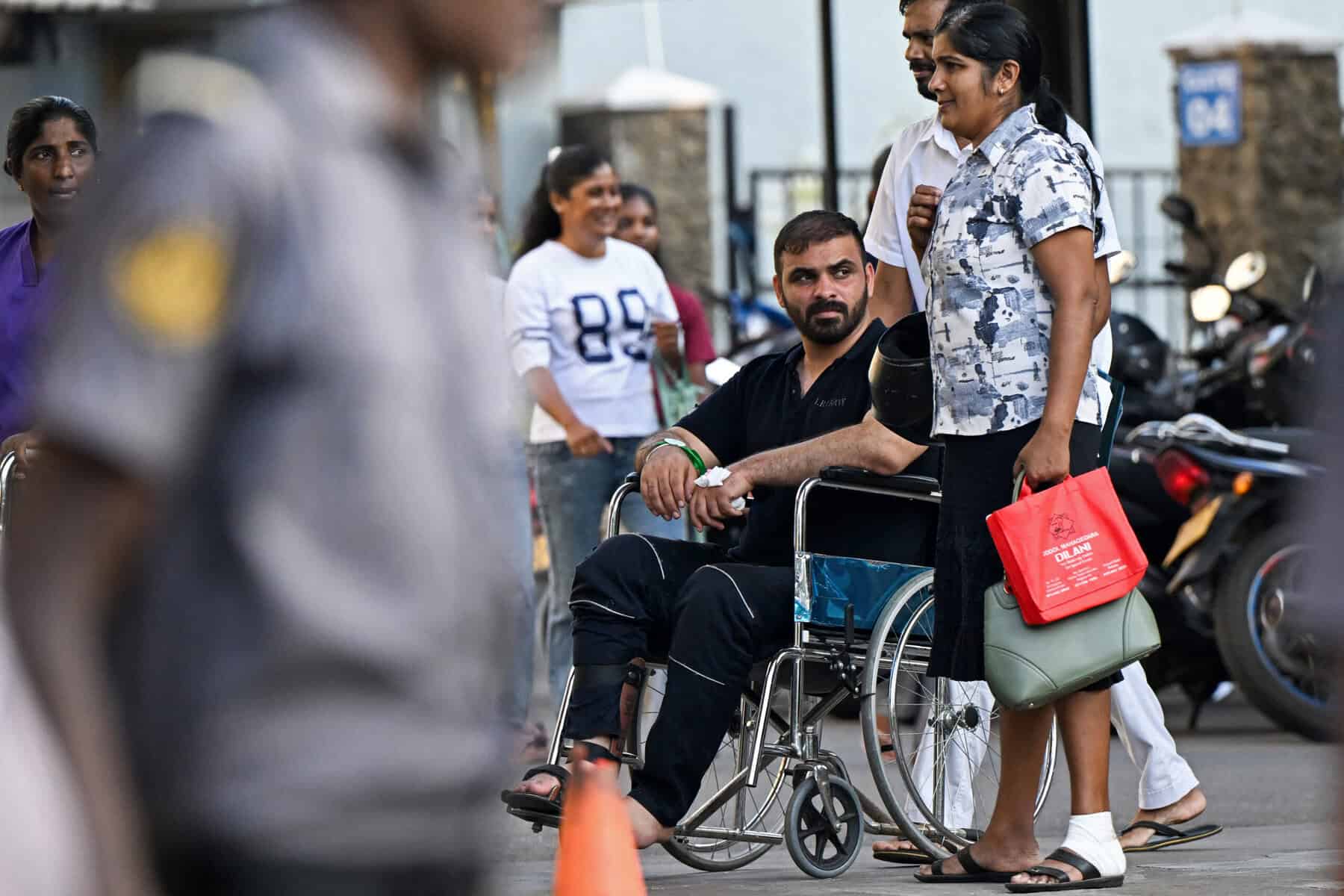
An injured Iranian sailor arrives to receive treatment at the Karapitiya hospital in Galle on March 4, 2026 after his frigate, IRIS Dena sank off Sri Lanka’s coast. Picture: Ishara S. Kodikara / AFP


In December 1941, my wife’s grandfather was a boy-sailor on a British Merchant Navy vessel off Malaya when two of the Empire’s most powerful warships – the battleship HMS Prince of Wales and battle cruiser HMS Repulse – were sent to the bottom of the Indian Ocean by air-launched Japanese bombs and torpedoes.
It wasn’t the realisation that airpower had just made capital ships obsolete which stuck with him, though.
After his ship later took aboard some of the survivors, initially plucked from the oil-soaked and burning sea, his comment, decades later, was: “Poor bastards.”
War is hell. Those of us who’ve been through it know that. Those of us who haven’t like to toss around concepts like bravery and patriotism to justify death.
I couldn’t help but be reminded of the “poor bastards” comment when I saw a bewildered Iranian sailor being pushed in a wheelchair at a hospital in Sr Lanka.
He was one of just 30 or so survivors of the 180 crew on an Iranian vessel torpedoed and sunk earlier this week by an American submarine.
Video of the sinking, shot through the sub’s video apparatus on its periscope, showed the ship’s end being swift, as it was blown apart by the torpedo.
A TV expert in the UK opined, in a monotone, that “very few” sailors ever live through something like that.
ALSO READ: What led to US-Israeli strikes on Iran: protests, nuclear power and proxies
The sinking underlined the importance of a comparatively old offensive technology – the torpedo – in modern war, as well as the fact that if you have annoyed America and they want to get you, you are not safe anywhere.
Now, lest you thinking I am simping for Iran, I am not. The regime in Tehran is backward, autocratic and brutally repressive of many of its own people.
Yet, whether it was close to acquiring nuclear weapons – part of the excuse Israel and the US used to launch their war on it – is something on which I will reserve judgment, especially bearing in mind that the WMD (weapons of mass destruction) excuse for the invasion of Iraq in 2003 turned out to be a lie.
What the war has shown is not only that Israel and the US have massive firepower, but also that their intelligence is such that they can pinpoint rooms where their targets – Iran’s top leaders – are meeting. And then blow them to pieces.
That precision – and it is, there is no denying that – is probably the reason that, despite all the explosives showered on Iran, less than 1 000 people have died so far.
By contrast, Iran’s big missiles clearly do not have that accuracy, as evidenced by many of them being fired into a general target area.
Iran’s drones seem to be more accurate. And Tehran seems to have plenty of both left in its stockpiles, despite the all-out allied assault.
ALSO READ: UN urges all sides in Middle East war to ‘come to their senses’
The question many are asking is about that stockpile and whether it will be depleted before the Americans and Israelis run through their own arsenals of anti-ballistic missile weapons and cruise missiles.
It’s a war which might in the end be decided – although not won – by logistics.
Also, while the “shock and awe” of these bombardments provides good TV visuals, history has proved that the winner of a modern war is not necessarily the one with the biggest and baddest guns.
Look at Vietnam. Look at Afghanistan. Look at Iraq.
Will this cause Iran’s people to attempt an overthrow of the regime? If that happens, will the replacement be worse?
If there ever does come a time when the US decides to put boots on the ground, I think: “Poor bastards.”
NOW READ: Wary European states pledge military aid for Cyprus, Gulf
Support Local Journalism
Add The Citizen as a Preferred Source on Google and follow us on Google News to see more of our trusted reporting in Google News and Top Stories.

