



Ramaphosa faces a test as the Madlanga report lands: accountability must follow or voters will deliver a brutal verdict.
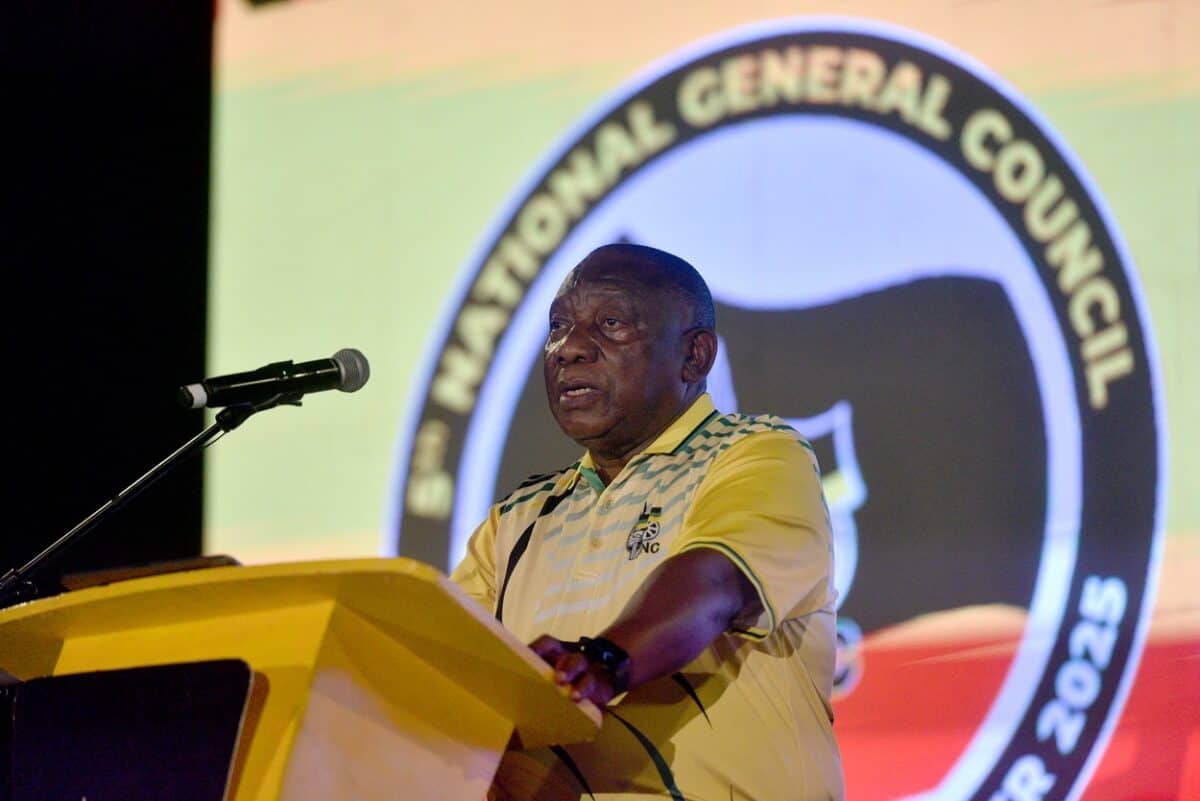
President Cyril Ramaphosa addresses delegates at Birchwood Hotel in Ekhuruleni, Johannesburg, 8 December 2025, during the 5th ANC NGC. Picture: Nigel Sibanda/ The Citizen


As President Cyril Ramaphosa prepares to deliver the ANC’s January 8th statement at Moruleng Stadium in Rustenburg, North West, this weekend, one truth should weigh heavier than any scripted assurance: the party has little to celebrate on its 114th birthday.
Downplaying the challenges facing the country and his party will not help. After the shocking revelations at the Madlanga commission, it is clear South Africa does not suffer from a shortage of commissions of inquiry. It suffers from a shortage of consequences.
With the commission nearing its conclusion, the country confronts a familiar danger – another costly, meticulous probe that risks being shelved, selectively quoted and ultimately neutralised by political resistance.
The Zondo commission already taught us the harshest lesson: uncovering the truth is possible, but truth without consequences is indistinguishable from silence.
If Ramaphosa allows Madlanga’s recommendations to follow the same path, the political cost will not be abstract or deferred. It will be immediate, electoral and brutal – beginning with this year’s local government elections.
ALSO READ: SACP takes the fight for Maduro’s release to the US embassy
The Zondo report explained state capture in clear terms. Those implicated were identified. Networks were exposed. Recommendations were laid out. And then, almost nothing happened.
A handful of prosecutions dragged on, key figures remained politically protected, some were redeployed and others resurfaced as power brokers. The message was devastatingly clear: accountability in South Africa is negotiable, slow and optional for the powerful.
This is the context in which Madlanga’s report will land – not as a clean slate, but as a test of whether the state has learned anything at all.
Ramaphosa cannot afford another “implementation task team”, another inter-ministerial committee, or another vague assurance that “processes are under way”. Those phrases have become the bureaucratic language of evasion.
Three things must happen within months of the Madlanga findings being released. First, a prosecutorial timetable must be published, detailing which recommendations will lead to charges, which agencies are responsible, and by when.
Without timelines, there will be no credibility. Second, the National Prosecuting Authority must be ring-fenced politically and financially, with public reporting obligations tied specifically to Madlanga-related cases. Silence cannot be allowed to masquerade as complexity.
Third, implicated individuals must face real political consequences. Suspension from public office pending investigation should be the minimum standard.
Anything less will signal that loyalty still trumps legality. Without these steps, the Madlanga commission will become another monument to institutional failure – cited in speeches, ignored in practice.
For Ramaphosa, this is no longer about legacy in the abstract. It is about credibility in the present. His reformist image survived Zondo because voters believed resistance came from entrenched ANC factions.
That excuse is wearing thin. After nearly a decade in national executive leadership, responsibility now sits squarely at the top.
ALSO READ: Are South Africans lazy? – Mantashe says citizens too dependent on government
This year’s local government elections will not turn on ideology. They will turn on trust. Municipal collapse, service delivery failures and corruption are experienced locally – where the lights go out, the taps run dry and refuse goes uncollected. Voters will draw a straight line between national impunity and local decay.
Madlanga’s report will not arrive in a vacuum. It will land in the shadow of the ANC’s 114th birthday and 31 years in power – a milestone that should have been a celebration of endurance, but instead exposes the party’s crisis of credibility.
This is Ramaphosa’s test. One path leads to decline – where inquiries pile up without justice, elections erode without trust and democracy weakens under the weight of impunity.
The other path leads to renewal – where accountability is restored, politics remain contested but genuine and power is finally held to account.
If the ANC wants its anniversaries to mean more than ceremonial speeches and fading nostalgia, it must prove that consequences still exist. Ramaphosa must choose quickly. The country is watching and this year, voters will render their verdict.
NOW READ: What to expect from the ANC’s January 8 statement – and what it should do instead
Support Local Journalism
Add The Citizen as a Preferred Source on Google and follow us on Google News to see more of our trusted reporting in Google News and Top Stories.

