



Police are overburdened, underfunded and under-resourced, writes Western Cape Premier Alan Winde
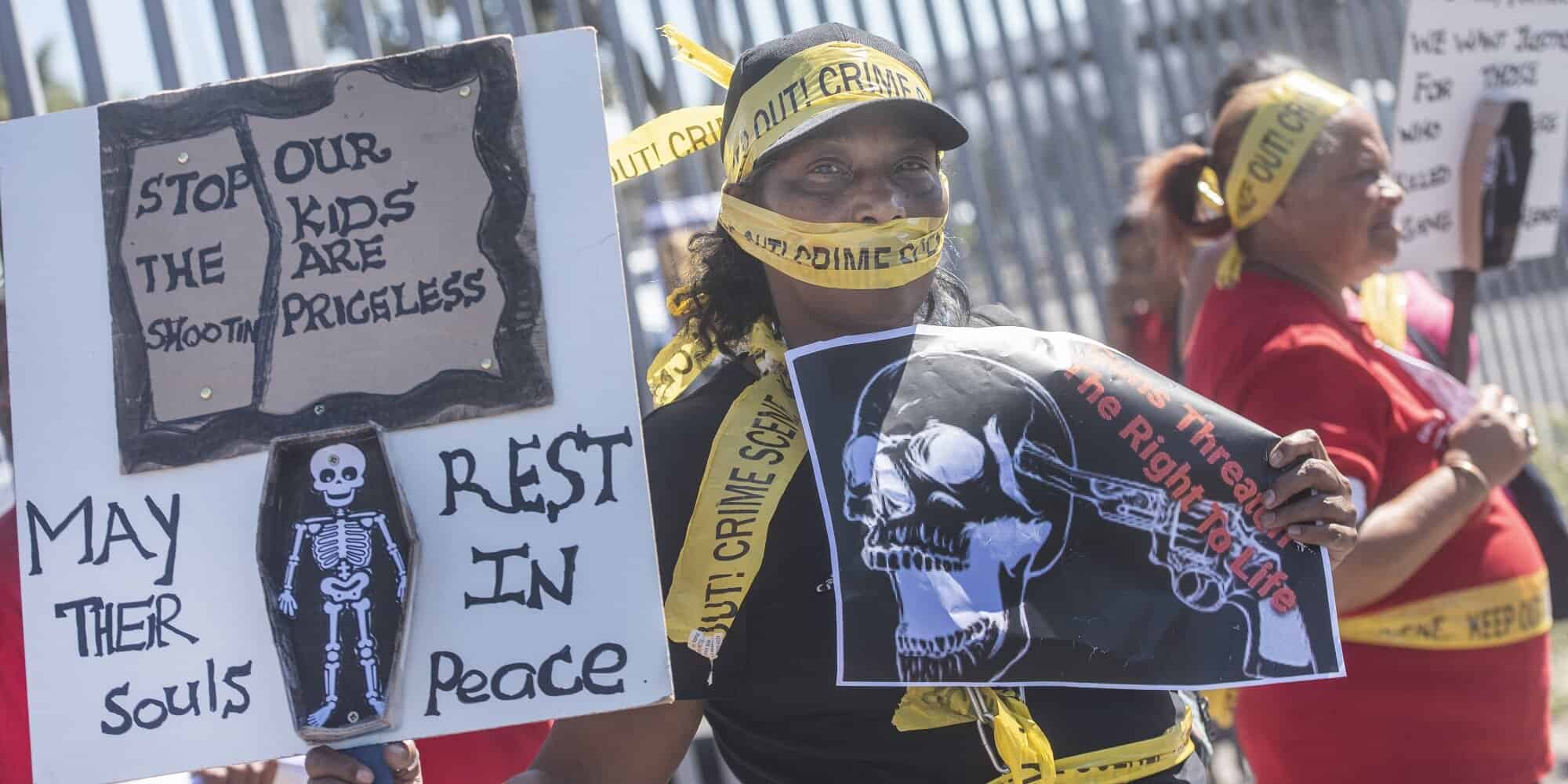
Lynne Phillips, Secretary of the Cape Flats Safety Forum, protests against guns outside Mitchells Plain Police Station on 21 March 2023, in Cape Town. Photo: Gallo Images/Brenton Geach


In reference to the article by Masoka Dube on 28 January in The Citizen, “A war cops can’t win alone”, my agreement with the reporter on this matter unfortunately begins and ends with that headline.
Indeed, the SA Police Service (Saps) in the Western Cape – and elsewhere for that matter – cannot win the war on crime alone.
And yes, there is absolutely a place for civil society’s input as we all strive to build a safer province. Collaboration across spheres of government, alongside civil society and communities, and the pooling of resources – limited as they are – is demonstrably more effective than isolated efforts.
But let’s get real about the single biggest problem facing our crime-fighters on the ground: they are overburdened, underfunded and under-resourced.
Safety is meant to be a competency of national government, administered by Saps. But is Saps actually capable of doing the job it is exclusively mandated to do?
The last available figures showed just over 12 000 operational Saps members are deployed and they are asked to police a province of more than seven million residents.
ALSO READ: Western Cape goes from 20 000 police officers to around 13 000 in six years
Alarmingly, the Western Cape today has fewer police personnel than it did a decade ago, despite significant population growth. Some precincts see one officer responsible for the safety of more than 1 000 residents.
At the same time, Saps members in the province see chronic shortages of vehicles, computers and other equipment, and are still expected to work in an archaic, paper-based docket system that was outdated 30 years ago.
The reality is stark. I regularly visit police stations and high-crime communities across our province and I have seen first-hand the conditions under which officers are expected to work. Thirty detectives using a single computer; officers communicating through WhatsApp voice messages because their radios don’t work; porous firearm storage and evidence lockers that see confiscated firearms routinely find their way back onto the streets – these are the realities of Saps.
These are the issues that must be fixed. And this is not an issue of budget. For 2025-2026, the Saps’ budget is in excess of R120 billion. The budget of the entire Western Cape Government – including our mandates of health and education – is just under R90 billion. And yet, we contribute more in one year to our Law Enforcement Advancement Programme (Leap) than Saps has allocated for its Anti-Gang Unit in five years.
ALSO READ: Ramaphosa considers deploying soldiers to violent areas, but warns of the danger
It is concerns like these that I regularly raise with the minister of police, including the matter of a provincial disaster. Just because this does not make it into the headlines, does not mean we are silent.
Claims of a “disturbing and morally indefensible silence” are misplaced. Crime is understandably raised in virtually every interview I give. I have never and will never shy away from addressing it. Reverend Llewelyn MacMaster is quite aware of the realities of policing, not least because I called him personally late last year to explain in detail the challenges our province faces when it comes to crime and what we, as a provincial government, are doing with our limited mandate.
But, instead, MacMaster seems to delight in social media posts and media interviews rather than finding reason in our safety challenges. He calls for a state of disaster on crime, but how will that address Saps’ ineptitude?
The reality is that the answer is and always has been clear: resolve the resourcing crisis, equitably allocate Saps members where they are most needed and learn from the lessons the Western Cape has already demonstrated: tech-enabled, data-led policing, with an emphasis on competent investigations and prosecutable dockets.
The demands of residents in our most violent areas are clear: not for academic discussions and legal classifications of their plight, but for action that will improve their conditions.
- Winde is the premier of the Western Cape
READ NEXT: Winde calls for ‘fair share’ of funding from Treasury amid population growth
Support Local Journalism
Add The Citizen as a Preferred Source on Google and follow us on Google News to see more of our trusted reporting in Google News and Top Stories.

