From Soviet school lessons on Soweto to Pretoria posting. Diplomat finds freedom languages and Ubuntu in nation once known for apartheid struggle.
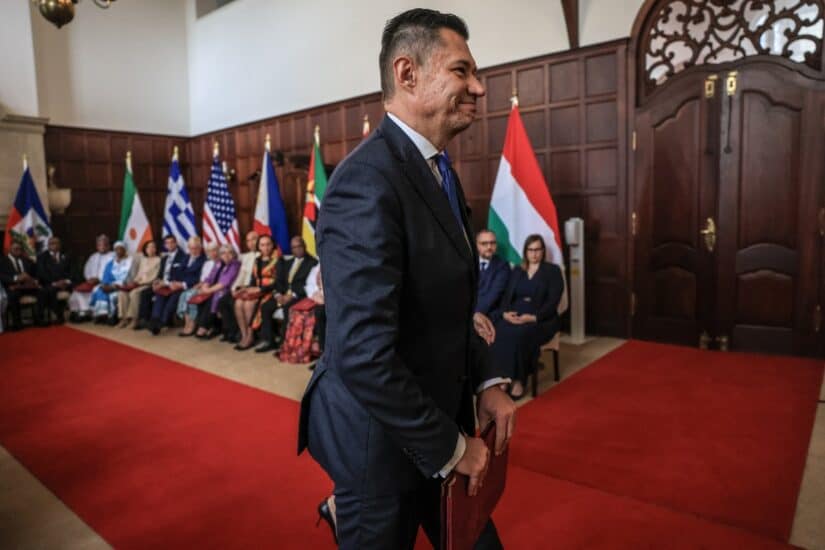
Ukraine’s Ambassador to South Africa Olexander Scherba walks to present letters of credence to South African President Cyril Ramaphosa at Sefako Makgatho Presidential Guest House in Pretoria on April 8, 2026. (Photo by Phill Magakoe / AFP)


While studying at a Ukrainian Soviet school, every Thursday morning I had to stand in front of my class and tell them what was happening in the world.
As it was the ’80s, almost every time I spoke about Africa. South Africa and the African revolution was on everyone’s mind.
This is how foreign exotic words “Soweto”, “Nelson Mandela” and “apartheid” entered my teenage life.
After that, Africa and I parted ways – until my recent appointment as Ukraine’s ambassador to Pretoria.
So, what was it like for a 55-year-old European like me to see for the first time the continent that made my heart race 40 years ago?
For starters, while preparing for life in Africa, you undergo a weird time of both anxiety and excitement, considering how this continent is seen in the world: beautiful and troubled, cheerful and poor, welcoming and dangerous.
Reports about crime, unemployment and frequent unrest feature in the press, next to colourful tourist adverts.
But then you hear those who have been to South Africa say: “Oh, it’s one of my favourite places.” And that turns out to be the most important and true thing in the end.
The first thing you notice on landing in Joburg is people. They smile, hug, pat each other on their backs.
They are friendly and humorous, speak African languages you don’t understand but always switch to flawless English if needed.
Soon you learn South Africa is a country of polyglots, people who naturally speak many languages, often as their mother tongues.
In a world that expects everyone to speak English, South Africa speaks English and so much more.
Yet, what could be a proverbial Tower of Babylon has become the world of Ubuntu; a template how 12 official languages can coexist peacefully and respectfully.
If you arrive in September, like I did, you are overwhelmed with jacaranda blossoms.
This endless mind-boggling sea of purple above your head and under your feet is not something you know and enjoy in the northern hemisphere.
As a European, you are left speechless before this beauty, while people around you walk by without noticing it.
The ubiquitous taxi buses make a lot of noise honking – but not to scare pedestrians away.
On the contrary, they invite them for a ride. That’s the moment you realise many things here look and sound like you expected and, at the same time, can defy your expectations.
There’s another thing you notice, how much freedom people have. Freedom to speak, freedom to write, freedom to dislike and criticise their government as much as they want.
You can say anything, publish anything and your word matters, because South Africa is a true democracy, where public opinion matters.
“South Africa is a movie,” says one of my favourite YouTube channels. And it’s truly so.
As a diplomat, you go to the affluent suburbs of Pretoria and Joburg first, the places where you will live and work – and you see the wealthy side of Africa.
You go to shopping malls and you see the middle class, people of all languages and skin colours living peacefully next to each other, like a true rainbow nation should do.
You also go to townships and to poor parts of Soweto and see the true dimension of Africa’s tragedy that, despite all the democratic leaps in the last decades, still goes on.
In Soweto, you see many kids and young people, single moms and grandmas. And you realise while men look out for a better future and their chances in life, women are the glue that keeps this society together.
You see the youth, the huge power that can be Africa’s and mankind’s future, but if unemployed can also be the source of all kinds of trouble.
You realise what an enormous untapped reservoir of human energy Africa is.
For mankind that grows older by a year it’s the proverbial fountain of youth. And yet, mankind is unclear how precious this might be.
What also strikes you is the sense of missed opportunities and desire to become a better nation – the search for new paths into the future, instead of the old ones that did not bring success.
Africa is the cradle of civilisation, yet sometimes feels like a cradle used and abandoned.
That Ukrainian schoolboy in the ’80s had no idea he would live here.
But perhaps Africa was always where he was supposed be, to learn the world’s oldest story is also its most unfinished one.