Parliament has since announced the MPs who will sit on the impeachment committee that will determine President Ramaphosa's fate.
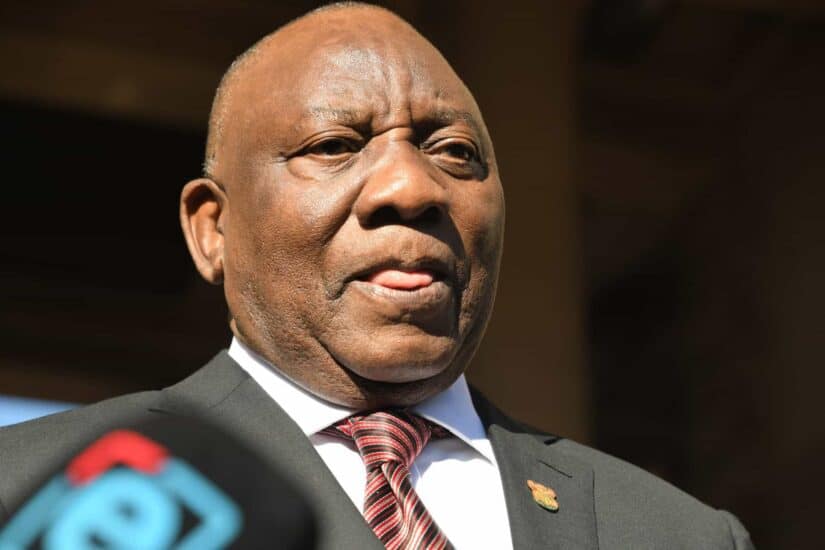
President Cyril Ramaphosa. Picture: Gallo Images/Frennie Shivambu)


President Cyril Ramaphosa has filed papers in the Western Cape High Court to review the Section 89 Independent Panel Report into the Phala Phala scandal.
The president filed his 63-page application in the Western Cape High Court on Tuesday, 26 May 2026.
The report, which Ramaphosa is challenging, forms the basis of the National Assembly’s (NA) impeachment process. It was submitted to the Speaker by the Section 89 Independent Panel, which was being led by former Chief Justice, Sandile Ncobo.
Ramaphosa decided to revive a judicial review of the Section 89 Independent Panel Report after the Constitutional Court (ConCourt) sent the report on the Phala Phala scandal back to parliament earlier this month, paving the way for an impeachment process against Ramaphosa to proceed.
Parliament has since announced the MPs who will sit on the impeachment committee that will determine Ramaphosa’s fate in the Phala Phala saga.
Papers
Ramaphosa stated that the independent panel misunderstood its mandate in at least four respects.
This includes misconstruing the inquiry it was meant to conduct. The president also arguing that Ncobo and his team drew conclusions based on hearsay and that the panel had no evidence beyond what he himself submitted.
Ramaphosa argues that the panel may have unlawfully obtained a confidential Namibian police report and an audio clip that points the finger at the State Security Agency’s (SSA) former director-general, Arthur Fraser, who initially exposed the theft at the farm.
Ramaphosa claims that Fraser’s allegations are based on speculation, fiction and conjecture.
Fraser laid a criminal complaint against Ramaphosa, accusing him of breaching the Prevention and Combating of Organised Crime Act by failing to report an incident at his Limpopo farm in 2020.
Challenge
The president wants the report’s recommendations declared unlawful and set aside, challenging the panel’s findings that there was prima facie evidence of a serious violation of the constitution and law, as well as serious misconduct.
In papers filed with the Western Cape High Court, Ramaphosa has asked the court to dismiss any action taken by the National Assembly (NA) arising from the report.
Misunderstanding
Ramaphosa argues the independent panel “misunderstood” its mandate in at least four respects and misconstrued what it was supposed to conduct.
He says the panel reached conclusions based on hearsay statements, without regard for the law.
“Save for the limited evidence I introduced in my response, there was no evidence before the panel,” Ramaphosa stated in court papers.
“There is no explanation for how the confidential Namibian police report and the audio clip found their way to the panel. It is therefore possible that the Namibian police’s confidential report reached the panel by unlawful means,” Ramaphosa argued.
Phala Phala report
The Section 89 Independent Panel Report concluded that there was prima facie evidence that Ramaphosa should answer questions about the theft of approximately $580 000 (about R9.6 million) from his Phala Phala game farm in Limpopo in February 2020.
Impeachment Process.
Meanwhile, almost all political parties met the impeachment committee deadline, except the largest party on the committee, the ANC, which indicated it would submit its names over the weekend.
The ANC has since submitted nine names and decided to field the chairperson of parliament’s committee on the Presidency, Doris Mpapane, at the top of its list.
Two political parties, namely GOOD and the PAC, indicated that they will not participate in the committee, as each party has only one MP who also serves in the executive.
It’s unclear when the 31-member committee will meet to elect a chairperson, as Ramaphosa has decided to revive a judicial review of the Section 89 Independent Panel Report, upon which the impeachment inquiry is based.