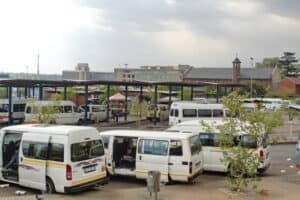
Parents have protested over their belief that foreign nationals were taking spaces in schools that should be reserved for South Africans.
Picture: iStock


The Department of Basic Education (DBE) has attempted to set the record straight on claims about foreign nationals in South African schools.
Parents have protested the exclusion of South African children from classrooms due to limited space, with the DBE stating that any claims of bias were “patently false”.
Protests marred the opening weeks of the 2026 school year as parents and activists called for the prioritisation of South African children.
Less than 2% foreign representation
The DBE stated that it understood the frustrations of parents living in high-demand areas, but warned against “scapegoating” the department for wider societal issues.
“The DBE wishes to correct misinformation and to firmly dispel claims that foreign learners are overrunning South African schools.
“Conversely, 98.2% of learners enrolled in public schools are South African citizens. The claim that foreign learners are placing undue pressure on the education system is therefore statistically incorrect, misleading and irresponsible,” the department stated on Thursday.
The 1.8% of foreign national children includes those whose parents work for international organisations or are ambassadors or diplomats.
Education Minister Siviwe Gwarube, in a recent reply to a written parliamentary question, stated that 253 618 foreign national children were enrolled in South African schools in 2025.
The minister and the DBE reiterated that the department was constitutionally obliged to admit pupils, regardless of their nationality and immigration status.
“South African courts have consistently confirmed that these constitutional rights apply to all children in South Africa, and are not limited by citizenship, immigration status or the possession of identity or birth documentation,” Gwarube’s written response states.
‘Infrastructure backlog to blame’
The department said the source of limited space at schools was an infrastructure backlog, funding constraints for the appointment of additional teachers, and other “systemic and structural” challenges.
It added that even if all foreign nationals were removed from schools, the issues would persist.
“These challenges cannot be simplistically, inaccurately or dishonestly attributed to the small minority of foreign learners in our schools.
“Public discourse must be guided by these values, facts, evidence and proper context. We must actively reject xenophobia, fearmongering and misinformation,” stated the DBE.
It also stressed that blame for the number of foreign nationals in schools should not be aimed at the DBE.
“Immigration management is a function of border control and national immigration authorities, not of school principals or education officials,” the DBE stated.
NOW READ: Civil groups condemn school protests over undocumented pupils