


His favourite country of all is Ethiopia for its people and landscapes.
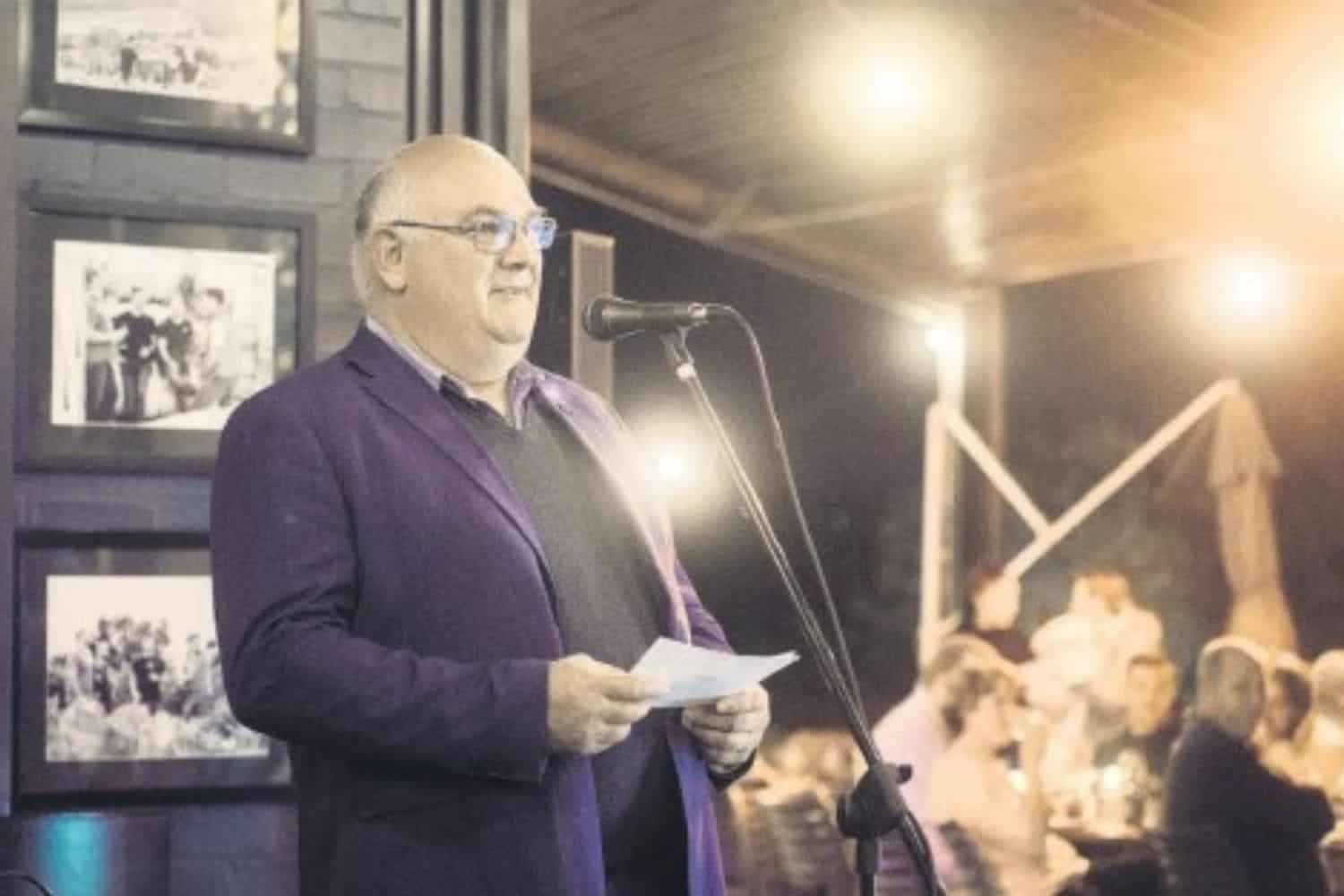
MULTI-SKILLED. Theo de Jager is also a published author and poet. Pictures: Supplied


Southern African Agri Initiative (Saai) board chair Dr Theo de Jager identifies as a tree farmer and a meat lover who learned to farm with vegetables and began with a love for palm trees.
“I will never give up or stop farming,” he says. De Jager, who farms outside of Tzaneen with avocados, macadamia nuts and blue gum tree plantations, says he always wanted to be a farmer growing up.
De Jager’s early life and education
De Jager was born in 1963, in Esselen Park and lived in Kempton Park before his father, who worked on the railways, sent him to agricultural high school in Brits.
“But he took me out after a year because he said if I wanted to be a farmer, I needed a farm. He said a farm wasn’t something you just bought; you inherited a farm and I wouldn’t inherit a farm.
“He also said to me to work hard and further my studies to become an agricultural advisor, so that I can farm on everybody’s farms.”
After De Jager matriculated from Hoërskool Menlopark in Pretoria in 1980, he didn’t study agriculture, but rather obtained a doctorate in philosophy through the University of Stellenbosch and University of Pretoria.
“I like to tell people that’s why I farm, because what else do you do in philosophy?”
ALSO READ: FSCA ‘clears’ Livestock Wealth of wrongdoing
Entering farming and leadership
De Jager’s career in farming started in the ’90s when he met with a farmer in Trichardtsdal in Limpopo to advise him on labour issues with the unions.
“I met him on the farm and the next thing I knew, I was managing his farm. It was the most wonderful experience of my life. It was a beautiful palm farm.”
Ironically, De Jager bought his first farm right next to the palm tree farm at an auction at the age of 36, shortly after which he was elected as the chair of the Farmers Association.
“Two weeks after I became chair, the first land claim was gazetted on our farms. At that time, nobody knew how it worked or what it was about — nor did I. Eventually, an agreement was reached on the land claim.
“Afterwards, others approached me to help them with their claims and negotiations. It quickly became my job at the district agriculture union and later at Agri Limpopo and AgriSA.”
Pan-African and global involvement
De Jager was also the president of the African Farmers’ Association of South Africa, which was why he is still intensely involved with matters in Zimbabwe and was the first South African president of the Pan-African Farmers Organisation.
“It was an amazing experience. I was in 44 of the 54 countries in Africa,” he said, De Jager said Ethiopia was his favourite country in Africa because of the trict agriculture union and later at Agri Limpopo and AgriSA.”
De Jager was also the president of the African Farmers’ Association of South Africa, which was why he is still intensely involved with matters in Zimbabwe and was the first South African president of the Pan-African Farmers Organisation.
“It was an amazing experience. I was in 44 of the 54 countries in Africa,” he said, De Jager said Ethiopia was his favourite country in Africa because of the people and landscapes.
De Jager was also the president of the World Agricultural Organisation, with its head office in Rome, which allowed him to meet and get to know farmers from around the world on all six continents.
ALSO READ: Foot-and-mouth disease: Cattle vaccine plan is ‘crisis, not disease control’
The farming family and personal life
“Farmers around the world are all the same, although no two farmers farm the same.
“Farmers are usually the more conservative people in society, not politically conservative, but more often religiously conservative with family values.”
De Jager says there is a phenomenon in the world of a family on a farm.
“They are different from a family in the city. There’s more glue and they are knitted tightly to each other. They still eat dinner together on a farm.
“You are more dependent on each other on a farm and it’s passed on to each other through the generations, which is more than the land and equipment.”
De Jager has ason and two daughters, who don’t want to pursue farming, presumably due to losing their first farm to a land claim.
De Jager, who is a published author, says he loves to read and write in his free time and has also had his poetry used in school curriculums.
READ NEXT: ‘We were given three months to leave’: Waterval farm residents allege forced displacement
Support Local Journalism
Add The Citizen as a Preferred Source on Google and follow us on Google News to see more of our trusted reporting in Google News and Top Stories.

