Institute charts protests since 2008 and links reductions to infighting. Aggression rises as ANC affiliates lose jobs and access to resources.
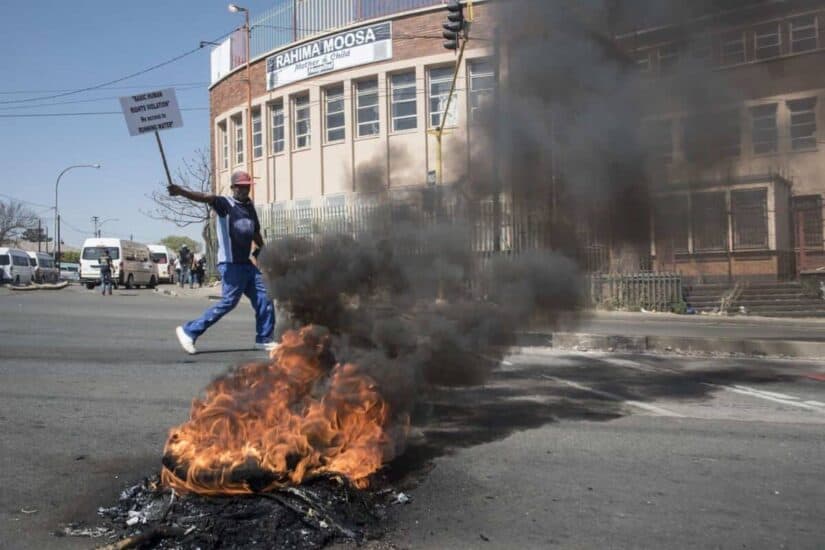
Residents of Westbury and Coronationville take to the streets, 26 August 2025, as they protest ongoing water supply issues. Picture: Michel Bega/The Citizen


The gravy train may be halting for many, but the elite are using protests for their political benefit, according to the latest research from the New South Institute.
While many South Africans taking to the streets have legitimate grievances, political elites have managed to turn those grievances into something that can advance their own ambitions.
Service delivery protests often mask political infighting – report
“We are certainly not discounting real grievances over services,” the director of New South Institute, Ivor Chipkin, told ENCA.
“We are saying that elites within political parties are able to take advantage of these local disputes,” he adds.
These conflicts are then used as battles for power and position within political parties.
Chipkin says the institute has, for years, been trying to gather data from service delivery protests.
It has been charting service delivery protests since 2008, said Chipkin, and noticed that the reduction of service delivery protests in some periods was not the result of improved services.
Little to do with improving lives
In many instances, the protests were meant to destabilise internal politics and had very little to do with improving citizens’ lives.
One factor causing protests is that people who often got jobs through their affiliation with the ANC can no longer do so as taps are closing, partly due to the government of national unity.
People are now accessing resources through other means, including organised crime.
“That is why we are seeing much more aggression and more organised forms of crime taking hold,” said Chipkin.
“We are seeing partisan relationships between senior generals, brigadiers and organised criminals,” he added.