In a no-holds-barred address, Ramathuba questioned how government explains its most glaring contradictions.
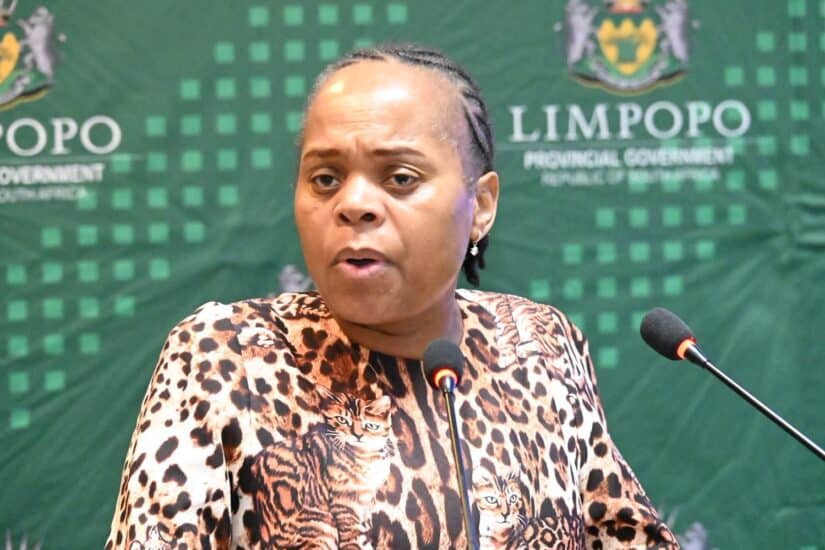
Limpopo Premier Phophi Ramathuba cracks the whip at Lekgotla. Picture: Supplied


Limpopo Premier Phophi Ramathuba has read the riot act to her executive council, accounting officers, mayors, municipal managers and CEOs of state-owned entities.
Reflecting on the bruising 2026 local government elections for the ANC, she declared that the era of endless explanations and bureaucratic paralysis is over, and that the next two-and-a-half years until the next general elections will be about one thing: implementation.
Addressing the Executive Council Budget Lekgotla at The Ranch Resort outside Polokwane on Thursday, Ramathuba used the halfway mark of her administration to issue orders to her government.
“When we took the oath of office in June 2024, we promised sweeping, fundamental and lasting changes. Today we cross the halfway mark.
“This lekgotla convenes directly after the 2026 local government elections. While those elections yielded commendable democratic victories, they also delivered an unvarnished, piercing message from our residents.
“The people have spoken loudly and clearly. They are demanding immediate, visible and tangible improvements in basic services – specifically water, roads and jobs. Their wishes must be respected. This lekgotla must be a definitive turning point.”
‘Bureaucratic paralysis’
Ramathuba questioned how government explains its most glaring contradictions.
“How do we explain that major dams such as Nandoni and De Hoop remain full for years, yet communities on their doorsteps have no clean, potable water?” she asked.
“Let us be brutally honest: too often this administration appears trapped in endless explanations that yield zero results. We are locked in a culture of bureaucratic paralysis.”
She put accounting officers squarely in the firing line, asking whether they are prepared to use resolutions from the recent provincial technical mid-year performance review to answer the agonising questions communities asked during the elections.
“Why do our people still lack consistent water? Why have flood-damaged roads not been repaired? Why is unemployment still rising?” she charged.
While noting that Limpopo’s unemployment had decreased to 30.2% in Q3, below the national average of 33.7%, Ramathuba said it remains unacceptably high and demanded disruptive interventions.
Projects and money
She lamented worrisome expenditure patterns where money is “recycled” through systems without changing lives, despite policy and budgets being aligned.
“Policymakers – the premier and MECs – have done their part. Yet critical half-yearly targets have not been achieved despite the availability of financial and human resources,” she said.
“Cluster reports blame delayed procurement, poor project management and lack of funding. These factors fall entirely within the mandate of accounting officers, CEOs and CFOs.”
She cited oversight committees that concluded government is failing due to lack of consequence management, ethical leadership, accountability and work ethic, creating a dangerous trust deficit.
“We know what must be done. We held a special infrastructure integrated planning workshop in July 2025. The challenge is not lack of plans; it is lack of execution,” she declared.
Ramathuba then issued non-negotiable directives:
- rigorous implementation of catalytic initiatives, including SEZs with urgent finalisation of township establishment on the south side of Musina SEZ and immediate action on the newly approved Fetakgomo-Tubatse SEZ;
- strict adherence to the 3D sustainability plan and Scopa reporting;
- intensified rollout of the professionalisation action plan and digital transformation roadmap;
- full implementation of the 2026/27 audit improvement plan.
She also issued firm deadlines on flagships: the provincial theatre must be completed by June 2027 at all costs; disaster spending must shift from reactive to proactive ahead of El Niño; the ZCC Interchange must be executed with “military precision” within 18 months; and the Thohoyandou Intermodal Facility inertia must “end today”.
Time for talk is over … but will action follow?
Quoting Sun Tzu, she warned: “The time for talk, excuses and endless paperwork is over. The next two-and-a-half years belong to implementation, implementation and implementation!”
However, the Bolsheviks Political Party of South Africa (BPSA) said Limpopo does not need another speech, but consequence management and action.
“We remain sceptical that the premier’s latest address will translate into meaningful and measurable improvements in the lives of ordinary people,” said general secretary Seun Mogotji.
“While we acknowledge that the premier has correctly identified longstanding failures, including bureaucratic paralysis, water shortages despite available dam capacity, weak consequence management and persistent service delivery failures, recognising a problem is not the same as solving it.”
Mogotji said communities in Sekhukhune, Moutse, Ga-Modjadji, Venda, Lephalale, Phalaborwa and other parts of the province continue to experience deteriorating roads, unreliable water, collapsing healthcare, unemployment and failing institutions, despite years of similar commitments and turnaround strategies.
“The question is no longer whether government understands the challenges. The question is whether those entrusted with public resources have the political will and administrative discipline to address them,” he said.
“We reject the culture of repeatedly introducing new plans while the same institutional failures remain unresolved. A lekgotla resolution cannot be a substitute for implementation, and a stern warning from the premier cannot replace disciplinary action against officials who consistently fail to perform.”
Mogotji said BPSA is particularly concerned that the same municipal managers, CFOs, senior executives and accounting officers who presided over poor performance and wasteful expenditure continue in positions without accountability.
“Premier Ramathuba’s repeated call for ‘implementation, implementation and implementation’ must not become another political slogan that disappears once the lekgotla concludes.
“The people of Limpopo are tired of speeches. They want functioning clinics, accessible roads, reliable water, employment opportunities and public institutions that respect their constitutional obligations,” Mogotji said.