The current near-capacity levels represent a turnaround from recent years.
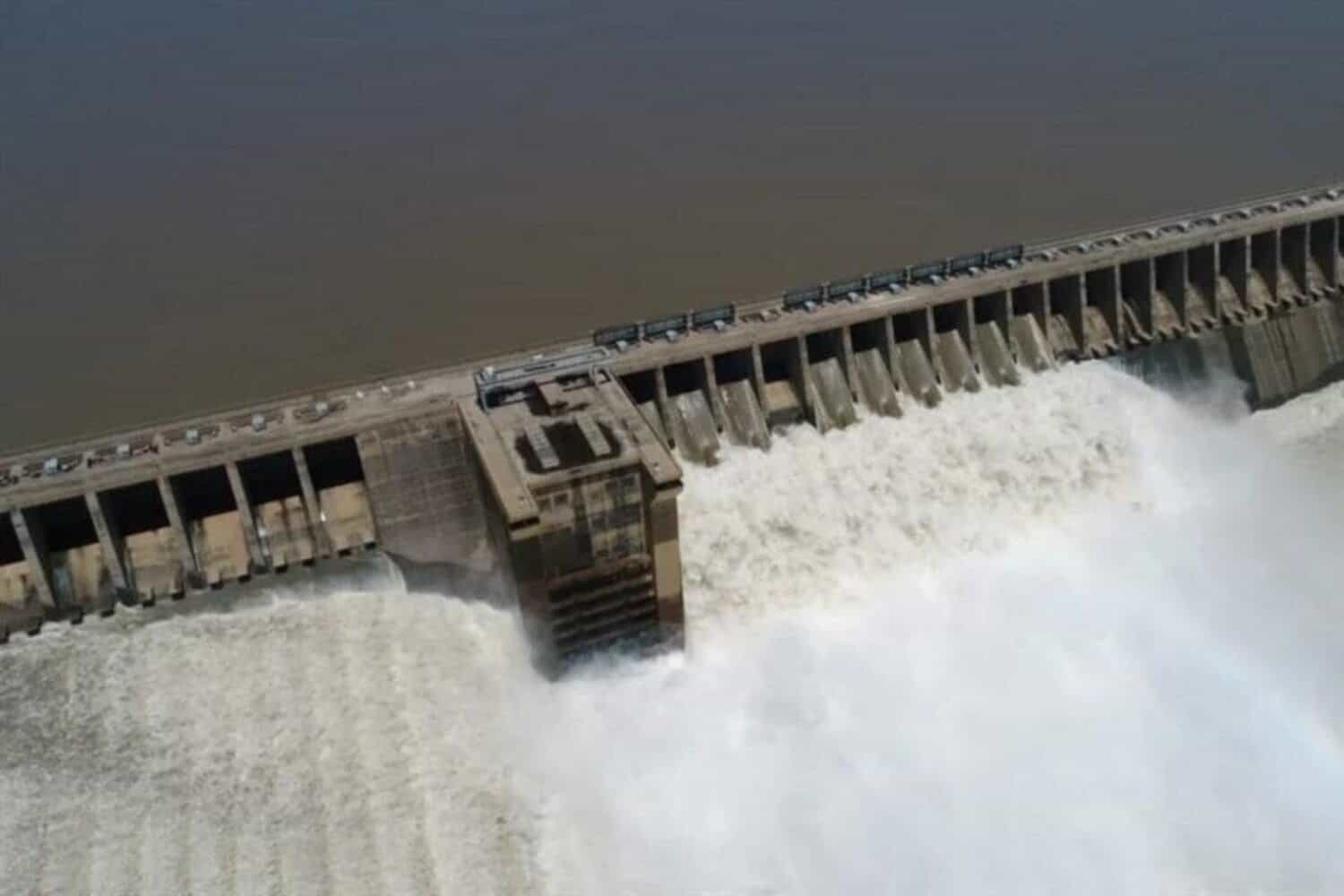
Vaal Dam. Picture: Supplied.


The Vaal Dam, a critical component of the integrated Vaal river system, has experienced a slight decrease in water levels over recent days.
According to the latest measurements from The Reservoir, a water resource information centre for the catchment management forums of the Upper Vaal Water management area, on Wednesday, 7 January 2026, the dam recorded a level of 103.42%, down from 103.68% the previous day.
The dam maintained an inflow of 261.9 m3/s while releasing 247.2 m3/s through two open gates.
The Vaal Barrage measured 7.5 metres, with an outflow of 267 m3/s and a water temperature of 23.1 °C.
Two sluice gates remain open at the dam to regulate water levels.
ALSO READ: Severe thunderstorms likely in three provinces on Wednesday
Recent level fluctuations
According to The Reservoir, on Tuesday, the water was being managed with an inflow of 284.2 m3/s and an outflow of 247.2 m3/s.
The Vaal Barrage, measuring 7.5 metres, is releasing 282.9 cubic metres per second while recording a water temperature of 22.8 °C.
Additionally, on Monday, 5 January, the dam recorded a capacity of 103.81%, with significantly higher inflows of 324.1 m3/s and matching outflows of 247.2 m3/s through the same two-gate configuration.
The Vaal Barrage released 267.2 m3/s that day, with water temperatures at 22.2 °C.
By 4 January, the level stood at 103.62% with inflows of 340.9 m3/s. The Vaal Barrage measured 7.4 metres, releasing 266.1 m3/s whilst recording a water temperature of 23.6 °C.
Historical context
The current near-capacity levels represent a remarkable turnaround from recent years. On 4 January 2025, the dam was at 23.86%, whereas on 4 January 2024 it was 67.2%.
The situation mirrors 2023, when the dam reached 102.00% with three gates open, although it remains below the 110.4% recorded in 2022, when four gates were required.
Previous years showed concerning lows, with 2021 at 56.7%, 2020 at 50.50%, and 2017 at its lowest point at 44.22%.
The dam has experienced various capacities over the decade, including 74.36% in 2019, 80.87% in 2018, 53.96% in 2016, 84.06% in 2015 and 99.88% in 2014.
READ NEXT: Here’s how full the Vaal Dam will be at the close of 2025