The R500 is not safe for motorists to travel on.
![Warning: Motorists urged to avoid R500 after massive sinkhole closes road [PICTURES]](https://media.citizen.co.za/wp-content/uploads/2025/12/R500-Sinkhole.jpg)
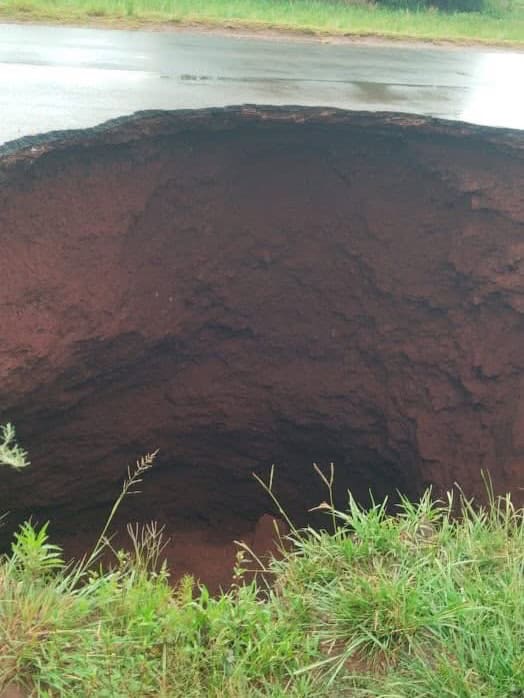
A massive sinkhole destroyed the road surface on the R500. Picture: Supplied


The Gauteng Department of Roads and Transport has urged motorists to avoid the R500 Road near Carletonville in the West Rand after a massive sinkhole destroyed the road surface.
About three new sinkholes formed along the R500 after large parts of the West Rand were hit by heavy rainfall and hail over the past week.
Assessment
The sinkholes are located on the route between Carletonville and Ventersdorp, a short distance away from Rooipoort Primary School.
Gauteng Roads and Transport spokesperson King Mthombeni said the R500 is not safe for motorists to travel on.
“Preliminary assessments indicate that over 80% of the road surface has caved in, making the route extremely unsafe. The affected section has been closed off while technical teams are being dispatched to conduct a full safety evaluation.”
ALSO READ: WATCH: Roodepoort road closed due to sinkhole
Warning
King urged motorists to take precautions to avoid becoming victims of the massive crater.
“Motorists are urged to use alternative routes, obey all road closure signs in the interest of safety and exercise extreme caution when approaching or travelling in and around the area.”
Gauteng MEC for Roads and Transport, Kedibone Diale-Tlabela, has called for heightened vigilance.
“We urge all road users to avoid the R500 Road near the sinkhole site. The collapse poses a serious risk, and the priority is the safety of motorists as they continue to assess the full extent of the damage.”
“We ask the public to cooperate fully with authorities and make use of alternative routes until further notice,” appealed the MEC.
The department said it will continue to monitor the situation and provide updates as more information becomes available.

What are sinkholes
Sinkholes are a common occurrence in Merafong. Khutsong alone has more than 209 sinkholes, resulting in damage to homes, the closure of a day-care centre and the evacuation of classrooms at a school, according to Construction Safety.
Sinkholes form when underground rock erodes, creating a void that can no longer support the surface layer of soil.
This process is driven by water dissolving soluble rocks such as limestone, gypsum, or salt, a process known as dissolution.
Human activities, such as building construction or leaking water and sewer pipes, can accelerate this process and create sinkholes.
ALSO READ: Durban sinkhole being repaired after family’s near-death experience
Support Local Journalism
Add The Citizen as a Preferred Source on Google and follow us on Google News to see more of our trusted reporting in Google News and Top Stories.