

Air quality monitors for “polluted” coast
The issue of burning sugarcane is always a hotly debated topic. We ask the experts.
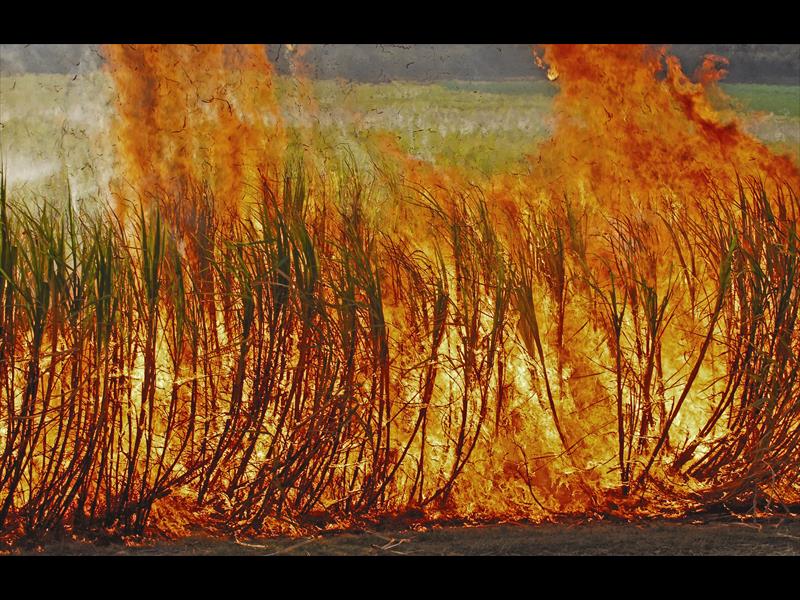
The Dolphin Coast may soon be furnished with air quality monitors (AQM) to determine if sugarcane burning is indeed the cause of residents’ seasonal respiratory ailments, if district and provincial authorities give the project their final approval.
The AQM’s will give a clear footprint of what pollution the Ballito area experiences but at a price tag of R500 000 each, one of the challenges lay in finding a location with electricity and 24 hour security to protect the monitors from vandalism.
Ilembe district municipality health and safety manager, Leon Botha, said last year the reservoir grounds next to Sembcorp Siza Water have been identified as a possible location. He said they were slowly making headway in getting permission from Ilembe district municipality to install the AQM unit and that he was waiting for a platform to be built for the equipment.
“I have requested permission from Umgeni Water to install a mobile ambient AQM at Umhlali and Sembcorp Siza Water, Ballito but Umgeni Water said they had a pending issue at higher level with Ilembe that had to be resolved first,” he said.
Ballito business woman, Clare Swithenbank-Bowman, has been contesting the practice of sugarcane burning for the last six years. Both she and her young son suffer from allergies during burning season.
“Last year my son had seven prescriptions for antibiotics at the age of three and I know of around 50 families within the Ballito area whose children have had to undergo surgery to get grommets put into their kids’ ears due to chronic ear infections,” she said.
Swithenbank-Bowman said the fact that those children never had those problems until moving here was evidence that there is a problem in the Ballito area.
On one of the occasions that she contacted the health department, she was apparently told: “Good luck with this battle; people have been complaining for years but nothing ever gets done.”
She believes erecting the air quality monitors was critical because nobody can point fingers at the sugarcane industry without evidence to back them up.
Research done in São Paolo, Brazil, Hawaii and southeast Louisiana, USA (all sugarcane producing areas), suggest that air pollution from burning sugarcane (biomass) causes damage to the respiratory system and that biomass particles are at least as toxic as those produced by traffic.
Expert opinion
To find out more about this burning issue the Courier spoke to Ballito based paediatric pulmonologist, Professor André van Niekerk. He said that sugarcane burning often raises concern about allergy and airway infections.
Sugarcane is a grass and he said sugarcane burning had the same effect as wild grass burning in that it released carbon dioxide and other harmful particles that contributes to air pollution.
Other contributors to air pollution like cigarette smoke, open fires in houses, diesel and petrol fumes, industrial air pollution, mineral dust and even salt spray from the sea adds to the total pollution problem.
“Parents who smoke and people who smoke inside their homes and cars fail to realise that the damage caused by their own actions are worse than the possible effects of sugarcane burning.”
He said the warmer coastal climate and wind worked to our advantage, dispersing the pollutants relatively quickly and clearing our air. The colder winter climate and low wind, over cities like Johannesburg, actually trap pollutants to form a toxic smog blanket over these cities on some days.
“If we had to test the air in Ballito today, we would probably still have some of the cleanest air for a developed area.”
He said pollution did not cause allergies but can make the symptoms of allergy worse in people who already suffer from allergic disease.
“We also know that direct exposure to pollution, and cigarette smoke, can increase the risk for airway infections.”
He said the popular practice of daycare groups for young children, and the use of pacifiers like dummies, contributeded more towards airway infections in our young children than sugarcane burning.
“Increased exposure to germs when children attend daycare has been shown to lead to an up to eight-fold increase in airway infections. Children under three have not yet fully developed their immune system and are not able to fight off such exposure to germs.”
He said sugarcane burning season overlapped with winter, making it easy to incorrectly attribute getting sick to sugarcane burning rather than the simple fact that there are more airway germs around in winter.
He emphasises that any practice that adds to air pollution should be strongly discouraged.
Ethekwini study
The May 2015 Air Quality Management Plan (AQMP) for Ethekwini Municipality revealed that sugarcane burning was responsible for only between zero and one percent of all air pollution.
Motor vehicles accounted for 83 percent of nitrogen dioxide emissions and 41 percent of particulate matter in the air, while industrial plants pumped 73 percent of the total sulfur dioxide and 52 percent of Ethekwini’s total particulate matter into the air.
Stay in the loop with The North Coast Courier on Facebook, X, Instagram & YouTube for the latest news.
Mobile users can join our WhatsApp Broadcast Service here, or if you’re on desktop, scan the QR code below.