

Fancy weather-wise design trends
Home Improvement: Creative ideas to embrace the environment of your home.
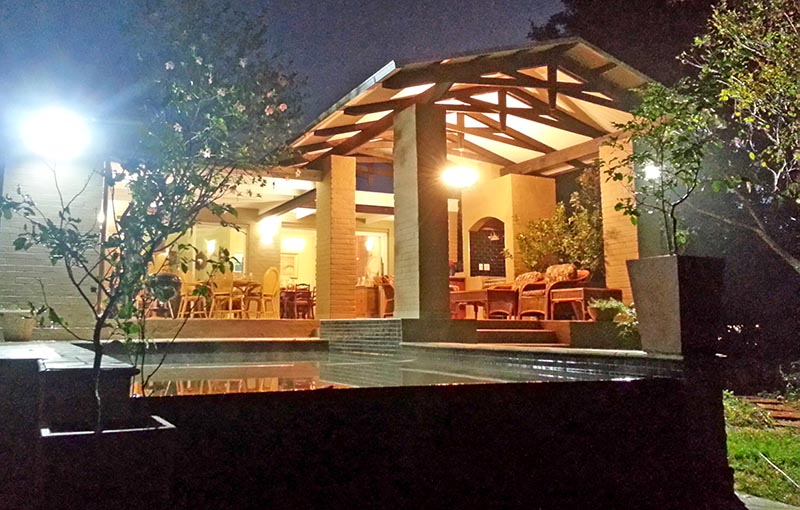
Since the enforcement of South Africa’s new legislation on energy efficiency in November 2011, it is more important than ever to reduce carbon emissions by keeping houses passive (creating and emitting the least possible carbon).
The Courier spoke to Vox Humana Architects’ Luigi Salemi about the latest ideas from South Africa’s brightest minds in the field of architecture.
Salemi said South Africa has been sub-divided into six climatic zones with different architectural requirements.
Ballito is part of the subtropical coastal zone (zone five) that runs from East London to the Mozambican border at Kosi Bay.
“The challenges that zone five faces are humidity and heat gain through the roof,” said Salemi. The solutions to these challenges present themselves in the form of modern insulation techniques for roofs and walls.
“Pratleyperl mixed into ordinary plaster can be used to keep a North Coast home cool in summer or a midlands home warm in winter. Pratleyperl contains prolite, a mineral mined in South Africa that has very high insulating properties. Two millimetres of this plaster mix provides the same insulation as a double skin brick wall.”
Houses with lots of glass are more expensive to insulate as they would require double glazing to regulate temperature.
Therefore people are encouraged to consider carefully about where they put in windows.
In a further attempt to reduce carbon emissions and tapping into South Africa’s sunny climate, solar heating has become very popular, replacing electrical and gas systems.
Salemi said this level of insulation dramatically reduces the need for power hungry air conditioners and heaters.
Outdoor living

In keeping with the topic of embracing the environment, Salemi said cooking outside with guests sitting around the patio area, while enjoying a glass of wine or two has become very popular.
“South Africa has an ideal climate and the outdoor lifestyle has become remarkably desirable, hence outdoor kitchens, incorporating not just a braai, but also an electrical or gas stove is fast becoming a trend to keep up with.”
The traditional outdoor patio has evolved into a space with room to accommodate not just patio furniture, but also a dining table and cooking facilities.
Limited space? No problem! By installing folding stacking doors you can create a fold-away wall, which turns a living room into a patio, incorporating indoor furniture into the outdoors.
What is outdoor living without timber decking? Salemi said advances in timber technology has taken care of high maintenance timber decking.
The popular balau timber looks beautiful but it is vulnerable to damage and requires constant maintenance.
Garapa timber is the answer to hassle-free timber decking as it is more hardy and requires zero maintenance.
“Garapa is yellow-ish at the start but after a year turns to a grey-ish beige, putty, tawny colour that looks very elegant and requires no maintenance,” he said.
Rainwater harvesting
For those who have caught on to the increasingly necessary practice of rainwater harvesting, Salemi recommends re-doing the gutter to route rainwater into a tank.
Unfortunately this is only worth the cost and effort on an 80 square meters or larger roof.
“Rain water harvesting is still new in South Africa and water from the roof can be channelled to an above or below ground tank.”
A below the ground tank is softer on the eye but heavier on the pocket while above ground tanks can be cleverly disguised.
It is important to note that water harvested from rain is not suitable for long term storage and has to be used on an ongoing basis for watering the garden washing the car or flushing the toilet.
Swimming pools
Salemi said the latest infinity pools worked on a water recycling system where water flows down the back of the pool and is recycled back into the pool.
Stay in the loop with The North Coast Courier on Facebook, X, Instagram & YouTube for the latest news.
Mobile users can join our WhatsApp Broadcast Service here, or if you’re on desktop, scan the QR code below.