
Can we afford to separate the school world from the real world?
Societal change, driven by technology, is accelerating faster than at any time in human history since the industrial revolution.
With artificial intelligence, robotics, 3D printing, drones, self-driving cars and collective intelligence enabled by the internet, the work world that current primary school pupils will enter will be very different to today’s working world.
Most of the jobs those kids will do have not been invented yet and we therefore need to rethink what a school is.
An example of how the world is changing: Microsoft said in 2007 there was no chance that the iPhone would get significant market share, it turned out to be a gross miscalculation.
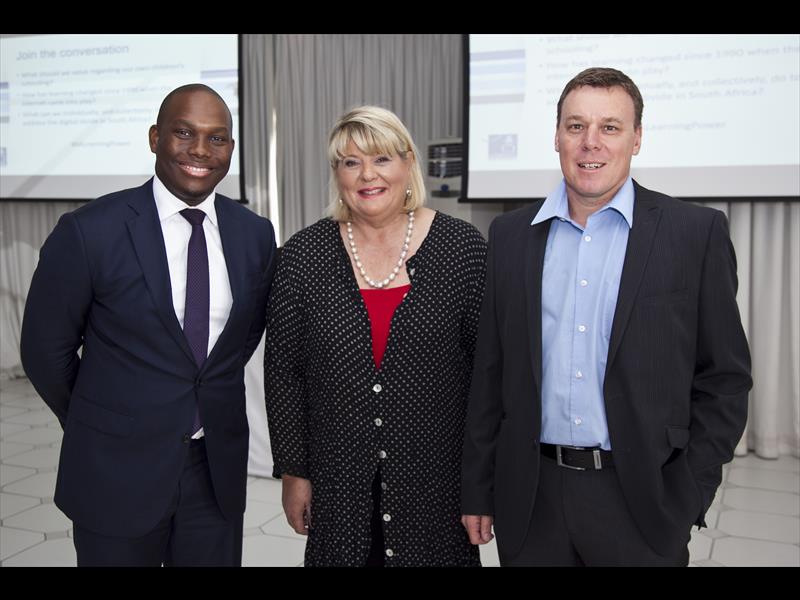
Head of the Curro centre for education excellence, Alta Greeff, said at a breakfast education seminar held at the Oyster Box Hotel in Umhlanga on September 11, that the best way to predict the future was to invent it.
She said the old 19th century education structure that formed today’s system, taught kids to become obedient factory workers who wear uniforms, walk in straight lines, keep quiet and not think for themselves. Those kids were trained to be good employees.
“Technology has brought about changes and children now need new skills. Knowledge is no longer enough and what you can do with what you know is more important than knowledge itself,” said Greeff.
She said both learning content and learning methods need to change.
Greef said kids should be taught to solve a need because that was where future jobs would come from.
“If kids love what they learn they will learn easily. The brain is a muscle, not a bucket and rather than being fed information, kids should be taught skills and habits of how to learn and be given access to information.”
She said exams were good but should be a hurdle, not a mountain. She said schools were too performance oriented and sometimes let kids pass to get a good pass rate for the school as a whole.
Guest speaker, Vusi Thembekwayo spoke about the demands of the workplace in the 21st century.
“What got you here would not get you there,” said Thembekwayo.
His advice was to find the truth by asking why, aim to be the best and not the biggest and have a vision that would excite yourself and others.
The conversation on 21st century education is ongoing and can be joined on Twitter by following #SALearningPower.

Stay in the loop with The North Coast Courier on Facebook, X, Instagram & YouTube for the latest news.
Mobile users can join our WhatsApp Broadcast Service here, or if you’re on desktop, scan the QR code below.