
The doctor prescribes coffee
Salt Rock coffee connoisseur studying the science of coffee.
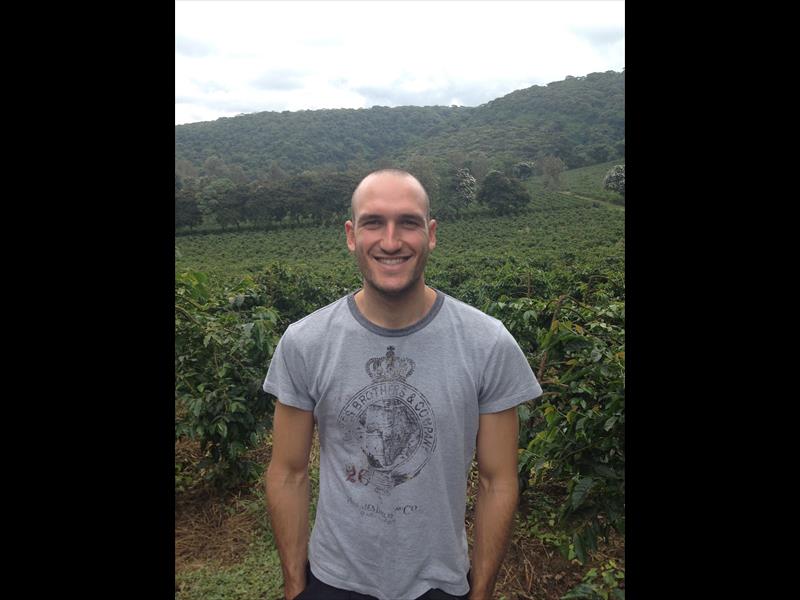
Waking up to a steaming cup of coffee is an instant happy-maker, but have you ever wondered where your coffee comes from or how that bean has been grown?
Salt Rock’s Alessandro Craparo or simply ‘Sandro’ has made coffee his business and is about five months away from completing his PhD with the University of the Witwatersrand in the science of coffee.
“My family is Italian, so I grew up with real coffee beans being ground and brewed. I have always found the plant interesting, because it is so temperamental and it is such a beautiful bean,” said Sandro, who has his own roastery called the Science of Coffee at The Workstation in Umhlali.
“Coffee is about ten years behind wine when it comes to research and awareness. I would like people to start thinking about coffee like they do about wine. People are slowly becoming more aware of coffee and ask questions about the bean’s origin, which is great, as this gives more justice to the farmer.”
The laid-back bean lover started working on the coffee crops about seven years ago and travels into East Africa almost monthly.
“There are about 100 million small holders, who make about 90% of the world’s coffee. Many of the farmers have no idea what coffee is or how expensive it is, because they get peanuts for their beans. It is crazy, knowing that coffee is the second most valuable commodity after oil.”
Sandro runs projects in countries like Tanzania, Uganda, Ethiopia and Central America, working with farmers and governments to try improve the future of coffee crops.
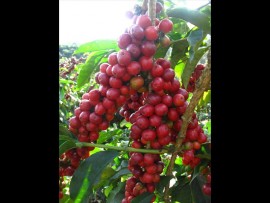
“Coffee plants are super sensitive. They ideally need a temperature range of between 18 and 21 degrees Celsius as well as a dry phase, so that they can produce good flowers and fruit. With knowledge we have gained through research, we train the farmers on various agronomy techniques like pruning and implementing shade to improve their yield and quality.”
He said since 1960, farmers have lost about 50% of their harvest, mainly due to global warming.
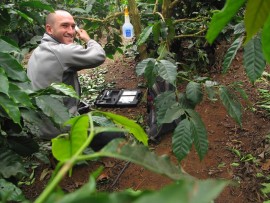
“I analyse the plant’s physiology – take measurements of how it is breathing, check if it is stressed and see how the environment is affecting the plant.”
When he is not working with beans, he enjoys drinking them, especially Ethiopian varieties. “Despite the numerous amazing coffees that I have floating around the lab and house, my wife Carolyn, has been drinking instant coffee until about a year ago, complete sacrilege! Instant is predominantly made with a different species of coffee – Robusta – which is lower quality, cheaper and has more caffeine than Arabica. She has now converted to real coffee and will never go instant again.”
Next time you drink a cappuccino, appreciate the journey of those beans that create a smile on your face with each sip.

Do you want to receive news alerts via WhatsApp? Send us a WhatsApp message with your name and surname to 061 718 4438.
Please read our WhatsApp broadcast list disclaimer.
Join us on BBM at 59015786
Join the conversation on Facebook, Twitter and Instagram.
Stay in the loop with The North Coast Courier on Facebook, X, Instagram & YouTube for the latest news.
Mobile users can join our WhatsApp Broadcast Service here, or if you’re on desktop, scan the QR code below.