

Dolphin Coast prepares to go into lock down
The nationwide lock down would be accompanied by a public health management programme which will significantly increase screening, testing, contact tracing and medical management.
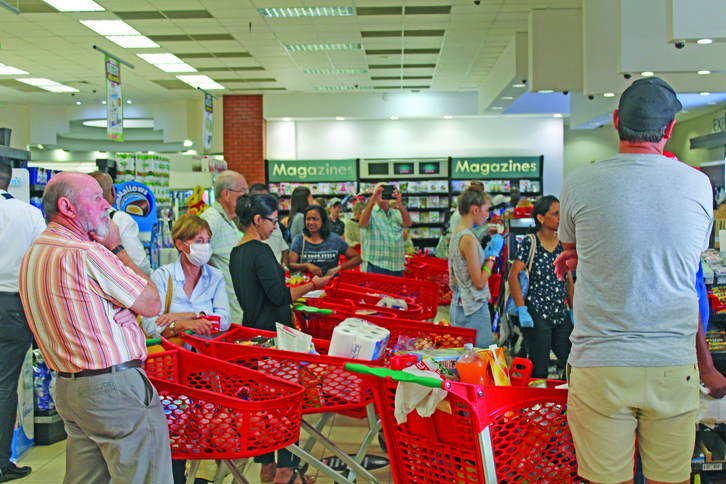
The world felt very different on Tuesday morning after President Cyril Ramaphosa announced to the nation on Monday night a three week lock down effective from midnight on March 26 until midnight April 16.
This comes after the total number of coronavirus cases rose to 402 earlier that day. However, the numbers had jumped by 152 to 554 by Tuesday morning.
This reflects the single largest increase in cases in one day, after increasing by 128 on Monday.
The president ordered much of the South African population to stay indoors in a removal of basic freedoms never seen before.
Admitting there was no easy option left in the battle against the coronavirus pandemic Ramaphosa banned all social gathering, closed down all “non-essential” shops and imposed draconian restrictions on anyone leaving their home.
“The action we are taking now will have lasting economic costs. But we are convinced that the cost of not acting now would be far greater,”
“The next few days are crucial. Without decisive action, the number of people will rapidly increase from a few hundred to hundreds of thousands,” Ramaphosa said.
The lockdown will mean the following for South Africans:
Everyone not exempted will have to stay at home.
The people exempted from the lockdown include health workers in the public and private sectors, emergency personnel, those in security services such as the police, traffic officers, military medical personnel, soldiers, and other persons necessary for the country’s response to the pandemic.
This also includes those involved in the production, distribution, and supply of food and basic goods.
Essential banking services, the maintenance of power, water and telecommunication services, laboratory services and the provision of medical and hygiene products.
Individuals will not be allowed to leave their homes except under strictly controlled circumstances, like grocery shopping.
For the homeless, either their existing locations or, where available, alternative temporary accommodation sites, will be used for their 21-day “stay-at-home” period.
During this period, clinics, pharmacies, food-stores and hospitals will remain open.
Provision for transport for essential staff will remain open.
ATMs, retail point of sale devices, post offices and cash pay points will remain open.
Ramaphosa said the South African National Defense Force (SANDF) would assist police to make sure these measures are implemented.
The nationwide lock down would be accompanied by a public health management programme which will significantly increase screening, testing, contact tracing and medical management.
Community health teams will focus first on high-density and high-risk areas.
Trade and industry minister Ebrahim Patel said on Tuesday that South Africa had done “extraordinary things to enable the banking system to remain strong”.
Ramaphosa asked that South Africans not flock to stores in a panic buying frenzy.
“It is important for all South Africans to understand that the supply of goods remains continuous and supply chains remain intact.
“Government has had discussions with manufacturers and distributors of basic necessities, who have indicated that there will be a continuous supply of these goods.”
Health minister Zweli Mkhize said most cases in South Africa were moderate, and only two cases in intensive care units have been reported. No local deaths have been reported.
Mkhize said they expect the number to continue to increase before the curb is flattened out and the numbers start to decrease.
We will keep you updated
Can you still walk your dog and exercise during lockdown?
The guidelines on daily exercising remain unclear.
The Courier will update you via our website (northcoastcourier.co.za), our social media platforms on Facebook and Twitter and through our WhatsApp broadcast service as soon as more specific guidelines are released by government.
To receive breaking news alerts from The North Coast Courier via WhatsApp send us a WhatsApp message (not an sms) with your name and surname to 061 718 4438.
* Notice: Coronavirus reporting at Caxton Local Media aims to combat fake news
Dear reader,
As your local news provider, we have the duty of keeping you factually informed on Covid-19 developments.
As you may have noticed, mis- and disinformation (also known as “fake news”) is circulating online. Caxton Local Media is determined to filter through the masses of information doing the rounds and to separate truth from untruth in order to keep you adequately informed.
Local newsrooms follow a strict pre-publication fact-checking protocol.
A national task team has been established to assist in bringing you credible news reports on Covid-19.
Readers with any comments or queries may contact National Group Editor Irma Green (irma@caxton.co.za) or Legal Adviser Helene Eloff (helene@caxton.co.za).
Do you want to receive news alerts from The North Coast Courier via WhatsApp? Send us a WhatsApp message (not an sms) with your name and surname to 061 718 4438.
Please read our WhatsApp broadcast list disclaimer. Join the conversation on Facebook, Twitter and Instagram

Stay in the loop with The North Coast Courier on Facebook, X, Instagram & YouTube for the latest news.
Mobile users can join our WhatsApp Broadcast Service here, or if you’re on desktop, scan the QR code below.