

How to survive a tyre blowout when driving at 100km/h
With festive season road fatalities being as high as they are each year, this is one article you should take note of.
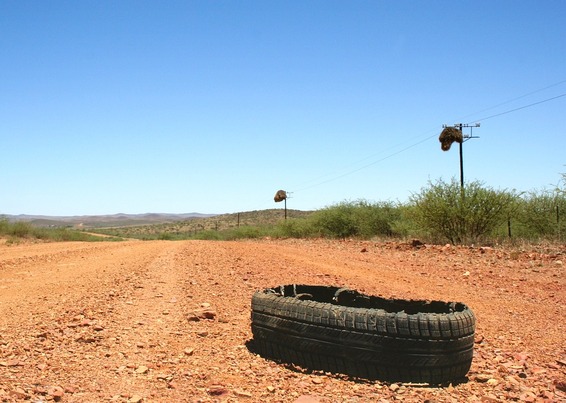
Staying calm when a tyre bursts at high speed is one of the most important things you can do.
With festive season road fatalities being as high as they are each year, this is one article you should take note of.
Most tyres burst owing to unattended punctures the Motoring Industry Workshop Association (MIWA) warned, adding that prevention is better than leaving it to the last minute.
“A burst tyre when travelling more than 100km/h can be a frightening experience and a safety risk to the driver and surrounding cars,” said MIWA chairperson, Dewald Ranft.

He advises on how to get your car to a standstill safely when you have an unexpected tyre burst while driving, specifically at speeds exceeding 100km/h.
These tips were provided in conjunction with Supa Quick.
“Stay calm and keep both hands on the steering wheel while keeping pressure off the brakes. Most people’s natural instinct is to slam on the brakes, but this will throw the car off balance and could send you into a spin, causing you to lose control of the car,” said Ranft
“It is best to attempt keeping the car going in a straight line to avoid any collisions. Note that your car will swerve in the direction of the blowout, but one should be able to remain in control if you can gradually reduce your speed.
“Remember, the deceleration force caused by the burst tyre will cause your car to slow down rapidly, so it is best to maintain your speed and then gradually ease off the accelerator,” said Ranft.
“If you are driving a manual car, use your gears to slowly reduce your speed. This can be done by gradually switching to lower gears, but only do so if you feel that the car is under complete control.
“Should you be driving an automatic, stay in the drive gear and do not change this. The drag from the exploded tyre will slow you down.
“Do not overcorrect when you first feel the swerve of your car after the blowout. It may be tempting to panic and turn the steering wheel hard in the other direction, but this will only make the loss of control more likely,” warned Ranft.
“Ensure that it is safe for you to come to a standstill and stop, taking traffic into consideration. Once done, turn on your emergency or hazard lights.”
Ranft said once a car reaches around 50km/h, you should be able to gently press on the brakes to bring the car to a stop.
“We urge drivers to take these steps seriously and try and familiarise themselves with the various stages so as to escape a blowout unscathed. It is also important to stick to the speed limit in case of any unforeseen emergencies.”
For breaking news follow The North Coast Courier on Facebook, Twitter, Instagram and YouTube.
Join our Telegram Broadcast Service at: https://t.me/joinchat/yJULuN8NaCs5OGM0
Join our WhatsApp Broadcast Service: Simply add 082 792 9405 (North Coast Courier) as a contact to your phone, and WhatsApp your name and surname to the same number to be added.
Stay in the loop with The North Coast Courier on Facebook, X, Instagram & YouTube for the latest news.
Mobile users can join our WhatsApp Broadcast Service here, or if you’re on desktop, scan the QR code below.