
#BookReview: A whale of a time with Ballito author, a former Union Whaling Company chemist and factory manager
His first book tells the story of his younger years working as a chemist aboard two vessels tasked with spearing whales in the Antarctic during the 60s, while his second recounts the whaling operations along the coast of Durban, as well as the years of the UWC.
The actions of the people of a bygone era should be judged in the context of what was deemed fit at the time, and not necessarily by today’s standards.
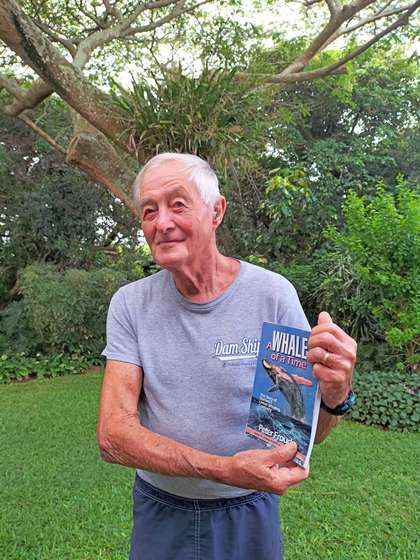
As a former whaler, few understand this better than self-published Ballito author Peter Froude (83), who has written two books recounting his 20 years as a whaler and chemist working for the Union Whaling Company (UWC).

‘A Whale of a Time’ was published last year, four years after his first book ‘Chasing Whales Around the Antarctic’.
His first book tells the story of his younger years working as a chemist aboard two vessels tasked with spearing whales in the Antarctic during the 60s, while his second recounts the whaling operations along the coast of Durban, as well as the years of the UWC.
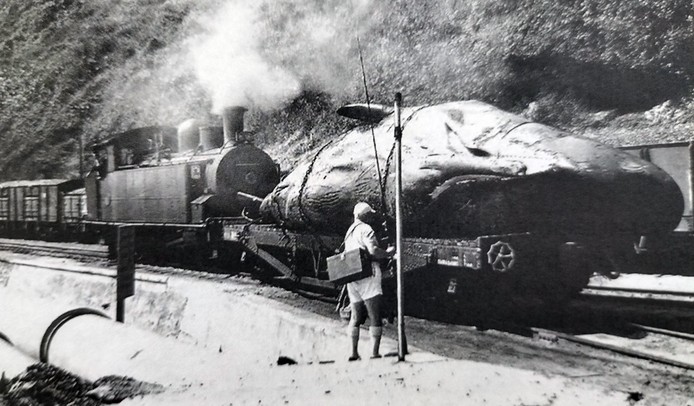
A booming whaling industry existed along the KZN coastline, with Durban as the main base.
Froude’s unexpected involvement in the industry came about when he had to find holiday jobs to fund his expensive medical studies at university in the mid 1950s.
After completing his first year of medicine at the University of Natal as it was known then, the university did not offer courses beyond that.
He had to continue his studies in the Western Cape, but stood little chance of saving enough through holiday jobs to fund the further five years required to earn his qualifications.
Instead he opted to enroll at Pietermaritzburg, majoring in chemistry and zoology with the idea of returning to medicine later.
He took on all kinds of odd jobs to pay his way before landing a permanent and lucrative job with the UWC.
He was first employed on a temporary basis for eight months and earned enough to finance three years’ studies.
But come the middle of his finals he received a call offering him a permanent job with the company, working as a chemist on an Antarctic factory ship.
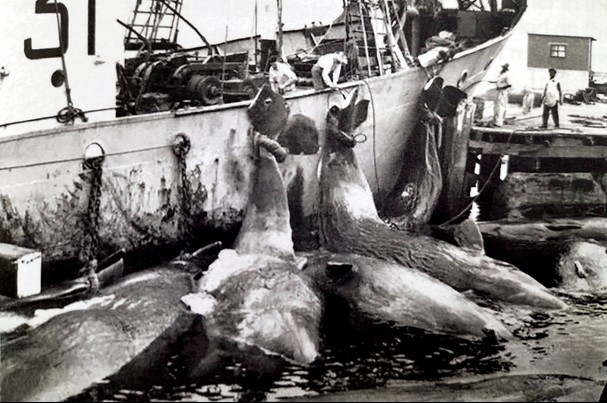
Froude needed to conclude his studies and exams before departing. The university’s vice-principal came to his rescue by allowing him to write his exam papers one after the other ahead of time.
“Before I knew it I was on board the small whale vessel heading south.”
He spent four summers in the Antarctic and eventually 17 years with the UWC as a factory manager.
Whaling is believed to have started in South Africa in the Cape in the 1790s, when whale hunters had to go out in rowing boats.
This method was modernised in the mid-1860s with steam ships armed with swivel harpoon guns.
It was common knowledge at the turn of the 20th century that more whales passed close to Durban’s shores than any other coastal city in the world.
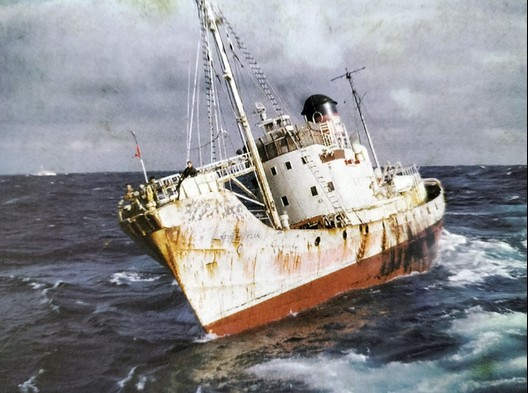
In his books, Froude recounts the growing whaling industry around KwaZulu-Natal as companies built empires on the back of the trade.
Whales were hunted for their oil, but eventually availability of kerosene, petroleum and other fossil fuels caused the industry to nosedive, while pressure by conservationists to protect dwindling whale populations also contributed significantly.
Whaling continued in South Africa until 1975 when UWC shut down. It would continue production until the end of 1976 with products still being manufactured from reserve stock.
In 1978, Froude became the last UWC employee before venturing into the oil industry.
He firmly believes if whaling had been controlled and not allowed to be overexploited, whaling could have continued without causing devastation of whale populations.
“Whaling could have remained a rich source of food for the world if conservation efforts were timeously implemented,” he said.
Froude’s books are available at R240 per copy. Contact him at 084 506 0210.
For breaking news follow The North Coast Courier on Facebook, Twitter, Instagram and YouTube.
Join our Telegram Broadcast Service at: https://t.me/joinchat/yJULuN8NaCs5OGM0
Join our WhatsApp Broadcast Service: Simply add 082 792 9405 (North Coast Courier) as a contact to your phone, and WhatsApp your name and surname to the same number to be added.
Stay in the loop with The North Coast Courier on Facebook, X, Instagram & YouTube for the latest news.
Mobile users can join our WhatsApp Broadcast Service here, or if you’re on desktop, scan the QR code below.