

Air report details UPL toxic soup of 62 chemicals at Cornubia spill site
The report also provided a list of products stored in the warehouse at the time of the fire. Listed under 3 categories, the report said there were 4 362 tonnes of pesticides, 1 177 tonnes of combustible solids/liquids and 35 tonnes of solvents present.
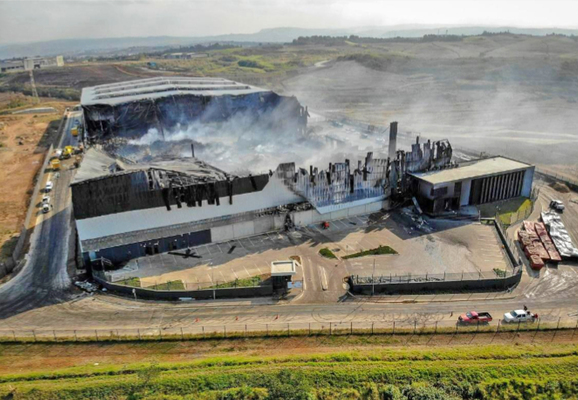
A shocking 62 toxic chemicals were present in the air during last July’s spill at the UPL South Africa chemical warehouse in Cornubia.
This has only now been confirmed, 7 months after the devastating fire with the release of the long-awaited atmospheric impact report (AIR) compiled by Airshed Planning Professionals and commissioned by provincial government and UPL.
On July 13 last year looters set the warehouse on fire, and during firefighting efforts chemicals were washed into the oHlanga tributary and uMhlanga estuary, while plumes of chemical-filled smoke polluted the air.
While firefighters attempted to control the blaze, the fire continued to smolder until July 21.
ALSO READ: Cornubia chemical spill’s impact will be felt for a considerable period of time says minister
Scores of residents complained about poor air quality, and as a precaution North Coast beaches were closed and remained so for several months as chemical mop-up operations were conducted.
In October, environment, forestry and fisheries minister Barbara Creecy said UPL was not in possession of requisite environmental authorisation prior to establishing its operations at Cornubia.
UPL denied this.
The impact report was released to government in November, containing a modelled analysis of the phases and duration of the fire, the products stored at the warehouse, meteorological conditions at the time and other relevant findings.
As not all specific information could be collected during the time of the blaze because of widespread unrest, the report also served as a worst-case scenario prediction.
UPL South Africa spokesperson Japhet Ncube said the reason for a worst-case scenario prediction was very specific.
ALSO READ: DFFE refuses to reopen beaches without chemical spill findings peer review
“The report models the worst possible outcome with the ultimate aim of identifying the areas in which humans may have been most impacted, which would then inform the epidemiological study.”
The report said the scale of the impact was considered to be regional with the impact significance rated as very high.
The report also provided a list of products stored in the warehouse at the time of the fire. Listed under 3 categories, the report said there were 4 362 tonnes of pesticides, 1 177 tonnes of combustible solids/liquids and 35 tonnes of solvents present.
The report revealed that hydrochloric acid, bromine, hydrogen cyanide and even sulfur trioxide were among the toxins released.
People exposed to the chemical fallout had temporary symptoms such coughing, runny noses and tearing eyes, while a significant number were exposed to levels which could have caused irreversible and other serious, long-term adverse health effects.
The report identified the most heavily affected areas to be Blackburn Estate, Blackburn Village, a nearby informal settlement and areas surrounding Umhlanga.
ALSO READ: Three months later and beaches from Umgeni to Salt Rock remain closed
Ncube said the next step was to conduct an epidemiological study which will consist of detailed medical testing of individuals within the impact zones – Phoenix to Umhlanga – to determine whether the chemicals have had, or are in the future likely to have an effect on human health.
“The results of that study will inform medical interventions and monitoring into the future,” Ncube said.
Meanwhile, more than R300-million has been spent by UPL to mitigate the impact of the chemical spill.
Download a copy of the report at www.scribd.com/document/558565397/Rec2-Air-UPL-Warehouse-Fire-Air-Rprt-Rev-0-22102021-1#.
For breaking news follow The North Coast Courier on Facebook, Twitter, Instagram and YouTube.
Join our Telegram Broadcast Service at: https://t.me/joinchat/yJULuN8NaCs5OGM0
Join our WhatsApp Broadcast Service: Simply add 082 792 9405 (North Coast Courier) as a contact to your phone, and WhatsApp your name and surname to the same number to be added.
Stay in the loop with The North Coast Courier on Facebook, X, Instagram & YouTube for the latest news.
Mobile users can join our WhatsApp Broadcast Service here, or if you’re on desktop, scan the QR code below.