Combating plastic pollution is everyone’s business says local NPO
The Litterboom was slowly building up its reclaimer database, and once more companies come on board the programme, more jobs will be created.

IF you’re a business owner who feels that it’s imperative to expand your social responsibility towards protecting our coastline and rivers from plastic pollution, then consider joining a programme which The Litterboom Project has been piloting.
Founded in 2017, the organisation’s aim is to alleviate the increase in marine plastic pollution by targeting the river systems, instead of dealing with it only in or near the oceans.
Speaking to Northglen News, Josh Redman, operations manager for The Litterboom Project since October 2021, said the new programme, called the Extended Producer Responsibility (EPR), ensures that businesses return a percentage of what they put into the environment to organisations such as Litterboom.
“The advantage of this programme is the increase in value that the reclaimers (informal recyclers within rural areas) are seeing, where they earn a fair living from organising and collecting plastic in their communities, in order to provide for themselves and their families,” said Redman.
READ ALSO: Bed manufacturer helps clean up Blue Lagoon Beach
“Basically, if your company uses plastic packaging in their products, a percentage of cash should go towards an organisation that cleans up the environment,” he said.
The first company to join the programme is Wedgewood. Funds donated to Litterboom are used to maintain its trucks, pay teams deployed to clean beaches and rivers, as well invest in reclaimers in local informal settlements.
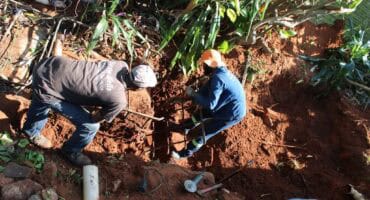
“One of our reclaimers lives in Blackburn Informal Settlement. He collects plastic and compresses it. Funds from our EPR partners go directly towards the reclaimer wages, while our operational costs are covered through the recycling of the plastic reclaimed, ” said Redman.
He said Litterboom was slowly building up its reclaimer database, and once more companies come on board the programme, more jobs will be created.
“This programme ensures that businesses that utilise plastic are being held accountable, that jobs are being created and that organisations such as The Litterboom Project are sustained. There has to be accountability,” he said.
“Part of our mandate is to also provide education in schools and communities on how to recycle and upcycle. We have educated people on how to respect our land. Our ancestors lived off the land, and somewhere that link was lost,” he said.
The Litterboom Project has teams in rivers from Umlazi to Umhlanga, and we are in the Black and Lotus rivers in the Western Cape.
“There is still a lot to consider for the EPR programme to be successful at scale. However the ideal would result in the recyclables having a local market demand, that wet waste would be well organised through community gardens and decentralised composting facilities. That would result in less resources needed for landfill collections at a national, provincial and local level,” said Redman.
Redman also encouraged other businesses to join the EPR programme.
For more information, visit www.thelitterboomproject.com
FOR YOUR INFORMATION:
The EPR was gazetted in 2021 to hold producers responsible for improving the design of their packaging, as well as ensuring that collectively there is a movement towards single use plastic retrieval through a subsidy programme.
One of the objectives of the EPR programme is to look at committing to the retrieval of plastic (among other waste items) in the environment.
The principle is that if all producers are meeting their targets, that there is a collective movement towards minimizing plastic waste altogether- especially in communities, rivers and oceans.
There is an effort by the National Department DFFE to streamline connecting Producer Responsibility Organisations to Producers, who will act as implementers of these verified collection schemes.