
The true meanings of misused mental health buzzwords
Psychologist Rakhi Beekrum explains how terms like “gaslighting”, and “narcissist” are often misused, and why their true meanings matter.
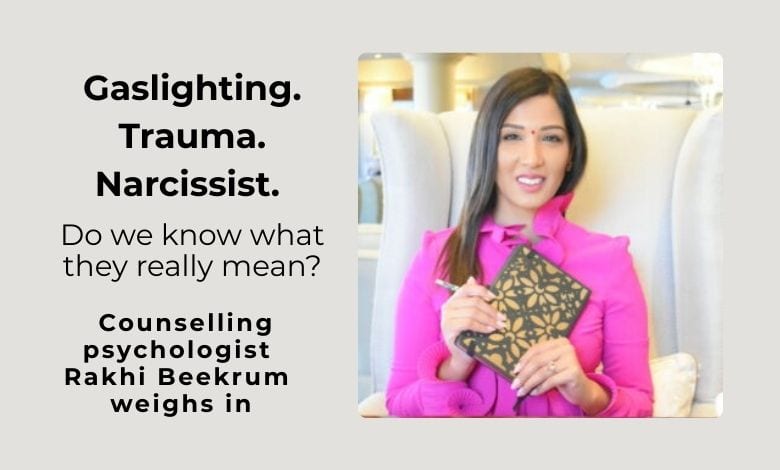
As conversations about mental health become more common, psychological language has increasingly entered everyday speech — from social media posts to workplace discussions and casual conversations among friends. Terms such as narcissist, trauma and gaslighting are now widely used in daily dialogue.
Also read: New community fitness run launches in uMhlanga
According to counselling psychologist Rakhi Beekrum, winner of Best Psychologist in Durban in the Best of Durban Reader’s Choice Awards for 2025, this growing public interest in mental health is a positive and encouraging shift. However, as psychological concepts become more mainstream, many of these terms are being used in ways that stray from their actual meaning.
“When psychological terminology is used too loosely, it can dilute the seriousness of the conditions and invalidate those who experience distress as a result of such conditions,” said Beekrum.
She highlights several psychological terms that are commonly misunderstood or misused.
Gaslighting is often used to describe someone simply disagreeing with you or remembering something differently. However, Beekrum notes that gaslighting is a deliberate and repeated pattern of psychological manipulation in which a person causes another to question their own perception of reality.
Similarly, the word trauma is frequently used to describe stressful situations or uncomfortable experiences. In psychology, however, trauma refers to exposure to events that overwhelm a person’s ability to cope and can lead to lasting psychological effects. Not every distressing experience is trauma — but, as Beekrum emphasises, every person in distress deserves compassion.
The term narcissist is also commonly used to describe someone who is arrogant, self-absorbed or difficult. In psychological terms, narcissism refers to a personality pattern characterised by grandiosity, a strong need for admiration and lack of empathy. When these traits are pervasive and significantly impair relationships or functioning, they may meet the criteria for Narcissistic Personality Disorder. Beekrum adds that a person may show occasional narcissistic traits without having a personality disorder.
Another word that is often misunderstood is triggered. While it is sometimes used as a synonym for being offended or annoyed, Beekrum explains that in psychology a trigger refers to a stimulus (current event) that activates an intense emotional or physiological response linked to a past trauma.
The term bipolar is also frequently used casually to describe someone who seems moody or indecisive. In reality, bipolar is a serious mood disorder characterised by distinct episodes of depression and mania or hypomania, which may include an elevated or irritable mood, decreased need for sleep, racing thoughts, impulsive behaviour and increased energy. “These are not everyday mood swings,” Beekrum says, adding that people’s moods can naturally fluctuate due to life stressors.
Similarly, being neat or organised does not mean someone is “OCD”. Obsessive-compulsive disorder (OCD) is a mental health condition involving intrusive, distressing thoughts (obsessions) and repetitive behaviours or mental rituals (compulsions) performed to reduce anxiety. Beekrum notes that it is highly distressing and goes far beyond a preference for order or cleanliness.
Beekrum also points to the growing popularity of discussions around attachment styles. “I see many people label themselves as having ‘anxious attachment’ or label a partner as being ‘avoidant’,” she said.
Attachment styles originate from Attachment Theory, which explores how early caregiving relationships influence patterns of emotional connection and security in adulthood. Importantly, attachment styles are tendencies rather than rigid personality types, and they can change over time through self-awareness, healthy relationships and therapy.
She stresses that psychological terms carry significant weight but having conversations around them are a positive step. Increased awareness can encourage empathy, help reduce stigma and assist people in recognising when they may need professional support.
“These terms were developed to describe complex patterns of behaviour, emotional processes and mental health conditions,” she said.
Using them thoughtfully, Beekrum says, helps preserve their meaning and ensures that the realities of those experiencing mental health challenges are properly understood and respected.
For more from Northglen News, follow us on Facebook , X or Instagram. You can also check out our videos on our YouTube channel or follow us on TikTok.
Click to subscribe to our newsletter – here