Three confirmed dead after heavy rains across Durban
In recent times, Durban and surrounding areas have experienced an increasing frequency of severe floods.
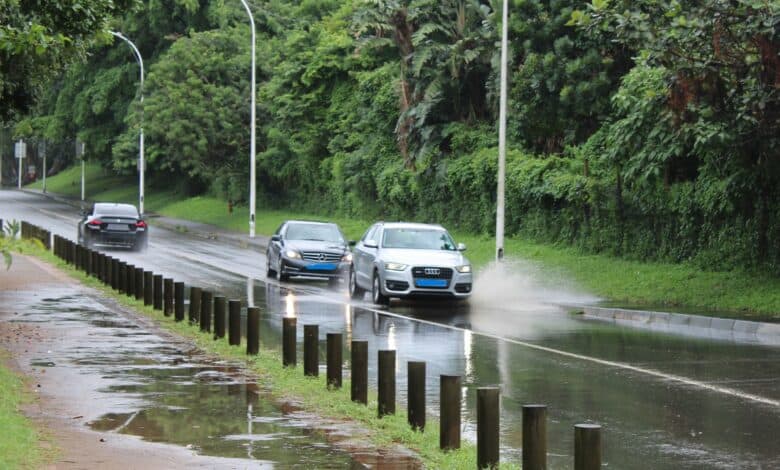
THE death toll from last week’s heavy rains and storms, which caused damage to roads, homes and low-lying bridges, has risen to three.
According to the KwaZulu-Natal Department of Co-operative Governance and Traditional Affairs (Cogta) the three fatalities occurred in Umlalazi, Pinetown and Molweni.
Since February 19 to March 15, torrential rains and storms have claimed the lives of more than 25 people and caused an estimated R3.1 billion in damages in the province.
Also read: Burst pipe damages Greenwood Park home
Following last week’s storm, eThekwini mayor Cyril Xaba confirmed the City has experienced an increasing frequency of severe floods.
“In eThekwini, stormwater systems are designed to handle a 1-in-10-year storm event at critical points and a 1-in-3-year storm event in non-critical areas. Large canals and river protection works are built to withstand 1-in-50 or 1-in-100-year storm events. Over the past decade, the City has experienced an increasing frequency of severe floods.
“The 2017, 2019, 2022, and 2023 floods were greater than the 1:100-year flood in certain parts of the city. In other areas, the flooding events in 2024 and early 2025 have also exceeded 1:20 to 1:40 years, meaning that the frequency and intensity of the floods has become unpredictable. The recurring floods need to be scrutinised against the existing capacity of infrastructure built in terms of the required level of service to understand the risk related to exceedance of the built capacity,” he said.
Also read: No major damage in North Durban after heavy rains
Xaba added the City is revising the flood lines to incorporate the projected climate impact of a 15% increase in rainfall intensity.
“Given the increasing frequency and magnitude of such catastrophic events caused by flooding in the eThekwini area, the city has embarked on many initiatives to reduce the risk of flooding and its impact on people’s lives and infrastructure. It is recognised worldwide that cities cannot afford to construct infrastructure to cope with every eventuality related to flooding, and therefore, other measures, such as the Early Warning System and risk mitigation need to be instituted. For this reason, our new designs are now taking into consideration the effects of Climate Change. These design standards are benchmarked with international best practices,” he said.
For more from Northglen News, follow us on Facebook, X or Instagram. You can also check out our videos on our YouTube channel or follow us on TikTok.
Click to subscribe to our newsletter – here