
The severity of the situation finally sinking in, Newcastle residents contemplate a life with impending restrictions and empty taps.
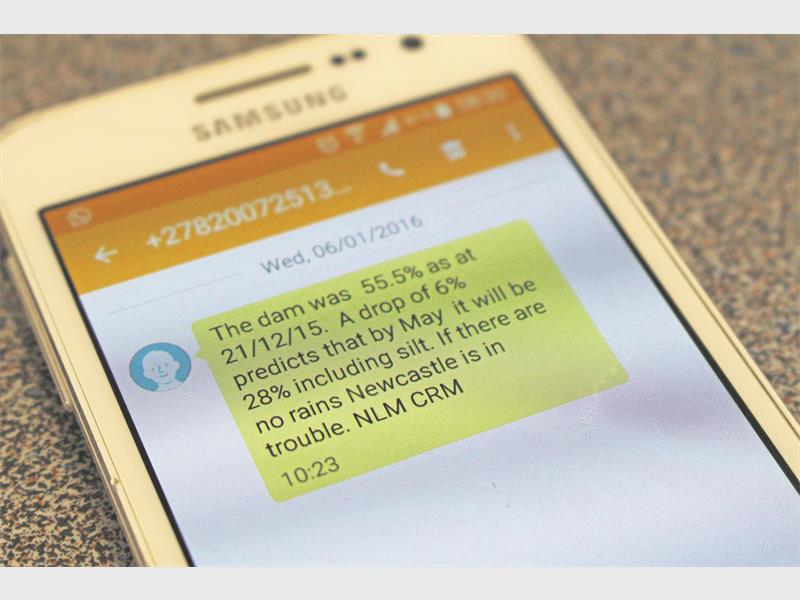
Last week, an SMS with details regarding the dam levels was posted to various social media platforms.
The message, quoted verbatim, read: The dam was 55.5% as at 21/12/15. A drop of 6% predicts that by May it will be 28% including silt. If there are no rains Newcastle is in trouble. NLM CRM.
Newcastle Municipality’s Customer Relations Manager, Doctor Dumisani Thabethe, confirmed the contents of the SMS were correct, and came directly from him.”NLM CRM means Newcastle Local Municipality Customer Relations Manager,” he explained. As tensions mount, and the community has become more aware of the possibility of water restrictions, Dr Thabethe said if the dam levels drop below 50 per cent, the situation will be considered a ‘state of emergency’.
On January 7, he revealed the water level at Ntshingwayo Dam had dropped to 53 per cent.
“Six per cent is the rate at which the dam levels are dropping. It is therefore predicted that should it continue dropping by six per cent, in May it [the dam] will be 28 per cent full.”
Dr Thabethe advised consumers to cut back usage by 30 per cent or more during the dry times.
“Residents must reuse domestic water by flushing toilets with used bath or sink water (grey water),” he said.
He stated ‘water load shedding’ needed to be maintained as a method of sticking to the daily bulk allocation target. This would become necessary to ensure water supplies would last beyond May 2016.
“All consumers must save the little water that is still available, report all visible water leaks and burst pipes to 0860144 144 and follow up on all reported complaints quoting the reference number given by call centre operators.”
He added that consumers needed to stop watering their lawns and gardens, as well as fix leaking taps, geysers and cisterns on their properties.
“Respond to all precautionary messages given by the municipality. The current drought is a provincial crisis that has no end date. We, therefore, all have to join hands and save the scarce resource,” concluded Dr Thabethe.