Smitten by snakes: Snakes on the road
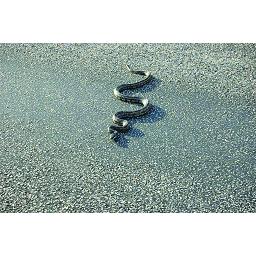
DRIVING home after work, you approach a large stick on the road, and suddenly it moves. Adrenaline takes over, the car swerves all over the road, and the stick disappears into the bush on the verge.
Issued by Rian Viljoen
DRIVING home after work, you approach a large stick on the road, and suddenly it moves. Adrenaline takes over, the car swerves all over the road, and the stick disappears into the bush on the verge.
Snakes are commonly found flattened on the roads at all times of the day and night. What are they doing there? Many reasons are commonly accepted for them making use of what definitely seems to be a man-made snake killing tool… The road.
Snakes, and other reptiles, are ectotherms, meaning that unlike us humans, they cannot produce their own body heat, and rely on external sources to maintain their bodies at optimal temperatures. Snakes are often found basking in the early morning and late afternoon sun, warming themselves in preparation for going hunting for food or a mate. The midday heat is normally only reserved for those snakes foolhardy enough to dare it, and snakes and many reptiles retire into the shade to escape the searing heat.
Roads are an excellent reservoir of stored heat. Black tar, crushed stone, and a baking African Summer sun create unbearable heat on the roads, even the more rural dirt roads absorb the heat and create extremely hot conditions. But, as the sun is rising, and warming the ground up, they make the perfect place for snakes and other reptiles to lie and grab some heat before moving off to their daily tasks. Late afternoon, as the roads slowly start to lose their heat as the sun goes down, a host of nocturnal species can often be seen using the roads as warming stations, before going off on their nocturnal forays.
Snakes and other reptiles also cross the roads for the simple reason of finding food, water, or better habitat on the other side. Roads have been built through their natural habitat, splitting and compartmentalising their ranges, forcing them to risk death by crossing the roads, normally ending up with a dead snake on the road.
Car lights, and street lights bring along a myriad of insect life as well, and these in turn, along with the heat, bring predators such as frogs and toads that feed on the insects, and being prey for a variety of snakes, they and the snakes are then at the mercy of the vehicle drivers on the roads. On roads, early in the morning and late in the evening, one can often find tons of amphibians and reptiles flattened against the tar, because they are hunting for their respective foods, and along comes a driver who either doesn’t see them, or more likely, does see the snake or amphibian (or other animal), and because of their upbringing, fear, cultural superstition, etc, you see the car in front of you suddenly swerve and from behind the car, out pops a poor animal suffering or dying because of ignorance (some do it on purpose).
Chameleons, tortoises (turtles live in the sea), and terrapins are often found crossing roads and because they are slow moving, they cannot get out of the way of half a ton of steel going at more than 100km/h. They also end up as a smudge on the road, and sadly roads are the main culprit, accounting for more reptile deaths than any of the other factors that make up the reasons for reptiles dying.
So, when you’re out driving, no matter what the time of day or night, please keep your eyes open for those funny-looking moving sticks, the rocks with legs, and the warty bumps in the road with sticky tongues. Reptiles and amphibians have adapted to our roads in their habitat, the least we can do is keep an eye out for our smaller road users, and afford them the courtesy of the having right of way over vehicles where safely possible.
If you have any interesting stories pleas send them to: estella@caxton.co.za or Contact us on: 034 981 39 30.