AbaQulusi residents outraged by sharp electricity tariff hikes
AbaQulusi residents angry over higher electricity prices, poor service, and lack of consultation.
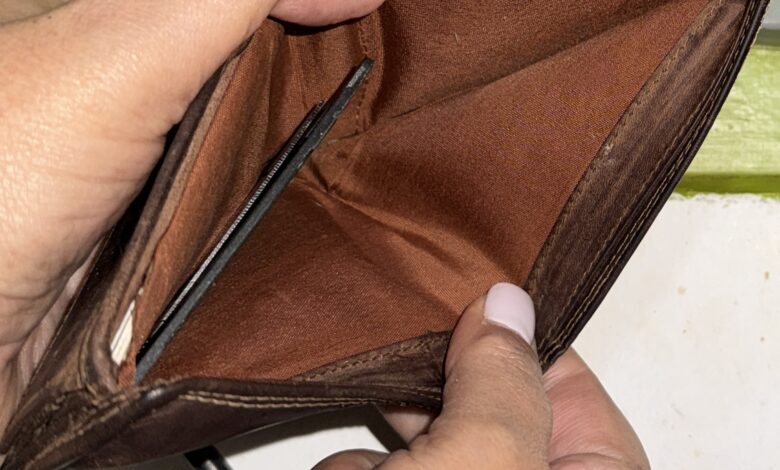
AbaQulusi residents have expressed their frustration and anger on Facebook since bearing the brunt of the increased electricity tariffs, which came into effect on July 1. Especially consumers who use prepaid meters have seen a sharp price hike, leaving them feeling concerned about their financial state.
The increases form part of the municipality’s 2025/26 budget implementation, but residents say there was little to no meaningful public engagement during the IDP roadshows, when the tariff hikes were proposed. “We always buy R800 and used to get 299 units. Today, however, we only got 186 units for R800. It’s ridiculous!” exclaimed one affected resident on the Vryheid Herald’s Facebook page.
These tariff hikes come after the National Energy Regulator of South Africa (NERSA) approved Eskom’s price increases, which municipalities pass on to consumers. However, residents argue that AbaQulusi’s service delivery failures – frequent outages, poor communication and ageing infrastructure – make the increases unacceptable. Another resident said, “We would understand if they were charging us these exorbitant amounts for stable electricity supply, but they are charging us for electricity that is unstable.”
In the Adopted Annual Budget, the municipality refers to the major challenge they are facing, namely vandalism, which has a negative impact on electrical infrastructure. “This not only affects service delivery, as services become unavailable immediately after infrastructure has been vandalised, but it’s also expensive to repair and replace.”
Even though electricity is more expensive (according to the adopted municipal budget, which is available on their website), the real cost is much higher than consumers are being charged now.
The 2025/26 Adopted Annual Budget and Medium-Term Revenue & Expenditure Framework (MTREF) reveal that the municipality is under financial pressure to keep the Electricity Department running. Despite a price hike of 11.32% in bulk electricity from Eskom, AbaQulusi is still not charging enough to fully cover costs.
A ‘Cost of Supply’ study shows that to run the electricity section efficiently and keep up with Eskom’s electricity increases, tariffs should ideally increase by 51%. But the municipality says that such an increase would be unaffordable for residents.
Instead, the municipality has implemented the following tariff increases:
• A 25% rise for residential users (prepaid and conventional)
• A 15% rise for other consumers like businesses
For the past three years, electricity sales have not brought in enough money to pay Eskom. As a result, other municipal funds have been used to subsidise the Electricity Department.
Making matters more difficult is the fact that municipalities owing Eskom money, including AbaQulusi, are now required to include repayment plans in their annual budgets.
NERSA has confirmed that it will only approve tariff applications based on ‘Cost of Supply’ studies that were submitted by municipalities. This means that tariffs are probably going to increase over the next few years.
The municipality also implemented a ‘High Season’ tariff in the winter months of June, July and August, since Eskom charges municipalities more during this period.
The current challenge is also that domestic consumers are being undercharged for electricity, while businesses and other consumers are being overcharged.
According to the adopted budget, for consumers who use a prepaid meter, electricity is now charged using two pricing blocks instead of the previous four. This means that if you buy up to 350kWh in a month, you’ll pay a lower rate (Block 1). If you buy more than 350 kWh in total during that month, the extra units will cost more per unit (Block 2). The system will keep track of how many units you have bought in that same month. This means that even if you buy electricity in smaller amounts, the total for the month is the same. Once you go over 350 kWh, consumers will pay the higher rate.
Domestic prepaid electricity users (excluding the indigent) will have to pay a fixed monthly service fee, as well as higher rates during winter months.
According to the municipality’s adopted 2025/26 budget, this applies to households with single-phase prepaid connections between 30 and 60 amps, which are common in most homes.
All prepaid consumers will pay a monthly service fee of R25.
Domestic consumers (excluding the indigent) will pay R2.55 per kwh for the first 350 kWh purchased and thereafter R2.72 per kWh. During the Eskom high season (June to August), electricity will cost more:
• R3.74 per unit for the first 350 kWh you use in a month.
• R4.16 per unit for any units above 350 kWh.
If you use a conventional (monthly billed) meter:
Conventional consumers will pay a monthly service charge of R224 (excluding three phase consumers, who will pay a service charge of R1300 a month).
• For the first 350 kWh used in the month, you’ll pay R2.72 per unit.
• After that, every extra unit costs R3.79.
In Eskom’s high season (June to August):
• The first 350 kWh will be R3.35 per unit;
• Over 350 kWh will be R4.12 per unit.
The Vryheid Herald has requested a proper breakdown of the new tariffs, since consumers are complaining and confused. Unfortunately, this information from the municipality had not been received at the time of going to print.
ALSO READ: Municipality warns residents to avoid scammer posing as disconnection official
The news provided to you in this link comes to you from the editorial staff of the Vryheid Herald, a sold newspaper distributed in the Vryheid area.