
Has hake had its chips?
CALL me a boring old traditionalist if you will, but I like fish and chips. There’s something honest about fish and chips, no mucking about, no pretence, no airs and graces, just good ol’ fish and chips. I don’t know where I got the taste from. I have no recollection of fish being a regular …
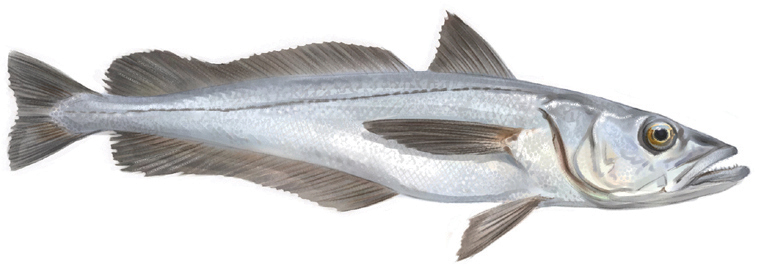
CALL me a boring old traditionalist if you will, but I like fish and chips. There’s something honest about fish and chips, no mucking about, no pretence, no airs and graces, just good ol’ fish and chips.
I don’t know where I got the taste from. I have no recollection of fish being a regular item on the menu at home when I was a child, besides, where would we have got fish from in the middle of southern Africa back in the 1950s? My Dad used to go fishing, although not often, and I suppose he occasionally brought fish home, probably bream, that he’d caught in a river or a friendly farmer’s dam. Then when I was 12 years old, we lived for a couple of years at Kariba, and from then I have definite memories of Kariba bream and a fish we called chessa, on the draining board of the kitchen sink.
But I’d heard of the traditional British fish and chips shop, I’d heard of cod and haddock and plaice, and I mean the real haddock fish and not the yellow-smoked hake that we call haddock in South Africa. I’d heard about them wrapping your fish and chips in newspaper and the reek of salt and vinegar. About 20 years later, I lived in a flat above a bottle store opposite a traditional fish and chips shop in north London. When they were frying and the street was redolent with the aroma, you were likely to drown on your own spit. And yes, they did have cod and haddock, proper haddock, and plaice and skate and ray, and chips and huge gherkins and pickled onions, but they wrapped it all in clean white paper and not newspaper.
Back in South Africa, it seemed that unless you lived at the coast, you were restricted to hake for the home, and if you went out to a restaurant they’d offer you sole or monkfish or kingklip. You could of course go to Klipfontein and catch carp, bass, eels, barbel and geelvis, but to be honest, the only one worth keeping and eating is bass. I had a mate who swore by carp fish cakes, but frankly, they weren’t very nice.
So fish and chips became hake and chips at home, and I used to eat sole at restaurants until it became so expensive that you couldn’t order it unless you had a good medical aid to cover the costs of the removal of an arm and a leg. So I moved “down market” to hake and chips, and to be honest, there ain’t nothing wrong with hake and chips. A squeeze of lemon, salt, vinegar, ‘marto sauce and tartar sauce (best made with the addition of capers and gherkins).
Then, towards the end of last year, I ordered take-away fish and chips from a business here in town, and the hake fillet had shrunk so much that they were obliged to give me two of them. And so it continued. Then, just before Christmas I ordered hake and chips at two different restaurants and at the one, the hake fillet had shrunk by a third, and at the other, I kid you not, I was served a hake fillet that was probably a bit smaller than a bait-sized sardine.
“’Scuse me,” I said, “what the hell is this?” and so she brought me half, not a whole one, half of another fillet the same size. Even then, I doubt if my portion of fish together was half the thin end of what used to be served as a hake fillet.
Obviously then, the stocks of hake in the sea are under pressure. If two of the best known high street franchises cannot get decent sized hake fillets, something is wrong. If we are down to eating the baby hake, then the adult hake are few and far between.
Hake, I’m told, is a “slow growing fish with a lifespan of about 14 years”. I’m told too that they can grow to just a bit more than a metre in length, which means that the ones I’ve been served in Vryheid have been plucked not from a school of fish but a nursery school. They have been the piscatorial equivalent of toddlers at Karnallie. Tiddlers.
We have two species of hake lurking around in our seas, Merluccius capensis and Merluccius paradoxus, and from what I understand, neither of them has been put on the endangered list. They are both classified “Green” although I did read that a rebuilding plan is in place to boost stocks of the ol’ paradoxus. This plan has a 20-years time frame.
I also read somewhere that the main export markets for hake are Australia, the USA and Europe. This might just give us a clue as to why we can’t get a decent sized hake fillet in our restaurants. I mean, if the hake species are not threatened by over-fishing, if hake are being given the time to grow into adults, my guess is that foreign buyers are taking advantage of the pathetically weak rand and shipping all the bigger fish overseas. At R18 for a pound, R15 for a euro and R11 for a US dollar, our hake provide a very economical source of protein for these damned foreigners.
I wrote to the head office of a national chain of restaurants last week asking them what the problem was. Their reply was, “With regards to fish, unfortunately it is a global problem we are experiencing and we do apologise for this. We are not sure when it will be sorted out.” I’ll tell you when – when the rand recovers, if it ever does.
Bloody hell, I wonder what carp and chips tastes like…?