Watch: Mission to find missing vultures, dead or alive
Two tagged White-backed Vultures had not moved for two days.
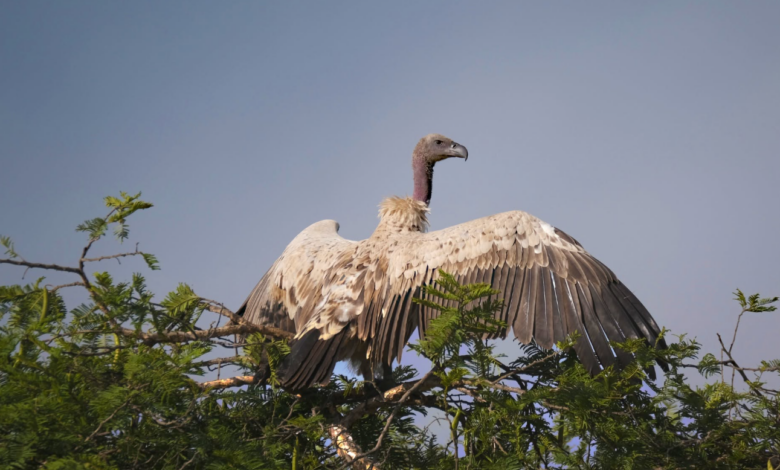
A member of the local honorary officers received a call from Ezemvelo, requesting assistance in checking a site from where they had received an alert of a possible problem with two tagged vultures.
Ezemvelo and the Vulture Study Group track several birds using satellite technology, and their system had sent an alert indicating that two vultures had not moved for two days, flagging a possibility that a problem had occurred.
Concern as the birds had not moved in days
This was particularly concerning, as the tagged birds were White-backed Vultures.
These vultures are critically endangered and while they mainly occur in the Kalahari and bush veld of Limpopo and Mpumalanga, a small breeding population occurs in the Elandslaagte area north of Ladysmith.
These birds are susceptible to collisions with power lines and also fall victim to poisoning.
Vultures are often victims of poisoned carcasses, where poison intended for other predators has a devastating impact on scavenging birds.
Vultures may also be poisoned intentionally, leading to a situation where multiple birds are killed and body parts harvested for nefarious purposes.
Were they dead?
With the worst-case scenario in mind, the honorary officer contacted the Ladysmith Birders and a team set off to the point identified via the satellite. The identified point was in a mountainous area in the foothills of Biggarsberg, in an area not accessible by vehicle.
The birders parked their vehicle in a safe spot and set off into the mountains, guided by the reported point and Google Maps on their phones. The absence of power lines in the area ruled out the possibility of a collision. However, during the walk, the Ezemvelo team confirmed that the birds had still not moved.
After about an hour of trekking through the good-condition grassland, a single vulture took off in front of the intrepid hikers, indicating that this was potentially not a poisoning event that would have resulted in all scavenging birds in the area being killed.
Found alive
Following prompts on Google Maps, the team eventually got to the identified point, to be met by a flock of vultures sunning themselves around the carcass of a cow.
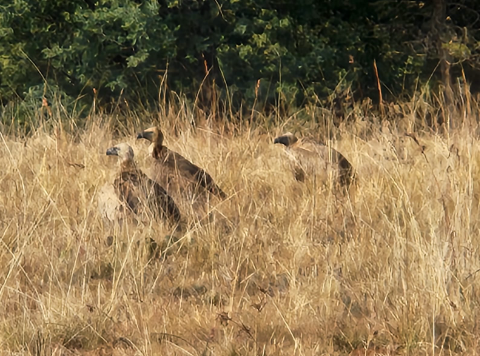
been disturbed. Photo: Supplied
The birds looked at the birders with disdain, obviously resenting the intrusion into their peace. There was very little movement among the birds, again raising concerns of poisoning.
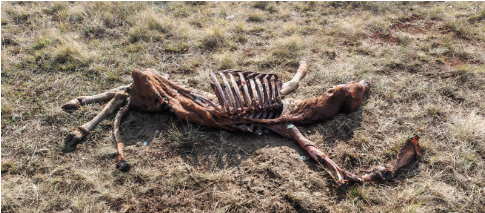
disease. This carcass was totally cleaned in two days by the birds. Photo: Supplied
The birders needed to ensure that the vultures were healthy, so they moved closer to the birds to encourage them to react. The birds reluctantly took off down the slope, narrowly avoiding trees and rocks in their flight path. It was apparent that the birds were not injured, but were rather engorged with food and simply had had no reason to move over the previous few days, activating the alert through the monitoring system.
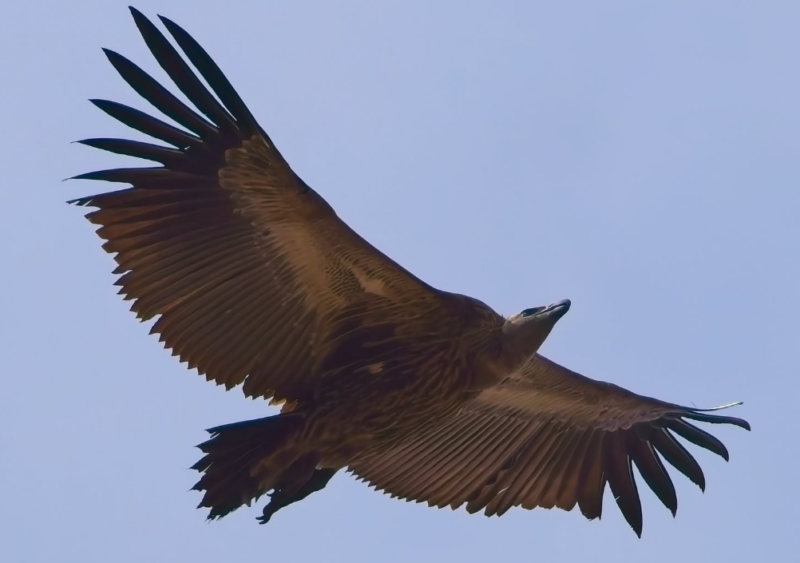
Shortly after their take-off, Ezemvelo notified the team that the signal from the birds was showing movement and that they were circling over the Elandslaagte area. The birders could see the birds that were tracked and could also report, following a detailed search of the site, that no birds – dead or alive – remained at the carcass. A successful exercise, with a good outcome!
Long way back home
Then the return trek to the vehicle started. Just as far, but significantly easier without the added burden of possibly finding poisoned birds.
Click to receive news links via WhatsApp Channel. Or for the latest news, visit our webpage or follow us on Facebook and Twitter. Join us there!