Local newsNews
Running the rapids of the Vaal can turn from easy to terrifying
It's not what you know, but how well you can do it
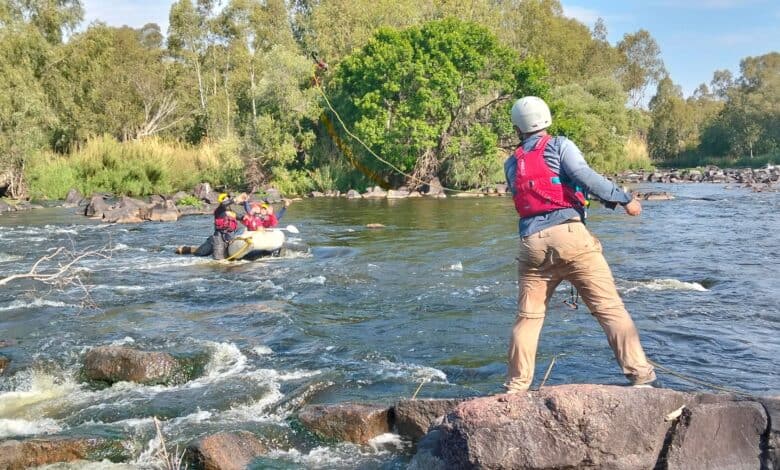
If you’ve run the rapids of the Vaal River you’ll be aware that they can turn from easy-peasy at low water to terrifying when rains fill the river from bank to bank. A doodle downriver on Class 2 and 3 can become a hectic run with all sorts of dangers including trees and holes.
Trees lying across the current make deadly “strainers” that can trap boats and drown paddlers. Holes are where the river drops over a ledge and reverses on itself to become a drowning machine. For more than six decades since I started paddling as a kid these hazards have been out there awaiting the chance to grab me.
So far, so good. Lots of close shaves but no final ending.
It takes courage to be a river guide because you are up against one of the elemental forces of Earth: flowing water. It can be fun and it can be fatal.
The Vaal River was at its friendly level – good rapids but without terror – when I conducted an assessment of river guides over the weekend. I was assisted by Damian Addison as my understudy to become an Assessor: he is already a Subject Matter Expert on rafting having spent three decades paddling.
The group of five candidates, with their chief instructor Ruan Viljoen, were from the Warriors Academy in Limpopo and are themselves becoming instructors in a variety of fields from hiking and abseiling to rock climbing and mountain biking. So they are already skilled and can take care of themselves in tough outdoor situations.
But they had a wakeup call.
The way one uses ropes in lowering people down cliffs (abseiling) is very different to how ropes are used in rivers when throwing to swimmers after a capsize. And the ropes themselves are not the same: abseilers use heavy climbing rope, river-runners use a much lighter floating rope. The latter are made of polyprop and when used to haul a weight can fray, melt from friction or snap.
It became very obvious during the assessment that skills and equipment do not necessarily cross over from one discipline to another. There were lots of rope tangles and bunches of what looked like spaghetti floating on the water, ready to clinch someone’s leg or catch a swimmer around the neck. Untidy ropework can cause serious injury or death.
In my youth I was in the Navy for a while and the first thing we learnt about ships was never to leave a bight (a loop of rope) lying on deck. If someone stepped in it and it suddenly paid out as an anchor line it would take their foot off.
The candidates soon realised the river principles – which they knew already from training and textbooks. They were now being required to perform in tricky, real situations. But nerves had got the better of them. They eventually came right under efficient Incident Command where clear instructions and analysis of the situation replaced confusion and lack of teamwork.
Remember, these were experienced outdoorsmen. It goes to show that what you know may not be enough to do things quickly and successfully without having had lots of practice in the actual surroundings of a river. It’s why we say there is no substitute for river time: long experience of what can happen.
In terms of the rules for the Generic Adventure Site Guide certificate (GASG), candidates are allowed three chances to prove their competence. So exercises were repeated and finally done well.
They all passed assessment because it was clear that the scenario tests had taught them how to do things practically. Next time I get to see them in action I’m sure I’ll see none of the fumbling and disorder of yesterday.
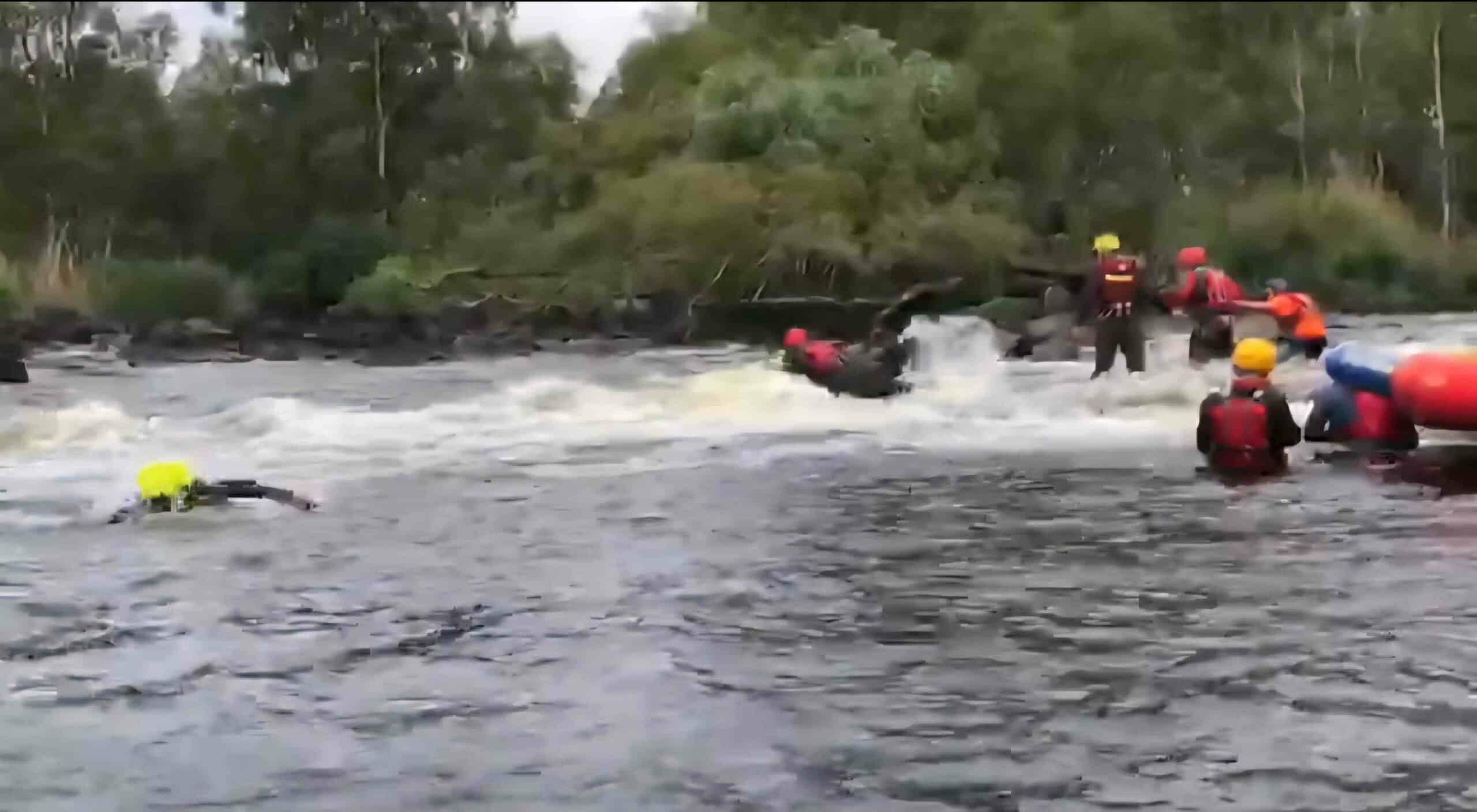
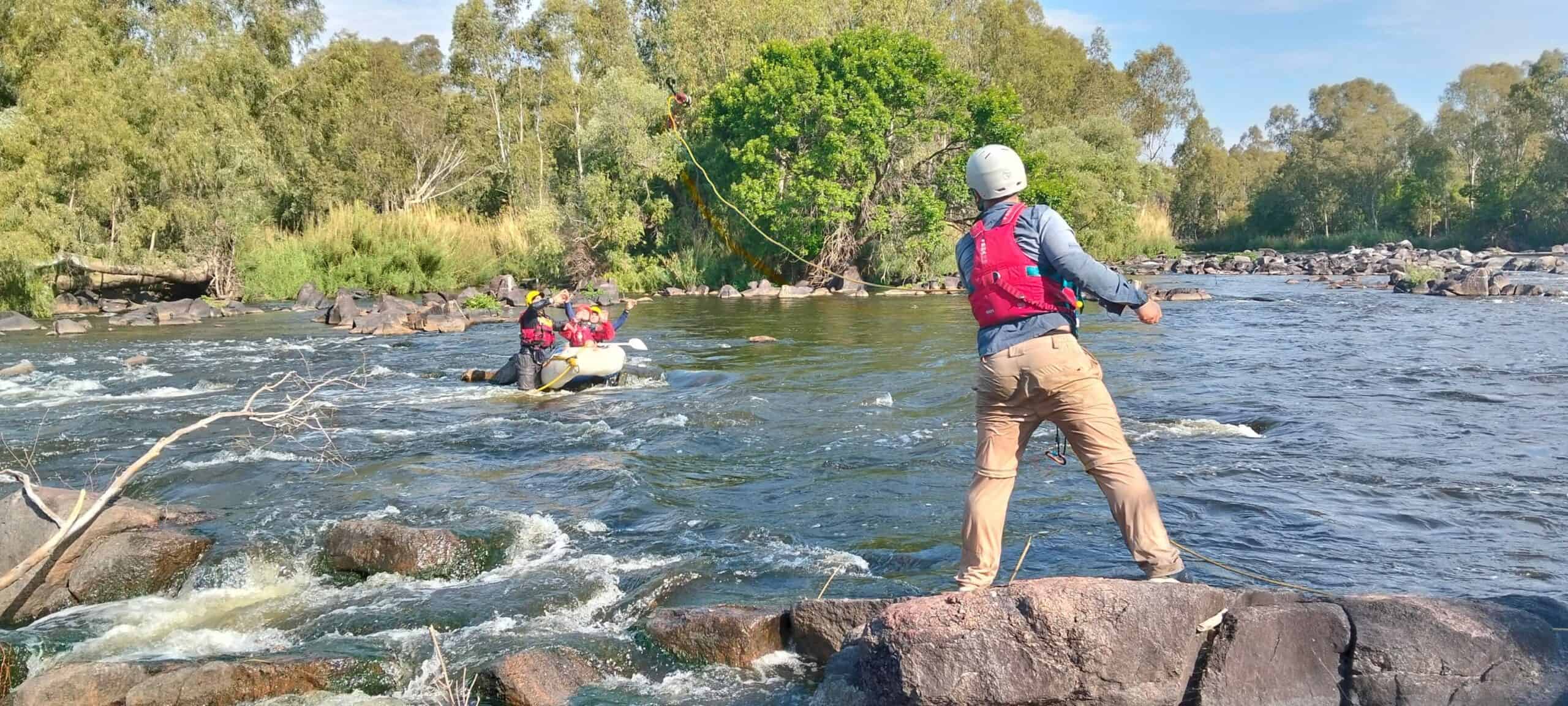
From here they go on to the full GASG qualification to become legal river guides. There is still much for them to complete but they have passed the first hurdle.
One very amusing incident (which would not have been funny if it were for real) was when two paddlers got their raft stuck on a rock – “wrapped” in river terminology – and one started screaming that he had a broken arm. Meanwhile the rescue crew were so focused on the technical job of preparing to pull the raft off the rocks that they ignored the injured man completely.
Tunnel vision? Putting saving equipment before saving lives? The exercise was repeated twice more to make the point that you FIRST care about people and send help. Point made. I was impressed by the openness of these candidates who quickly recognised their mistakes and put the learning to good use.
A lack of calm analysis leading to a coherent plan of action was partly responsible for mistakes.
The Assessment was conducted by Adventure Standards Africa (AsAfrica) on behalf of the African Paddling Association (APA). This was a welcome collaboration of two training bodies.
* Next river proficiency course, 2nd week of December, Vaal River Parys. For guides, canoe clubs, recreational paddlers. Call or WhatsaApp 084 245 2490. https://asafrica.org
At Caxton, every story is written by humans. We use AI only to perform quality checks - never to generate the news. Happy reading!