Adventure guiding careers: The Vredefort Dome the perfect playground
It would not be an exaggeration to say that Parys has become a recruiting centre for touring companies looking for competent and experienced employees.
In and around Parys the tourism industry creates jobs for local people, but they must be qualified and show some experience before being hired. That is where trainers and assessors come in.
South Africa has a statutory system to accredit legal tour guides and hospitality workers, yet two problems face many candidates: a poor educational background and the costs of becoming certified. For young township dwellers who are desperate for work, literacy and finance are huge obstacles.

Despite this, a number of youths who would otherwise have had little prospect of jobs above the most unskilled level have managed to qualify and have found work in other centres of South Africa, from the Cape to Limpopo. It would not be an exaggeration to say that Parys
has become a recruiting centre for touring companies looking for competent and experienced employees.
Parys and the surrounding towns offer a rare blend of accommodation, adventure, catering and visitor services such as garages and support infrastructure, found only in comparable tourist venues set among mountains, rivers and seasides. For adventure guides in particular, the setting of the Vredefort Dome — with its Bergland, the Vaal River, game lodges and
activity centres — is an ideal venue for training.
Since 2013 I have been an accredited Assessor for CATHSSETA, the Sector Education and Training Authority for hospitality and tourism. I have qualified dozens of young men and a few women as rafting, hiking and mountain biking guides, and have seen at least half of
them find work with operators far from Parys.
That is not to mention the many who have trained with me and gained the basic competence certificate without completing the final Lead Guide qualification, which requires substantial paperwork.
The basic certificate allows a person to assist a qualified guide but not to lead tours independently.
There are three statutory divisions of tourism: nature, culture and adventure. Nature covers fields such as game ranging and geological or environmental interpretation, including topics like the Vredefort Dome. Culture includes people, art, history and even science. Adventure
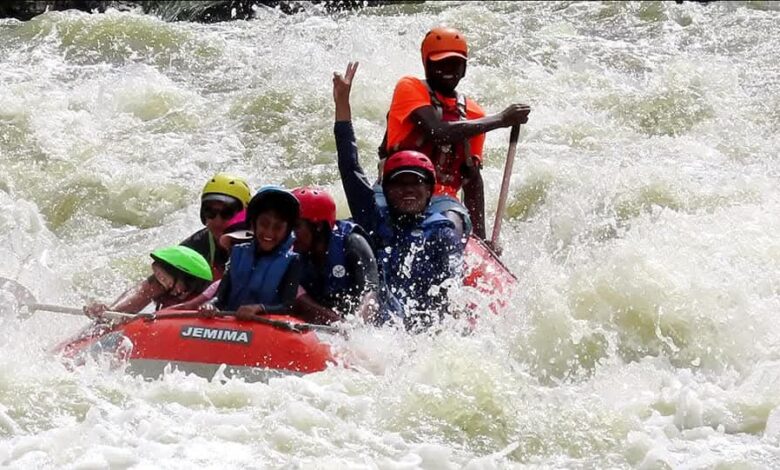
encompasses outdoor activities involving some degree of risk. Adventures may be “soft”, such as mild hiking trails, or “hard”, such as rock climbing and higher-grade whitewater rafting. In our region most activities fall between soft and hard, combining excitement with managed risk in pursuits that do not require advanced technical skill, but do demand reasonable physical fitness and a willingness to face challenge.
When the Vaal River runs high, however, rafting can verge on extreme conditions. We typically experience spells of high water during December–January and again in late March–early April as different weather systems bring heavy rains.
In mountain biking, the hills of the Bergland include trails that are quite technical and demand serious ability. Mostly, though, the Dome environment offers moderate and forgiving adventures to the average visitor and outdoor enthusiast.
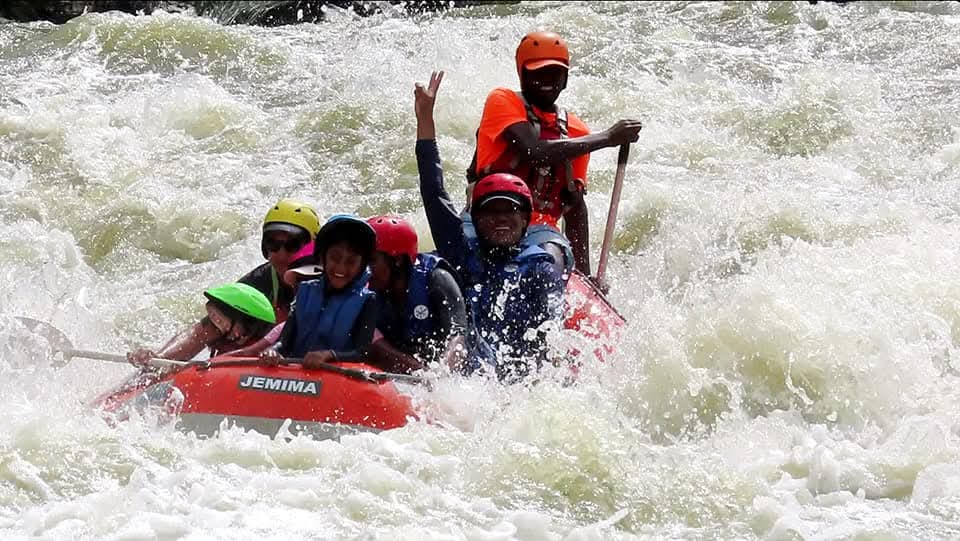
None of this means that adventure guides can afford to be unqualified or unprepared to manage challenges. They must demonstrate a high level of skill themselves and be able to teach essential techniques to those who pay to play. This places a massive responsibility on their shoulders. They cannot be cowboys, nor can they hang back when people need guidance or rescue. They must understand the law of negligence, be skilled storytellers who make activities enjoyable, and be capable organisers, drivers and communicators who can
handle difficult clients.
The demands are considerable, especially for guides whose English may not be strong, yet who must work with local and foreign participants for whom English is the common language. They may feel intimidated by high-status clients such as business executives,
doctors or politicians, yet must assert guiding authority over them.
Training adventure guides therefore raises a host of difficulties, particularly where candidates come from disadvantaged backgrounds.
Adventure guiding attracts youngsters who may not have excelled academically but are athletic and imagine that guiding simply involves showing people the outdoors. In reality, they must master operational details, manage equipment and vehicles, write reports, deal
with officials and landowners, account for monies spent, and above all demonstrate presence of mind and maturity in times of crisis.
Crises will come
Outdoor surprises such as fires and floods, accidents, lost or panicking participants, and operational problems such as permit errors, vehicle breakdowns, unreasonable officials or traders demanding bribes are part of the landscape. On top of this
is the ever-present danger of injuries on the trail, sometimes involving multiple casualties.
Wilderness First Aid Level 3 — currently a four-day course, soon likely to be extended — and the skills of casualty evacuation are essential. Life-threatening situations often occur in remote areas where guides and groups must rely on their own resources to get out of
trouble. Even a helicopter rescue, which sounds like a quick solution, demands considerable skill from guides on the ground.
At this point one may wonder why anyone would take on such hazards and responsibilities.
Should one not remain in a comfort zone and avoid the risks?
Avoiding harmful risk is indeed the key principle of adventure guiding. Yet all outdoor activities involve some degree of risk.
“Challenge by Choice” is the motto of our training organisation, Adventure Standards Africa — meaning that participants undertake only what they are willing to risk, provided they understand the risks involved.
For this reason, guides must obtain informed consent by explaining in advance the hazards associated with a trail or activity. In court it is not sufficient merely to show that a person signed an indemnity if they did not understand what they were undertaking. In the event of
an accident it must be demonstrated that the participant knew such an incident was possible, even if the precise circumstances could not be predicted.
Negligence arises when guides fail to exercise their Duty of Care to protect participants from foreseeable harm. Any act or omission that shows carelessness may be judged negligent, making both guides and operators legally responsible.
So again, why choose this profession?
Because some people are wired to be adventure guides. They love the freedom of the outdoors, the wind and the water, and the privilege of sharing their workspace with newcomers. For them, another day at the office means another
descent of a river or ascent of a peak.
Adventure guiding attracts those who can become true professionals if they apply themselves. The full legal qualification is at matric level, which presents challenges for candidates hoping to escape conventional office work for the Great Outdoors.
My role as trainer and assessor is to ensure they are brought up to standard in every function of guiding — from people skills and paperwork to knot-tying and splinting a broken arm, from running a rapid to pitching tents in a storm. Training includes hard knocks, because it must.
About the author
Prof Graeme Addison is Director of Adventure Standards Africa, based in the Vredefort Dome and operating nationally.
See https://asafrica.org�. Contact 084 245 2490.